Villefranche-sur-Mer is the corner of the Riviera that the coast road almost misses. From the Basse Corniche it reads as a single curve of ochre and rust, a fishing harbour folded into the deepest bay on the coast, the cruise tenders standing offshore because the water runs too deep to dock. The big names are next door — Nice ten minutes west, Monaco a quarter-hour east — and Villefranche keeps to itself: a town of stepped lanes, a covered medieval street, a citadel on the point, and one calm beach that faces the whole bay like a balcony. Cocteau decorated the fishermen's chapel here. The houses have not been repainted into postcards. It is the Riviera with its working clothes still on.
Here is how SOF reads it.
The bay is the whole point
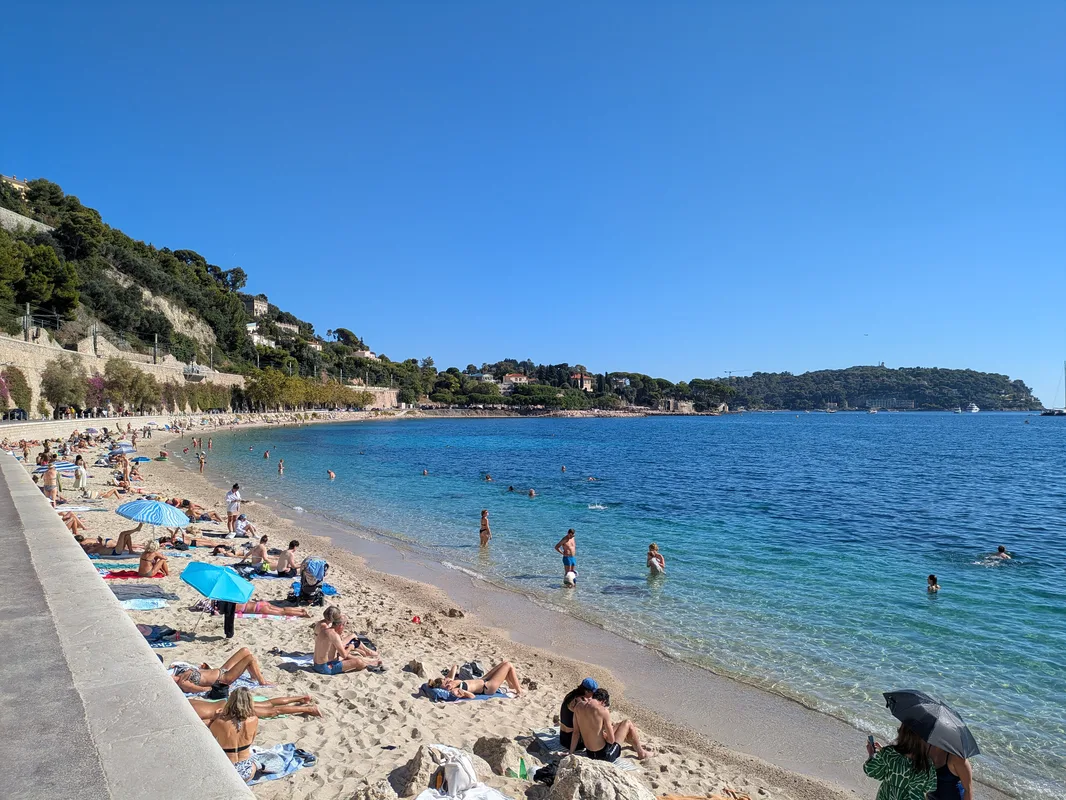
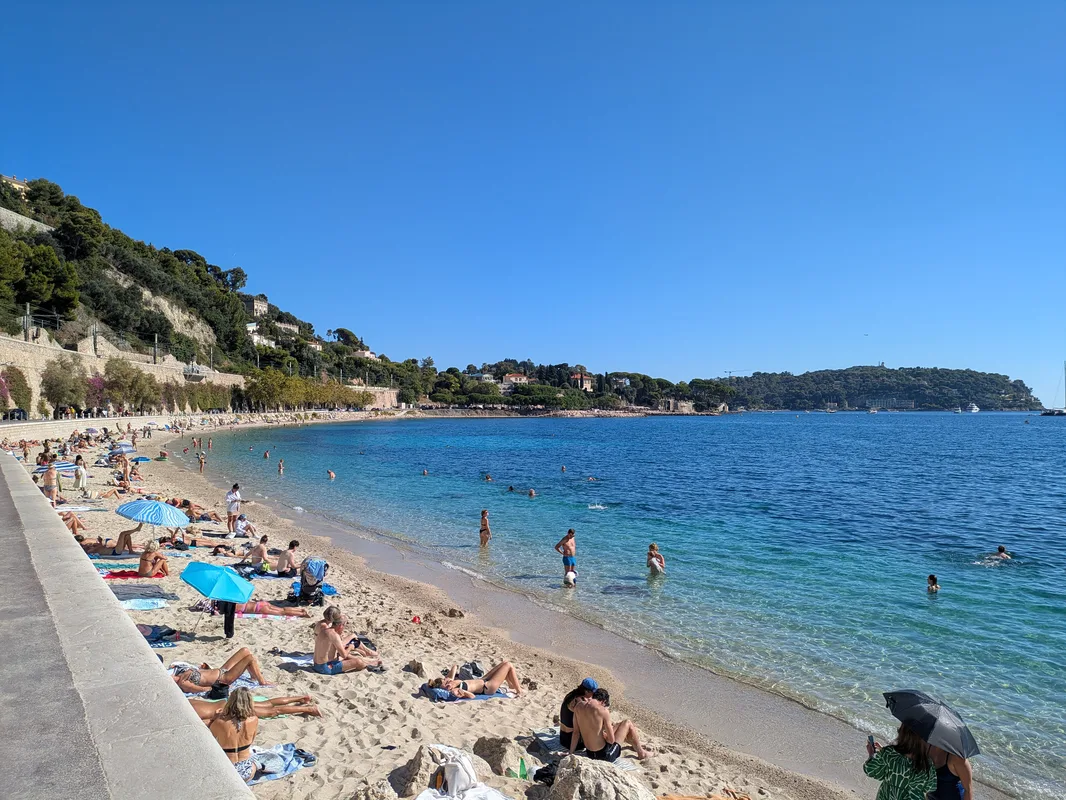
Understand the water and you understand the town. The Rade de Villefranche is one of the deepest natural harbours in the Mediterranean — a glacial trench that drops fast a few metres off the sand, which is why the navy has anchored here for centuries and why the cruise ships sit out in the roadstead and ferry their passengers in. For the visitor this means two things. The swimming is extraordinary: clear, deep, sheltered from the open-sea swell by the headlands of Cap Ferrat and Mont Boron. And the light works differently — the bowl of hills holds the morning sun, the western face goes gold at the end of the day, and the whole thing turns into a single amphitheatre at sunset. Plage des Marinières is the seat in that amphitheatre: a long, gently shelving strip of sand under the railway arches, the one genuinely calm town beach between Nice and the Italian border.
The old town, by foot
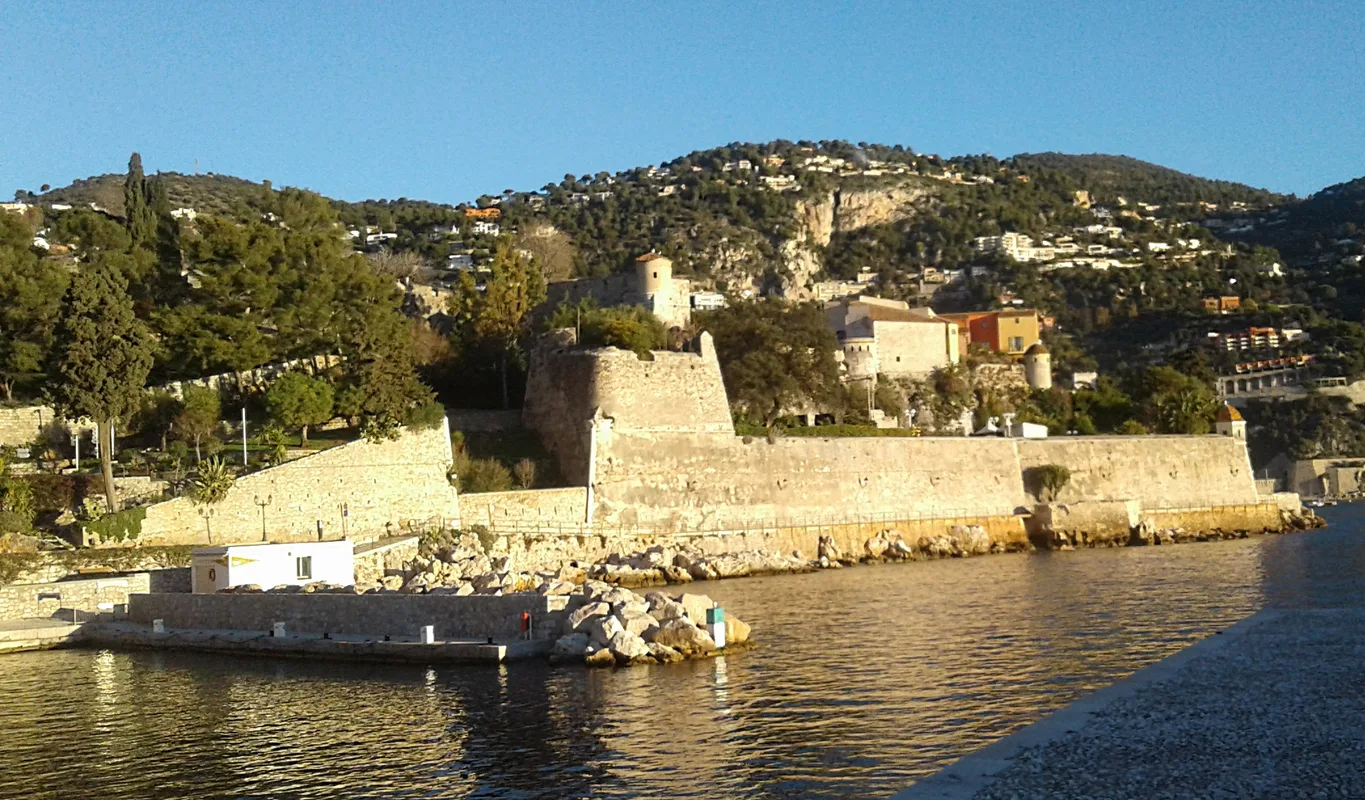
Villefranche climbs. The harbour front is flat and easy — the quais, the chapel, the cafés — but the town proper is a stack of stepped alleys that you walk, never drive. The set piece is the Rue Obscure, a vaulted passage running under the houses since 1260, built for defence and still cool and dark on the hottest August afternoon; it is one of the oldest covered streets in France and takes about ninety seconds to walk, which is not the point. Above it the lanes thread past the Rue du Poilu and the Rue Baron de Brès, where the back-alley tables are, up to the Citadelle Saint-Elme — the sixteenth-century fort on the point, its ramparts free to wander, the museums and gardens inside, and the best wide view back across the rade. Start low, climb in the cool of the morning, and let the alleys deliver you to the water by lunch.
A day, the SOF way
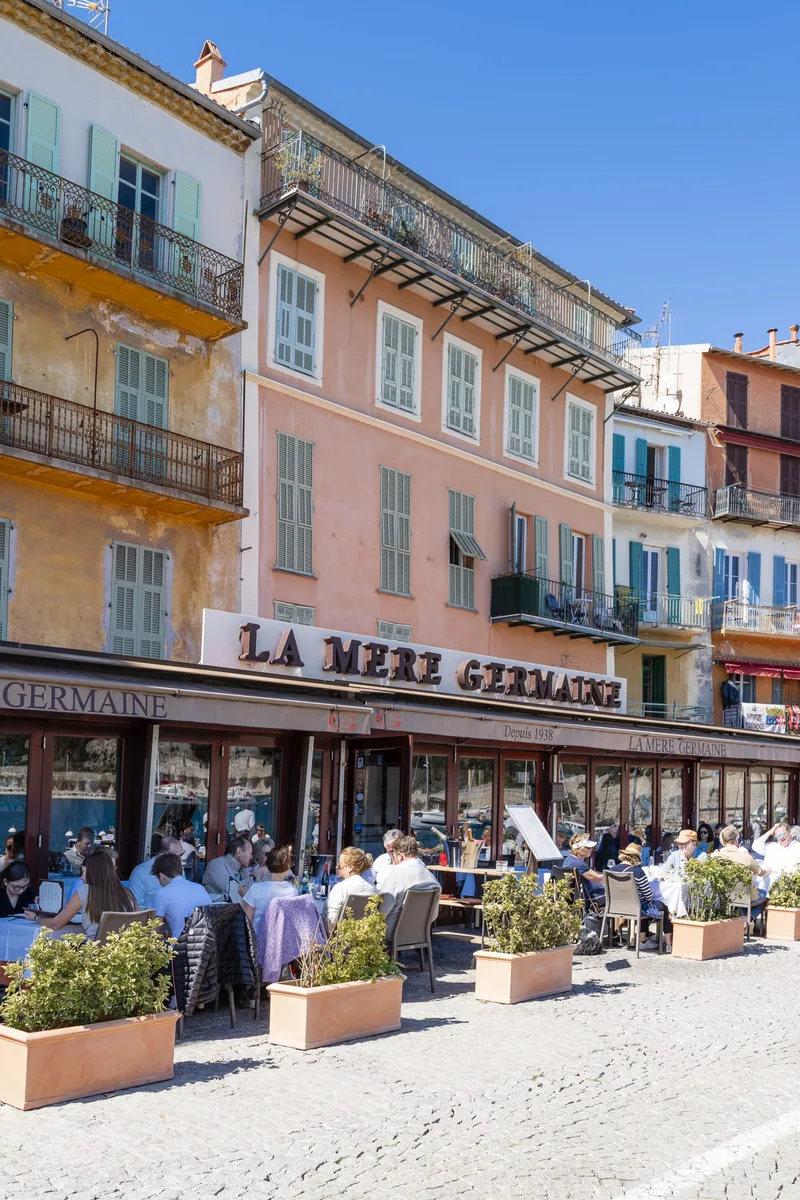
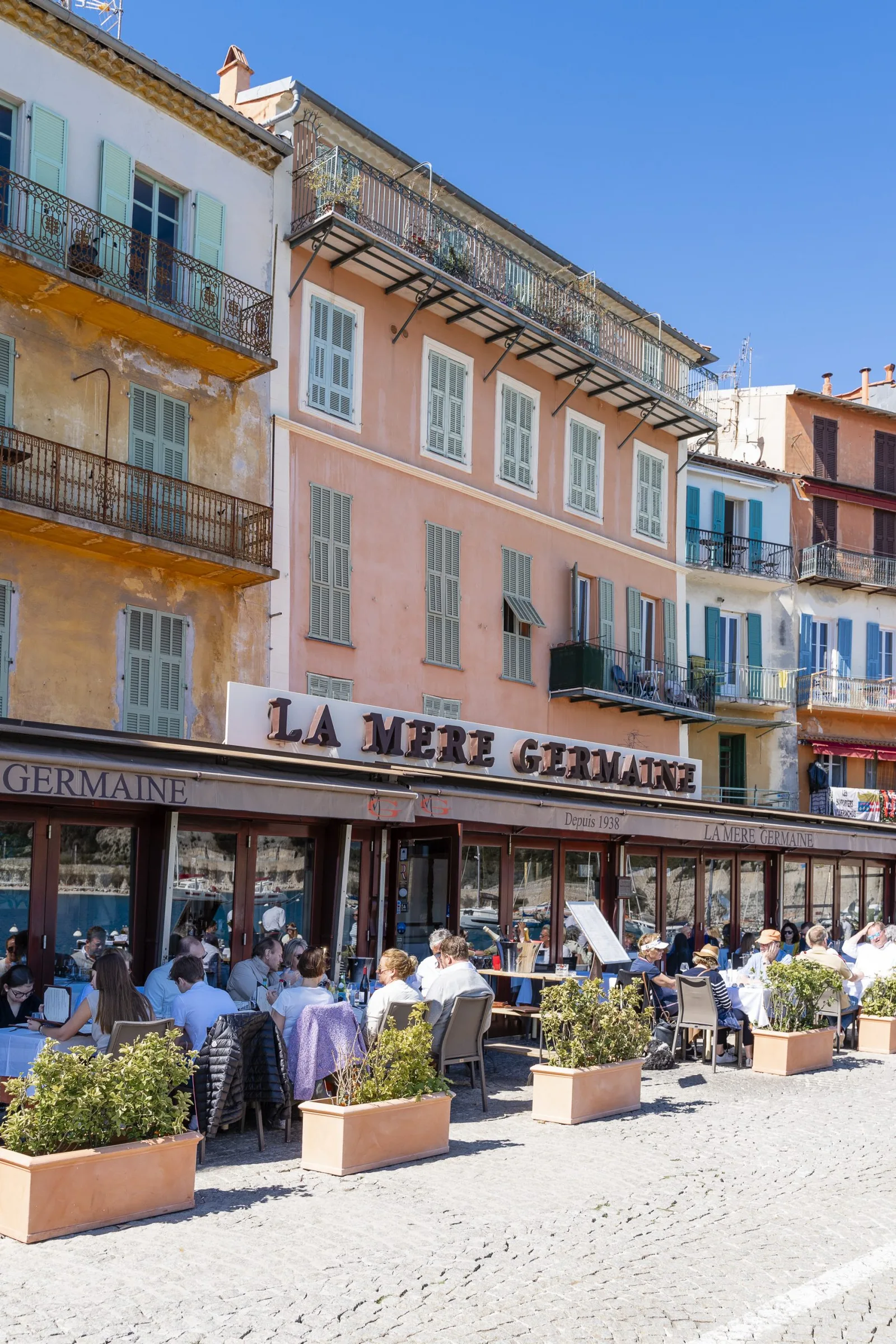
Morning belongs to the Citadelle and the old town while the stone is still cool — the ramparts, the Rue Obscure, the slow drop through the lanes. Mid-morning, a coffee and something from the ovens: Bakaro or Ronde des Pains on the Rue du Poilu, the pedestrian spine where the town actually shops. Then down to Marinières for the long bright middle of the day — a swim in that deep clear water, a lounger at the Marinières Plage private club, lunch with your feet near the sand. As the afternoon softens, the harbour front takes over. A late, unhurried lunch of the catch at La Mère Germaine on the Quai Courbet — the town's grande dame, on the water since the 1930s, the kind of plateau-and-rosé table the whole coast used to be built around. Reset, then climb to Mayssa Beach beneath the Citadelle for the apéro as the bay turns gold. A scoop from Feracci on the way through the old town. Dinner runs late and easy from there.
After dark
Villefranche is not a nightlife town, and that is the appeal — it glows rather than roars. The evening shape is a harbour-front apéro while the light goes, dinner on the quai or in a back lane, and a slow nightcap. The water tables — Oscar and Le Cosmo on the harbour front, Wine Pier on the ground floor of the Welcome Hotel for a glass with the boats lit up in front of you — carry the early evening. Deeper in the old town, L'Aparté sits inside the Rue Obscure itself and La Belle Étoile and Les Garçons hold the back-alley tables for a long, lamplit dinner. For something later and unexpected, the Trinquette Jazz Club down at the Darse — the small eastern fishing port — runs live sets by the water; it is the closest the town comes to a scene, and it is a good one.
What to know
- Getting there — the train is the move. Villefranche sits on the coastal line; it is six minutes from Nice and the station is a short walk above Marinières, which spares you the hairpins and the parking. From Nice airport, reach it via Nice-Ville.
- Parking — the town is steep and the spaces are few; in season use the Parking Wilson or the port garages, or arrive by rail and forget the car entirely.
- The walk you cannot drive — the old town is stairs. Wear something you can climb in; leave the heels for the harbour front.
- Cap Ferrat next door — the peninsula and the Villa Ephrussi are a short hop east, and the coastal path around the cap starts from the bay; pair them with a Villefranche morning.
- Reservations — the harbour-front tables fill on summer evenings and for the long Sunday lunch; a day ahead is usually enough outside August.
Villefranche keeps the scale the rest of the coast has lost — a real harbour, a real town, the deepest blue on the Riviera held in a single quiet bowl.