Antibes is the Riviera town that the Riviera forgot to ruin. It sits between Nice and Cannes with the largest yacht harbour in Europe at its feet, and yet the place it keeps for itself is the opposite of all that glass and chrome: a walled old town of warm stone, a market that has run since the fourteenth century, and water so clear and deep off the Cap that it reads almost black. Old stone, deep water, quiet light. Most visitors come for a day, photograph the ramparts, and leave. The Antibes that locals keep asks for longer.
Here is how SOF reads it.
The old town behind the walls
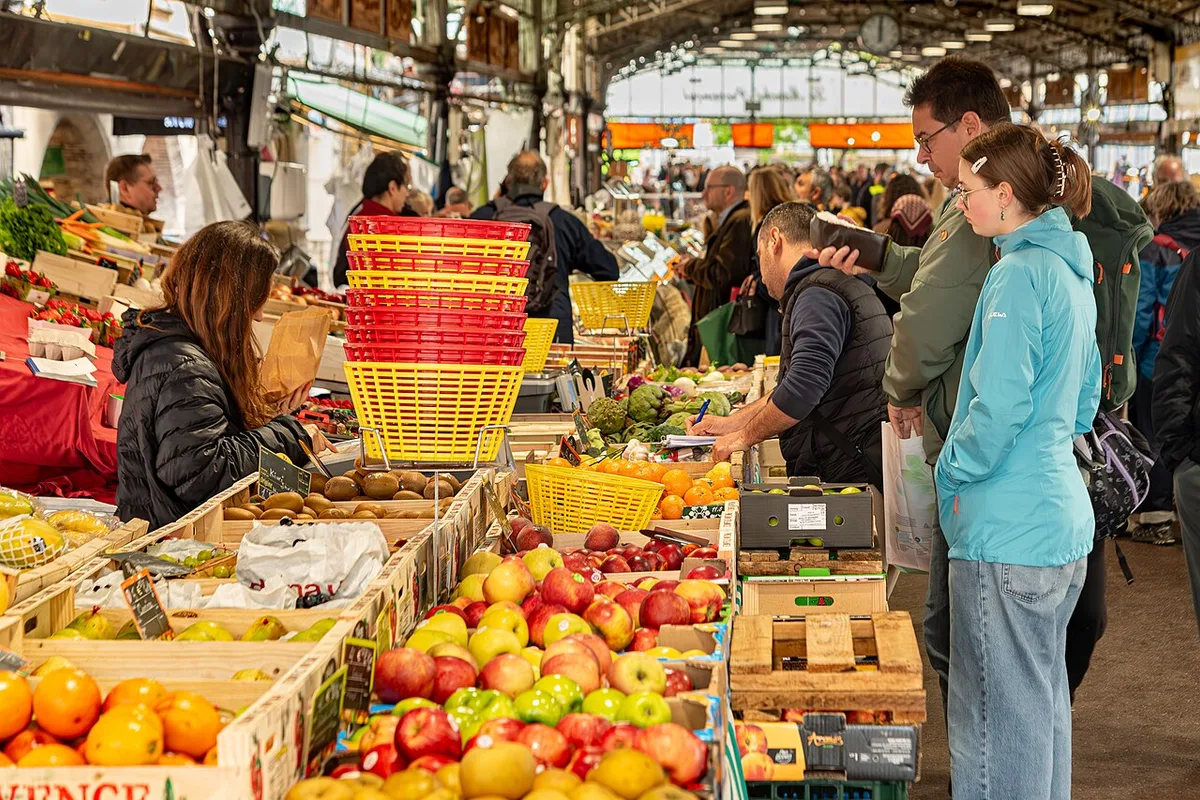
Vieil Antibes is small, and that is the point. The Vauban ramparts hold it tight against the sea, and inside, the lanes are too narrow for anything but walking. The spine is the Cours Masséna, where the Marché Provençal runs every morning but Monday under an iron-and-glass hall from 1900 — olives in barrels, the day's catch, a salt-anchovy stall that three generations have not changed. Come before ten, buy nothing or everything, and when the stalls fold around one o'clock, do what the Antibois do: lean on a wine counter where the produce just was.
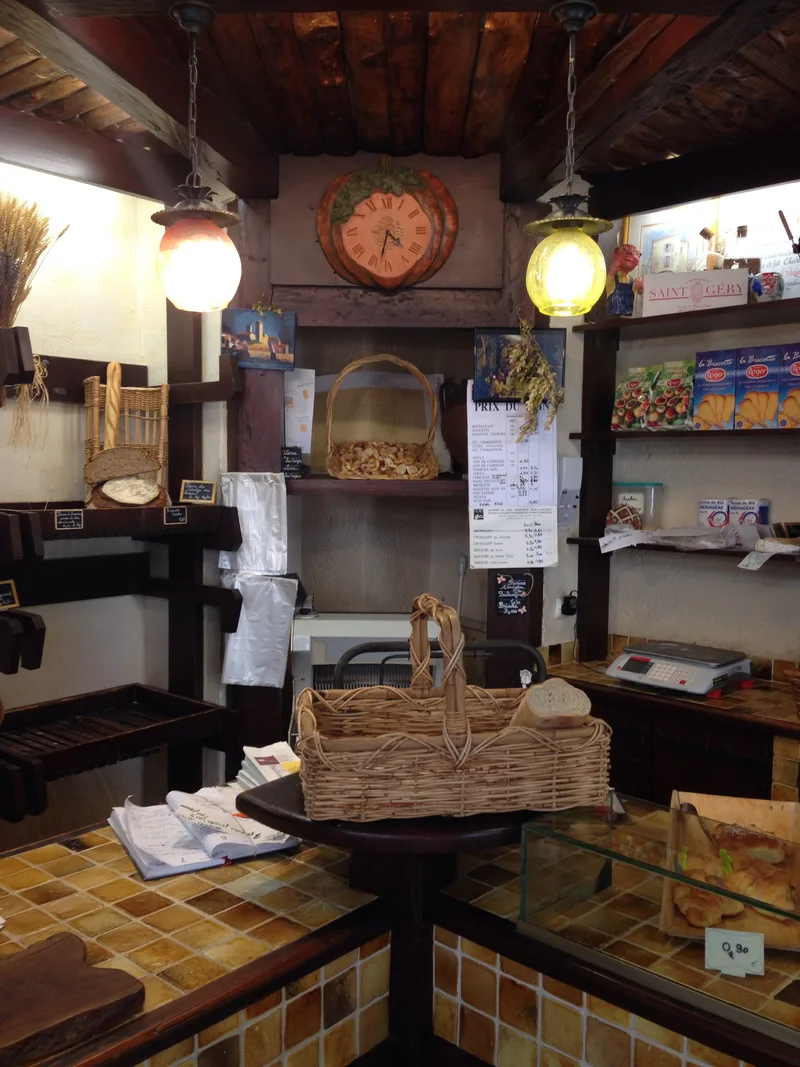
The streets reward aimlessness. Rue James Close is the prettiest of them — cobbles under bougainvillaea — and along it sit the shops that have nothing to do with the marina: Maison James Close, a concept store of homeware, lighting and local makers; Le Vélo de Léon across the lane, a paper-and-craft shop of Caran d'Ache pencils and hand-bound notebooks, the kind of place Antibois grew up in and visitors rarely find. For bread, there is only one answer. Boulangerie Véziano has fired its oven in the same room since 1830, six generations on the same levain; the fougasse is the reason you came, and the queue from eleven tells you so.
The water, and the Cap
What sets Antibes apart from its neighbours is the sea itself. The Cap d'Antibes is a green headland of pines and walled villas, and the water around it is the clearest on this stretch of coast — cold, deep, the kind you swim in rather than pose beside. Walk the Sentier du Littoral, the coastal footpath that traces the rocks; it is free, it is spectacular, and almost nobody on a yacht ever sees it.
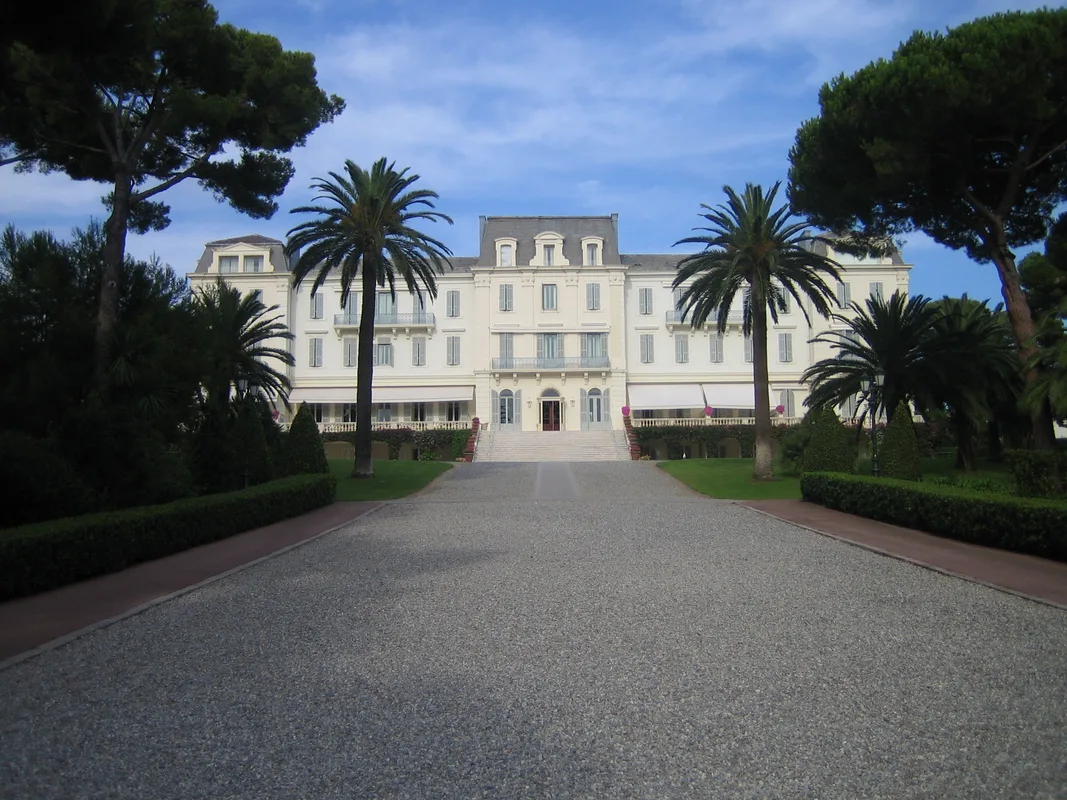
Two tables hold the Cap. Maison de Bacon has served bouillabaisse on the rocks since 1948 — white jackets, one serious menu, the best version of a dish you thought you knew, with the Baie des Anges for a view. And at the southern tip, the Eden-Roc Bar at the Hôtel du Cap: a clifftop terrace looking north to the Alps, a martini mixed the same way for ninety years, and a calm that explains the prices. You needn't stay there. You should dress for it. Do it once; you will remember it.
Picasso worked here
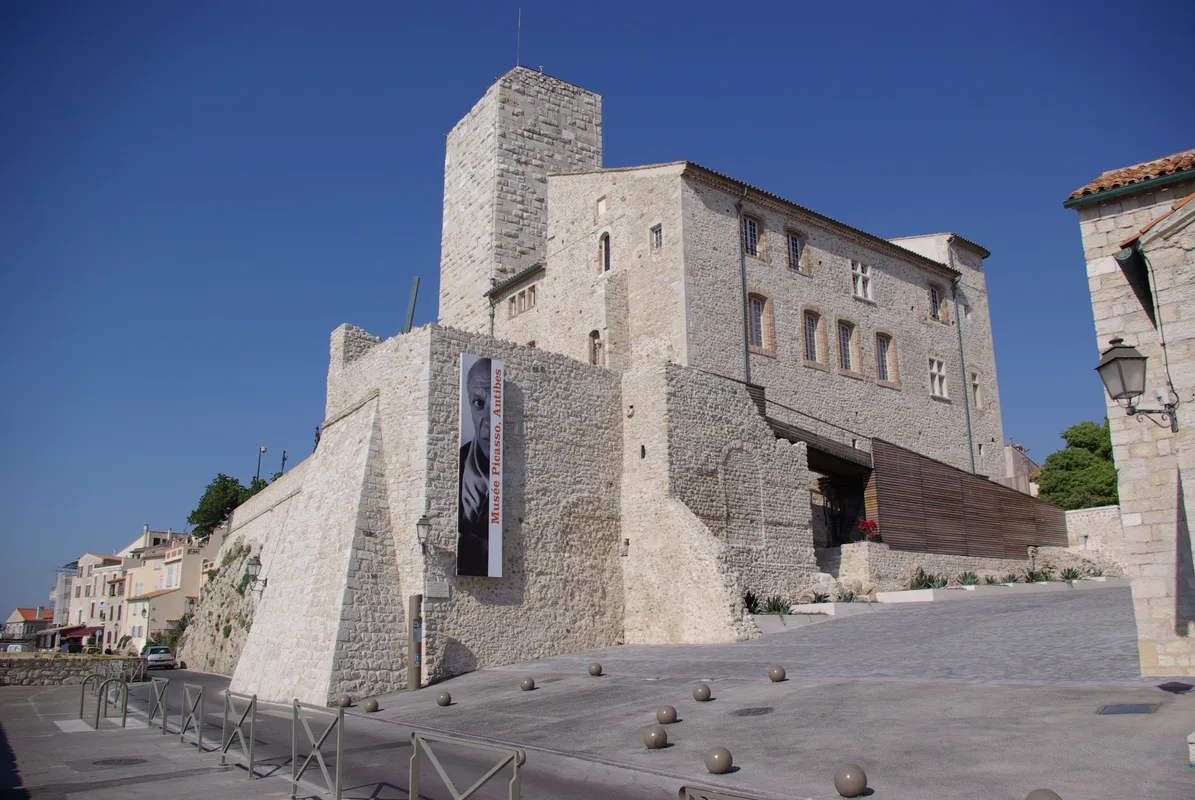
In the autumn of 1946, Picasso was given the top floor of the Château Grimaldi on the ramparts and stayed two months. He left the work behind, and the castle became the Musée Picasso — goats, fauns, fishermen, an art that feels lighter than what he was painting in Paris, with the Mediterranean filling every window. The ramparts outside are as much of the visit as the rooms within. He was not the first painter to find the light here, and Antibes wears that lineage quietly: a town that has been looked at hard, by people who knew how to look.
After dark, and the apéro
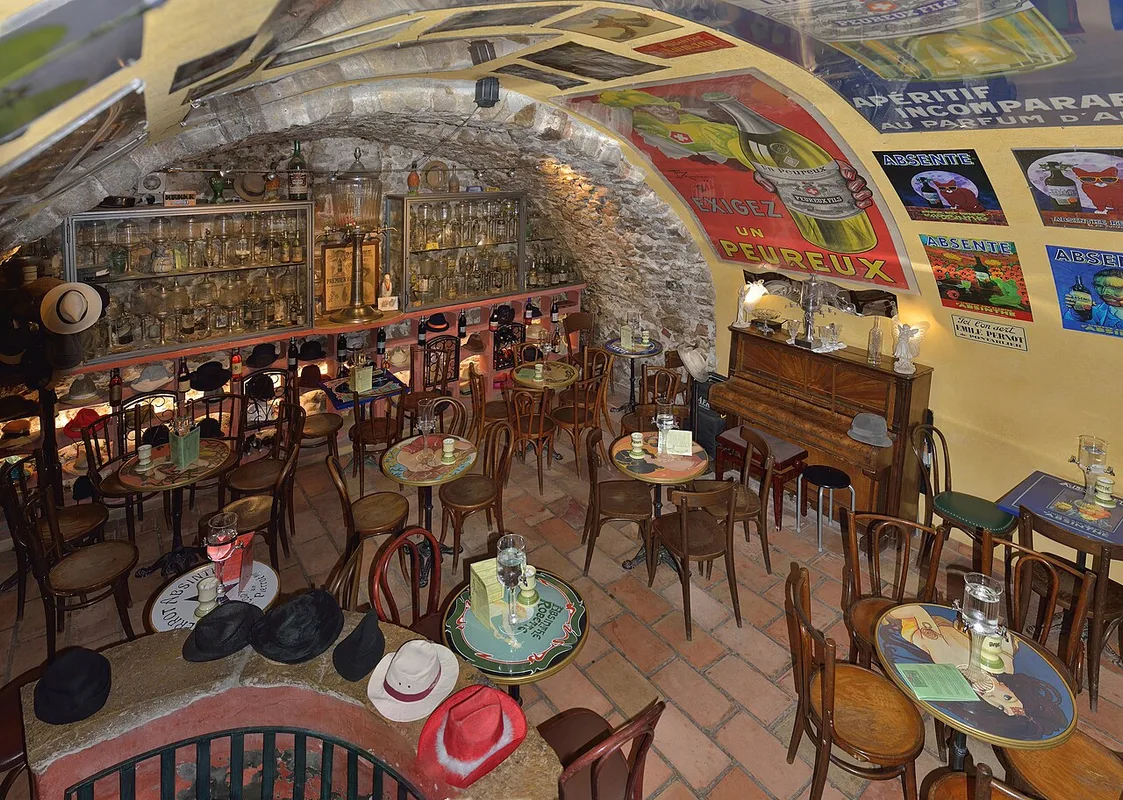
Antibes does not roar; it pours. The evening belongs to wine bars and a long, unhurried table. Under the market hall, the Absinthe Bar at Balade en Provence is a vaulted 1860 cellar with a pewter counter, candlelight, fifty absinthes by the glass and a piano on Fridays and Saturdays — the most theatrical room in the old town. For natural wine and a knowing list, Jeanne on Rue Sade and Les Vins de la Lune on Rue de Fersen are where the town actually drinks; La Cave des Épicuriens and Pablo, on the port axis, carry it later. Among the dinner tables, Le Vauban and La Closerie sit at the old-town edge, and Choopy's runs the morning-into-brunch shift the locals keep. For coffee done properly there is Good Mate and Nomads; for gelato, Amarena and the Gelateria del Porto.
Juan-les-Pins, the other half
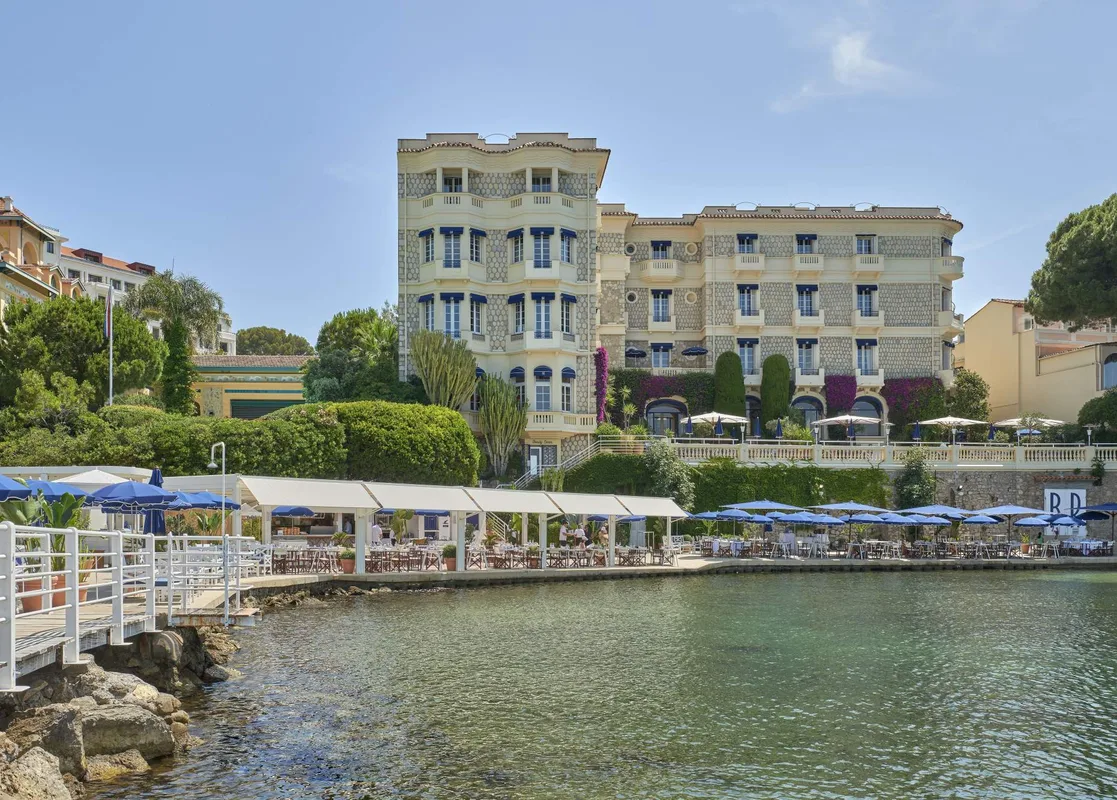
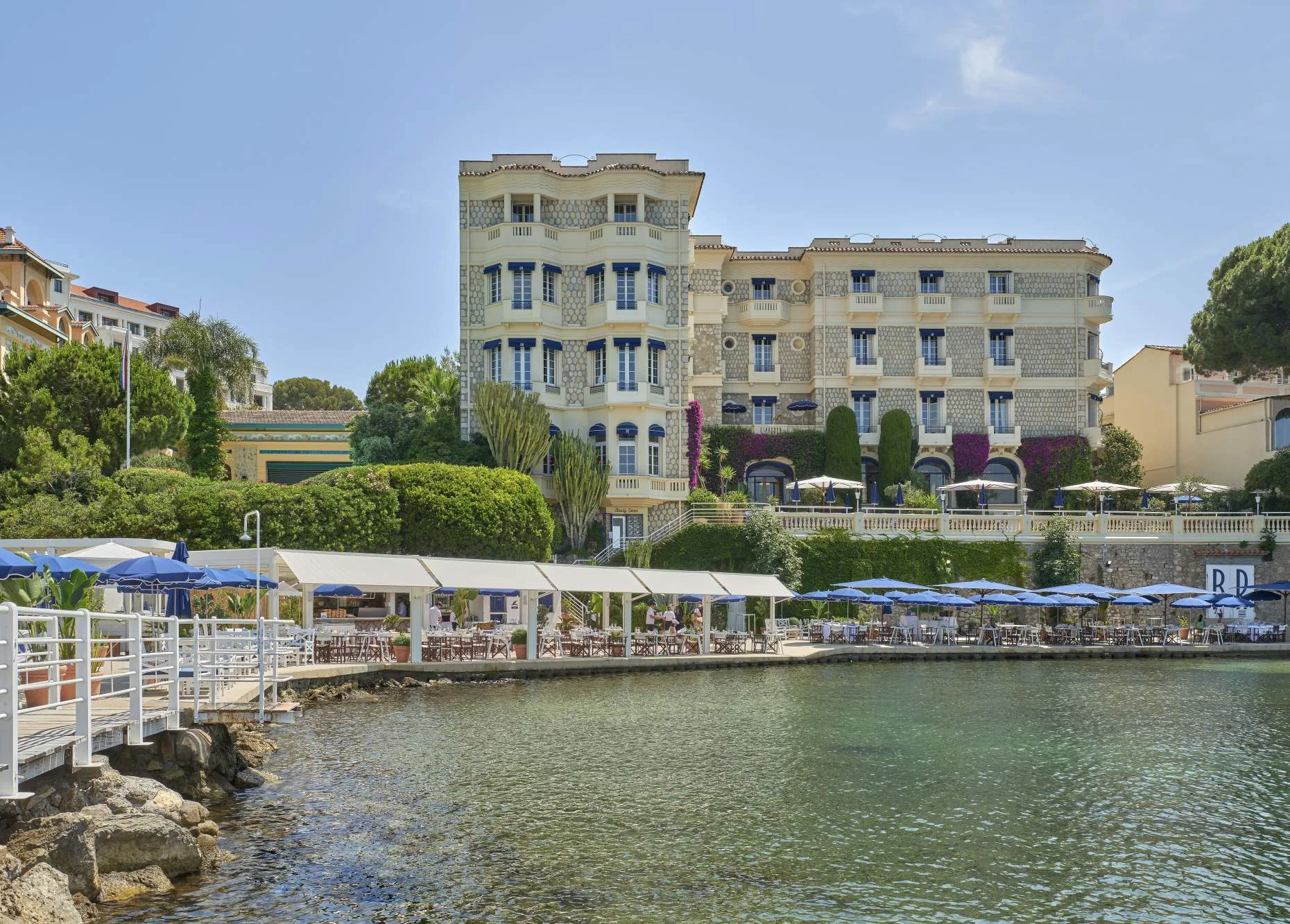
Antibes has a second face, and it is jazz. Across the cape, Juan-les-Pins is the 1920s resort that the Lost Generation made famous — pines down to the sand, a festival every July, and the Hôtel Belles Rives, which was F. Scott and Zelda Fitzgerald's villa in 1925 before it became the Art Deco hotel it still is. Marble baths, sea-blue glass, the original cocktail bar with its bronze portholes, and lunch on the wooden pontoon with the Mediterranean at the foot of the lawn. It is the Riviera exactly as the Roaring Twenties wrote it, and it is ten minutes from the medieval ramparts. That gap — between the fishing-town stone and the jazz-age glamour — is the whole of Antibes.
What to know
- Getting around — the train from Nice or Cannes drops you a short walk from the old town; skip the car inside the walls, which are pedestrian by design. Park outside and walk in.
- The market — daily except Monday, mornings; the stalls give way to the wine counters by early afternoon.
- Reservations — Bacon and Eden-Roc go days ahead in summer; the old-town wine bars are a morning call, or a walk-in out of season.
- The dress code — elegant-relaxed in town, a notch up for the Cap. Linen over labels, as ever.
Antibes rewards the traveller who stays the night — who lets the day-trippers leave on the last train and finds the town turn quiet, stone-warm, and entirely its own.