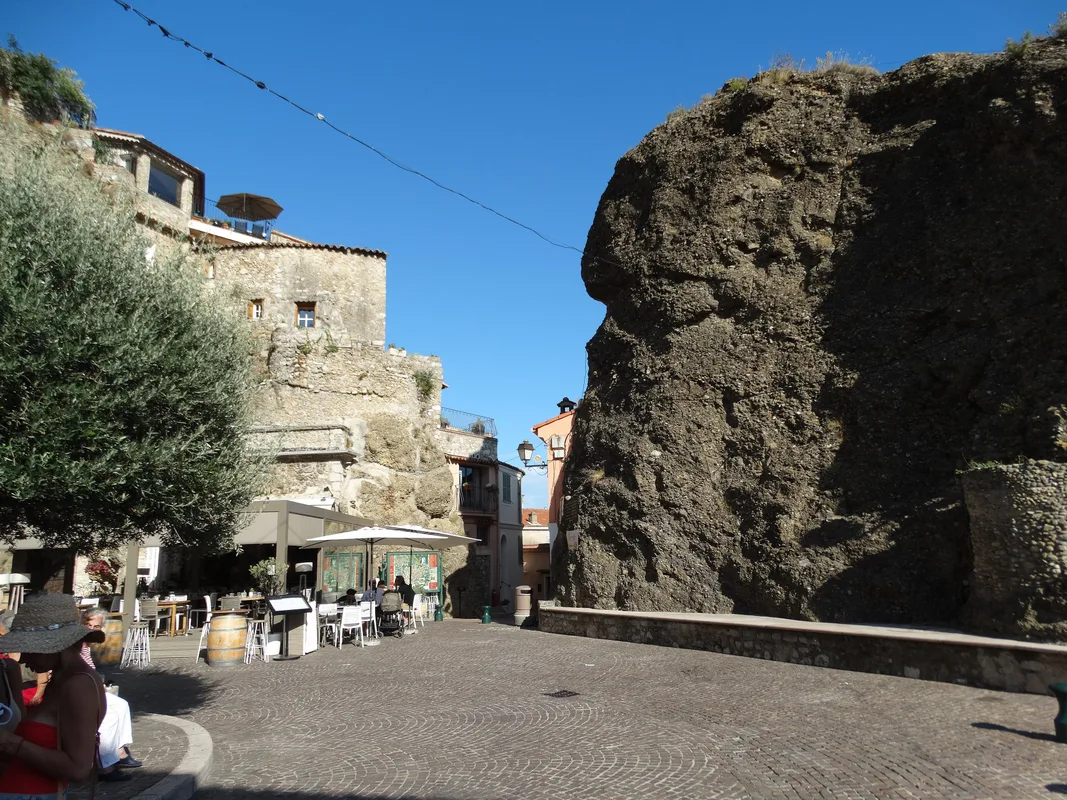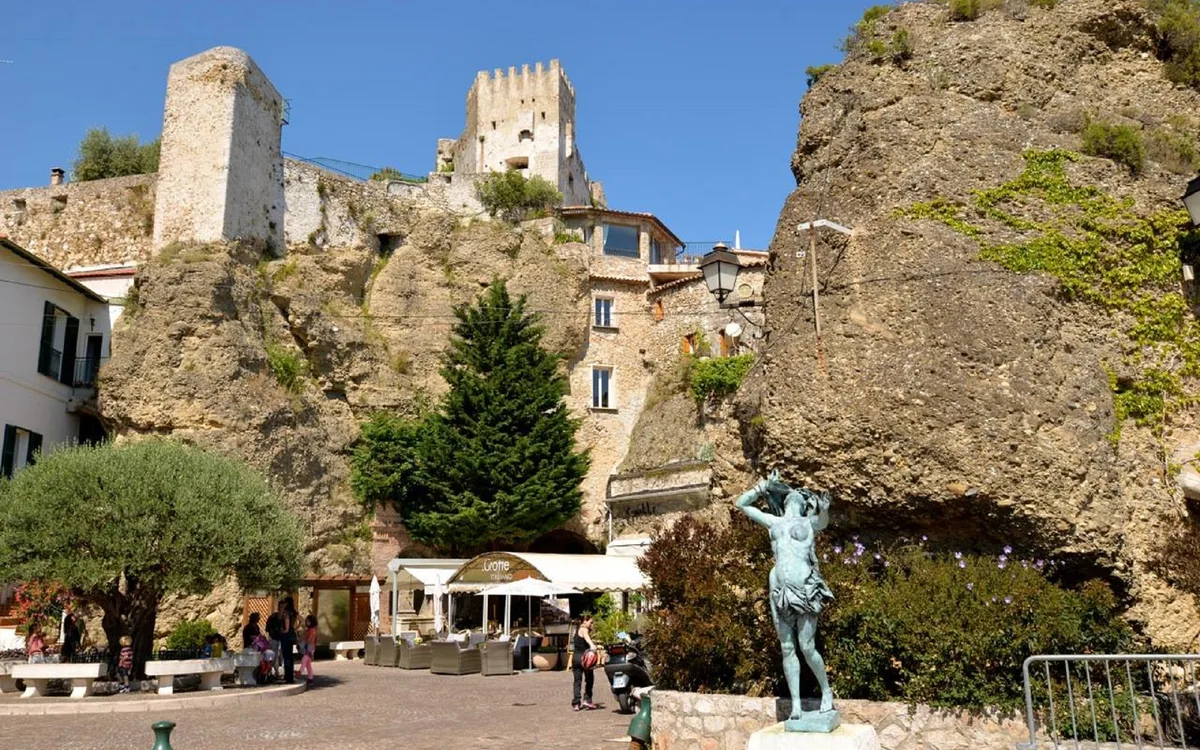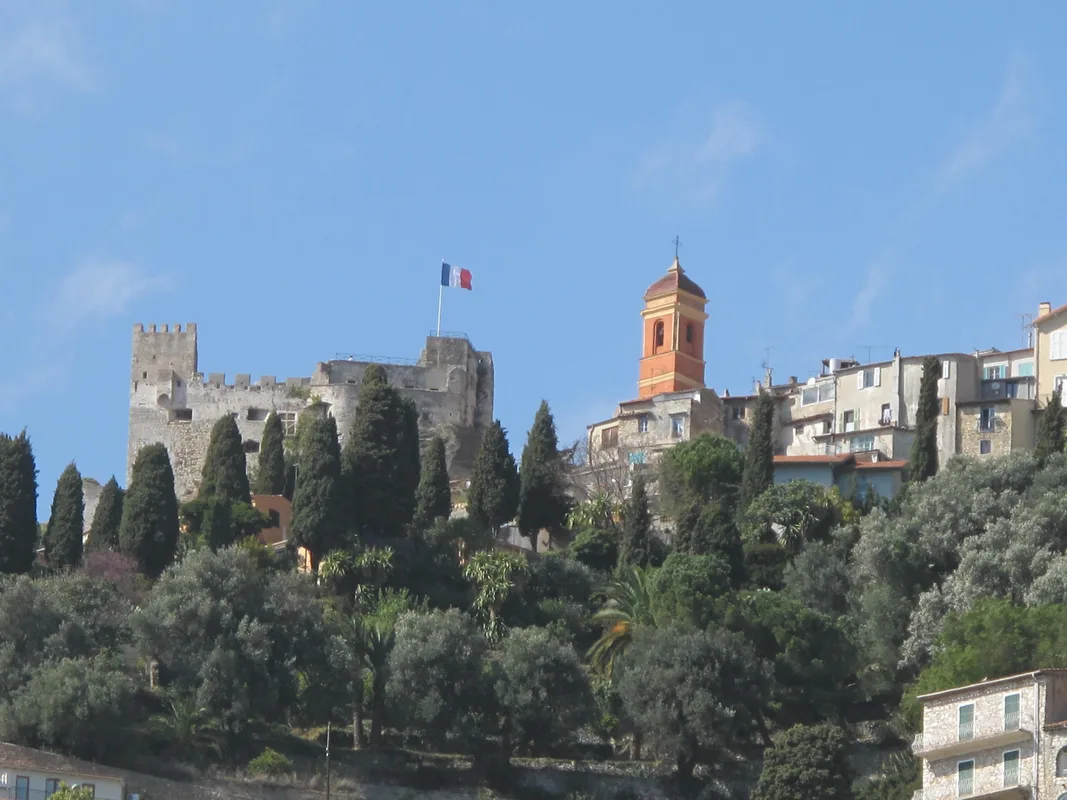
Most people meet Roquebrune-Cap-Martin at sixty kilometres an hour, from the Moyenne Corniche, as the bend where Monaco suddenly appears in the windscreen. That is the postcard, and it is not wrong. But the commune is two places stacked on top of each other, and the view is the least interesting thing about either. Above, there is a tenth-century village built around one of the oldest castle keeps in France, a knot of vaulted streets that smell of stone and rosemary. Below, there is a wooded cape — Cap-Martin — where the pines come right down to the rock and a footpath traces the waterline all the way to the Monaco border. Between them sits the last stretch of French coast before Italy. People come for the panorama. They stay because the place keeps its own hours.
The two Roquebrunes
You will spend your time in one of two registers, and the trick is not to mix them up. The medieval village is the upper one: car-free, vertical, reached by a short climb from Avenue Raymond Poincaré. Streets here are stairs as often as not, and the Rue du Château threads past the keep toward a balcony that frames the Principality below like a model railway. The coastal side — Carnolès and Cap-Martin — is the flat one, all promenade, parasol pines, and the kind of bourgeois villas that the Riviera built when discretion was still the point. Carnolès has the train station and the everyday shops; Cap-Martin has the coves. The village is for lunch and dusk. The cape is for the morning and the water. Decide which day you are having before you park.
The walk that explains the place
If you do one thing here, walk the Sentier du Littoral — the coastal footpath that loops the cape and runs on toward Monaco. It is also signed as the Promenade Le Corbusier, and that is not branding. The architect kept a cabin here, a one-room wooden Cabanon the size of a generous bathroom, and he drowned in the sea just below it in 1965. The path passes the spot. It also passes Eileen Gray's villa E-1027, the Modernist house that is the real pilgrimage for anyone who cares about twentieth-century design; visits run by reservation in season and sell out, so plan if it matters to you. None of this is strenuous — an hour and a half at a stroll, shaded by Aleppo pines, the water turning that particular ink-and-glass blue against the white rock. Go early. By noon in July the good benches are taken and the light goes flat.
A day, the SOF way
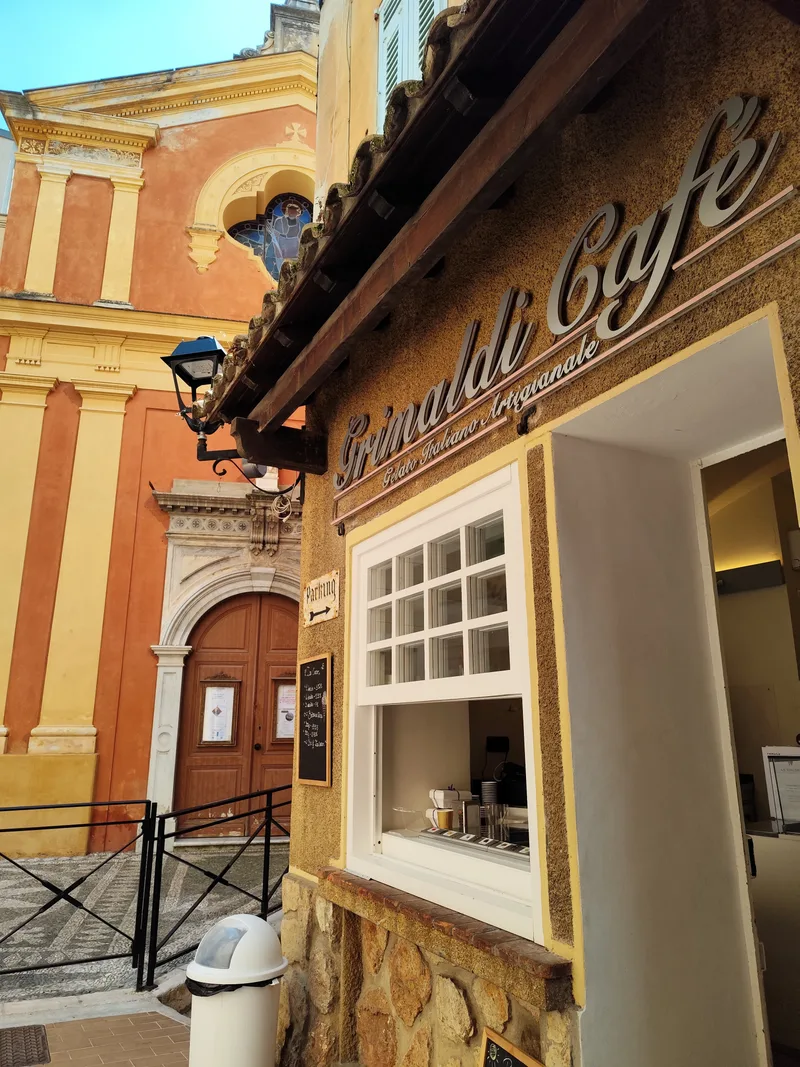
Start on the coast, while it is cool. From the cape, climb to the village mid-morning and take the first coffee at Grimaldi Café, a pocket-sized terrace café-glacier on the Rue du Château axis with a balcony hung directly over Monaco — the cleanest single view of the Principality you will get from a coffee cup. Ten o'clock, an espresso, and the harbour is small enough to read every yacht. Then let the village do its slow thing. The one shop worth the detour is Céramique Rabatti, a hand-thrown ceramics workshop on the Rue du Château where pieces are fired on site and, if you come late afternoon Tuesday to Saturday, the boutique opens onto the workshop and you can watch the maker at the wheel. It is the rare honest village-artisan find — the right kind of souvenir, animals and santons and bowls, nothing airport about it.
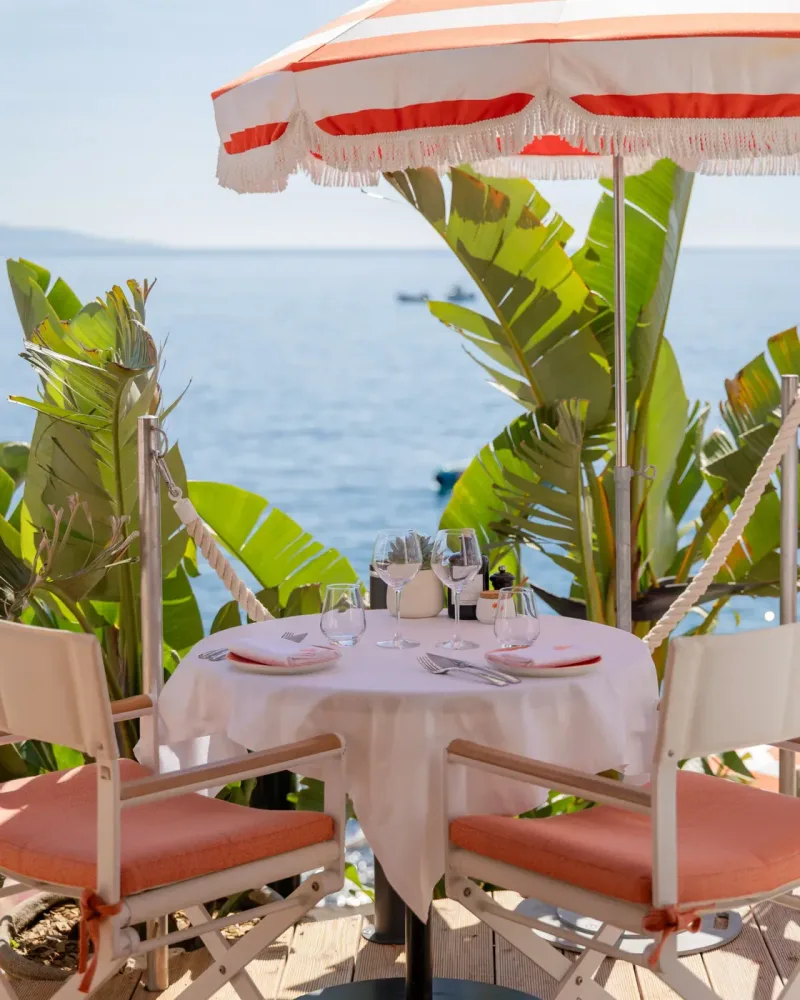
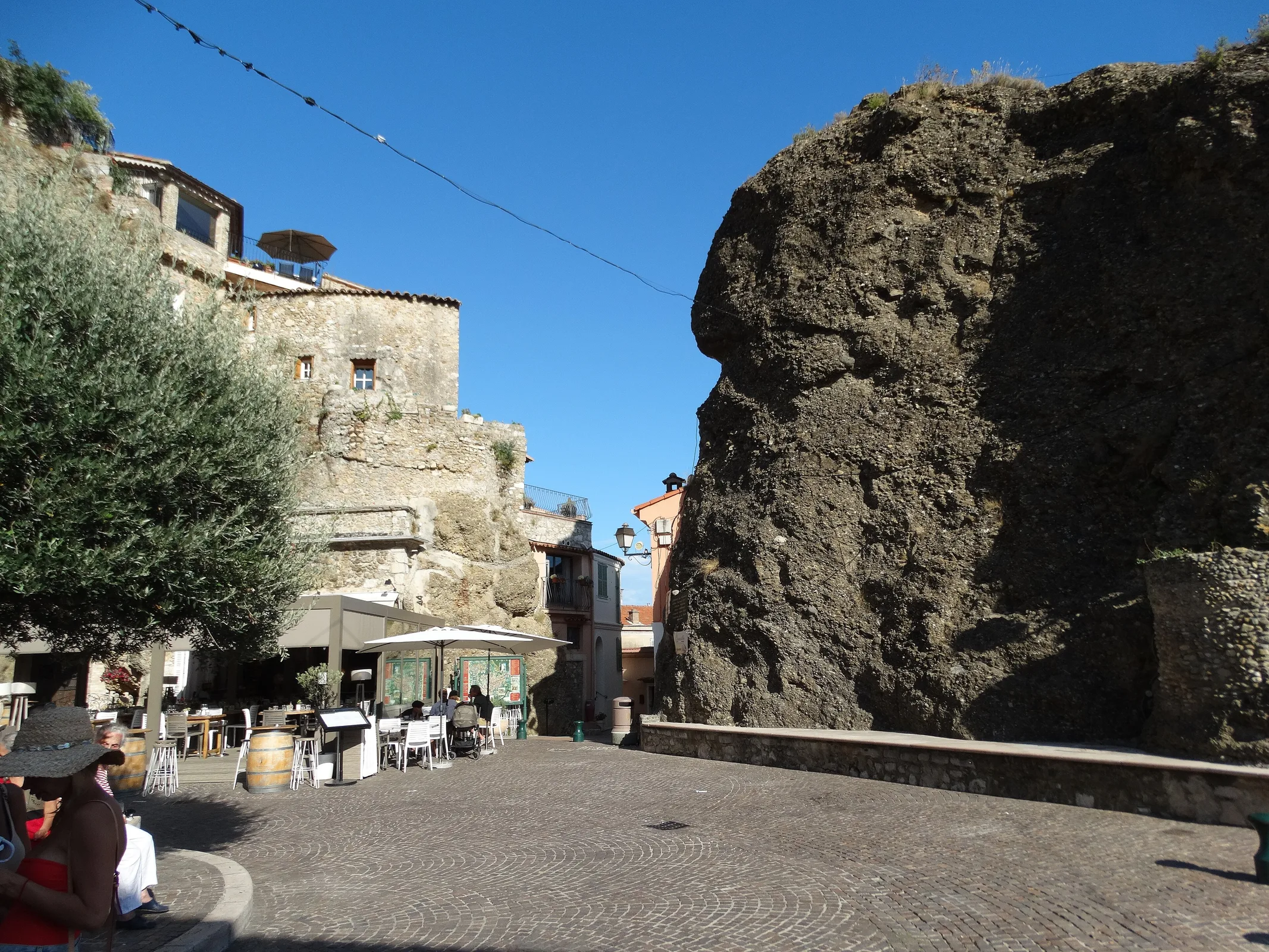
Lunch is the village's main event, and it happens on Place des Deux Frères, the terrace square where the rock falls away toward the sea. Hôtel-Restaurant Les Deux Frères is the anchor: refined French-Mediterranean cooking on a terrace that looks straight out over Monaco and the water below. Book a table for one o'clock and the sun arcs across the Principality for the length of the service. It is smart-casual by day and keeps jackets for dinner; reserve a week ahead in season, and note it closes Wednesdays. Sharing the square is La Grotte et L'Olivier, the more relaxed neighbour — same view, lower key, the kind of place you fall into when Les Deux Frères is full.
In the afternoon, drop back to the coast for gelato. Gla'ss Gelateria, on the Carnolès side near the promenade, is an Italian-trained counter that runs local collaborations — ask for the fougasse mentonnaise scoop, orange-flower water and Menton lemon, the Riviera's citrus terroir folded into a cone. It is the seaside counterpart to Grimaldi: one view per scoop, the other per espresso.
After dark, and the question of where to stay
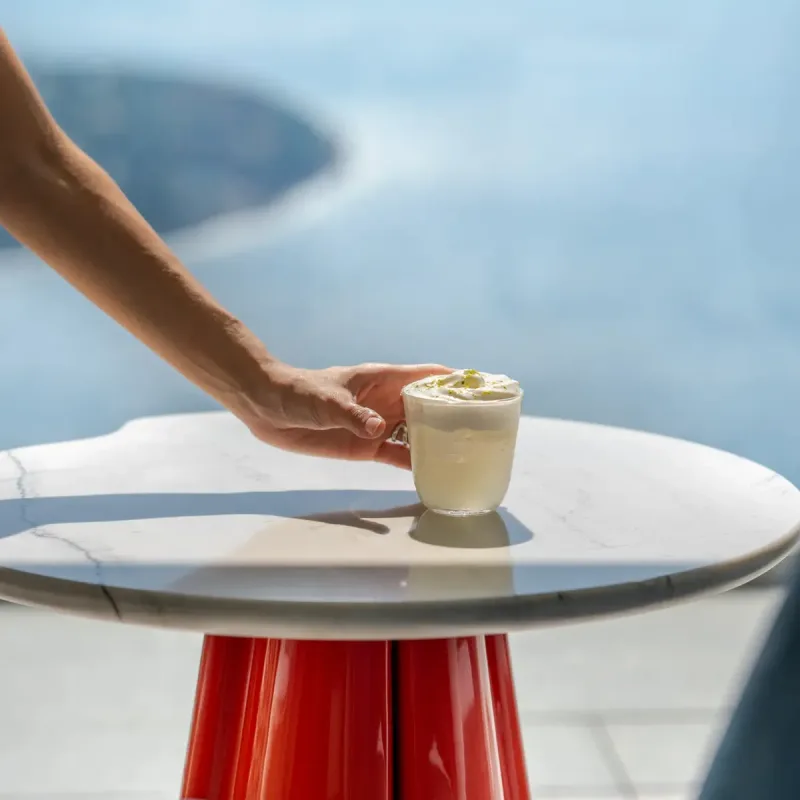
Roquebrune's evenings are quiet by design, and that is its luxury. For the apéritif, there is exactly one address that turns the geography into theatre: the Sunset Lounge at The Maybourne Riviera, the hotel that hangs off the Grande Corniche above the village. The terrace is cut into the cliff edge, Monaco sits directly below the railing, and a seven-thirty negroni as the coastline lights up is the most vertical drink on the coast. It is walk-in for the bar, valet for the car, and resort-smart for the dress. The Maybourne is also the answer to where to stay if the budget is open — it is the commune's serious hotel, and in season (roughly June to October) its private cove at Cap-Martin becomes La Môme Riviera, the beach club run by the Cannes group: crudo, gamberoni linguine, bouillabaisse at dinner, a shaded cove that holds its cool into the afternoon. Lower down, at the village entrance on Avenue Raymond Poincaré, Le Rooftop by La Roquebrunoise offers a more grounded perch for a drink with a view — useful when you want the panorama without the Corniche drive.
Roquebrune asks for very little. Walk the cape, climb the village, take lunch slowly above Monaco, and let the last evening light do the rest before Italy.