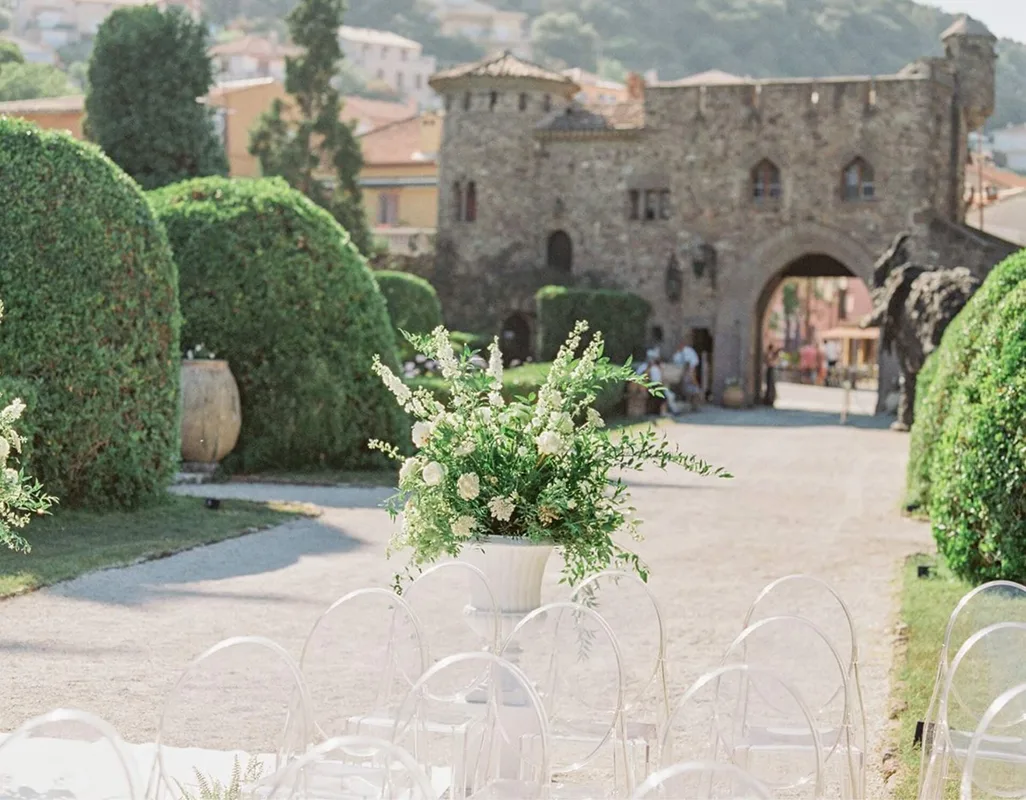
Most people meet Mandelieu-la-Napoule from the autoroute, as the last green breath before Cannes, and file it under "the place with the golf and the marina." That is a town that exists, and it is pleasant. The other Mandelieu is the one you see from the water at the end of the day: a stone castle standing in the sea, gargoyles on its towers, and behind it the Estérel going the colour of rust as the sun drops. An American sculptor built that view in the 1920s, and the rest of the town has been quietly living up to it ever since.
Here is how SOF reads it.
The castle is the whole point
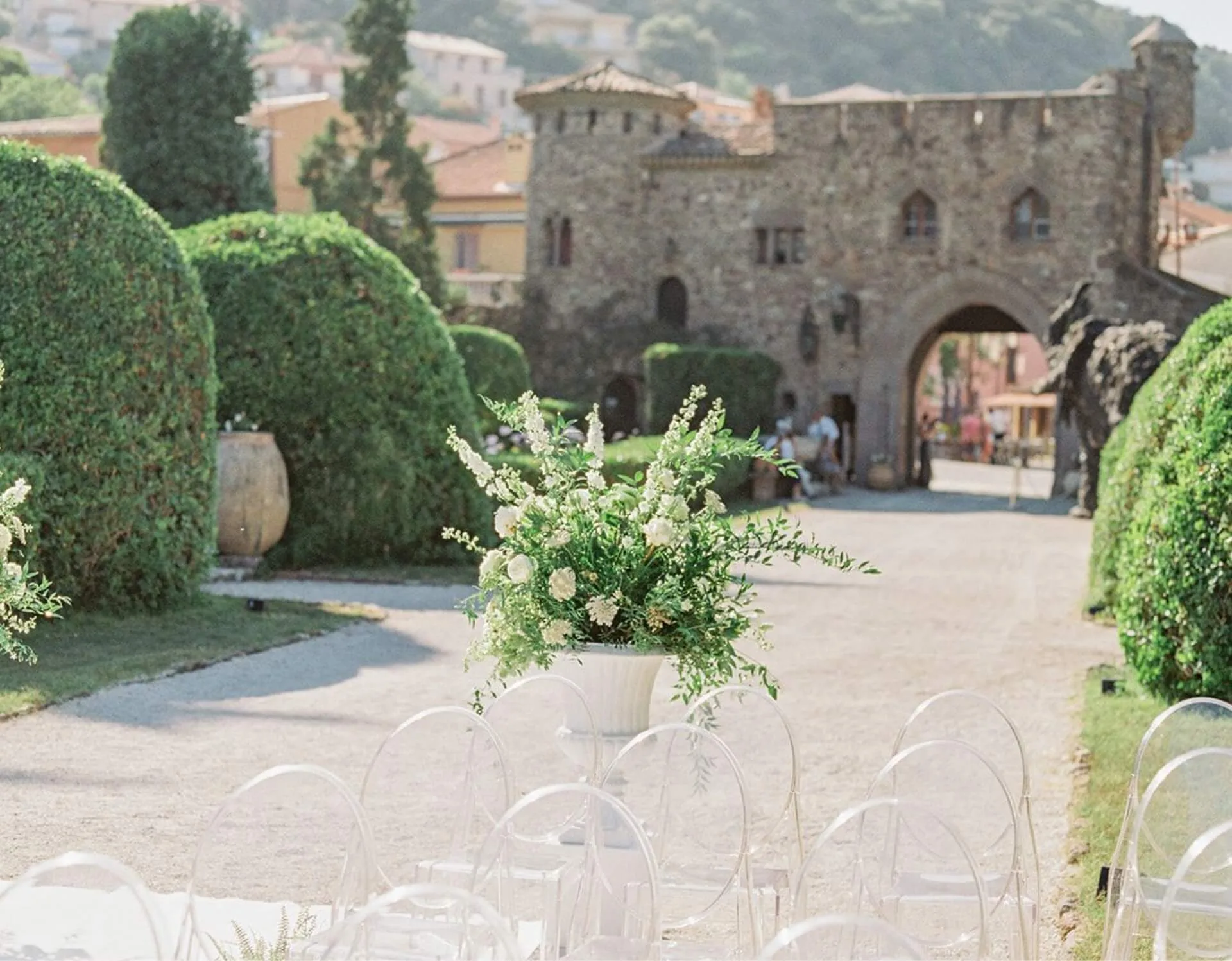
Start with the Château de La Napoule. Henry Clews — a New York banker's son who decided he would rather carve — bought a medieval ruin on the shore in 1918 and rebuilt it into a private fantasy, every doorway and capital cut with his own beasts, dwarfs and mottoes. His wife Marie laid out the gardens and, after his death, turned the place into the foundation that still runs it. The gargoyles are not solemn; they were carved to mock the society the Clews had fled, and they are still mocking it.
Go for the 11:30 guided tour of the interior — it is the only way past the gardens and into the rooms, and the guides are good on the Clews legend without sanding off its strangeness. The castle keeps April-to-September hours for the full programme; tickets are sold at the box office on the day, so arrive with a little slack rather than a printout. Give it an hour for the towers and the sea-walled garden, then walk out the way every photograph is taken: from the little bay on the Cannes side, castle in the foreground, Estérel behind.
The water and the red rock
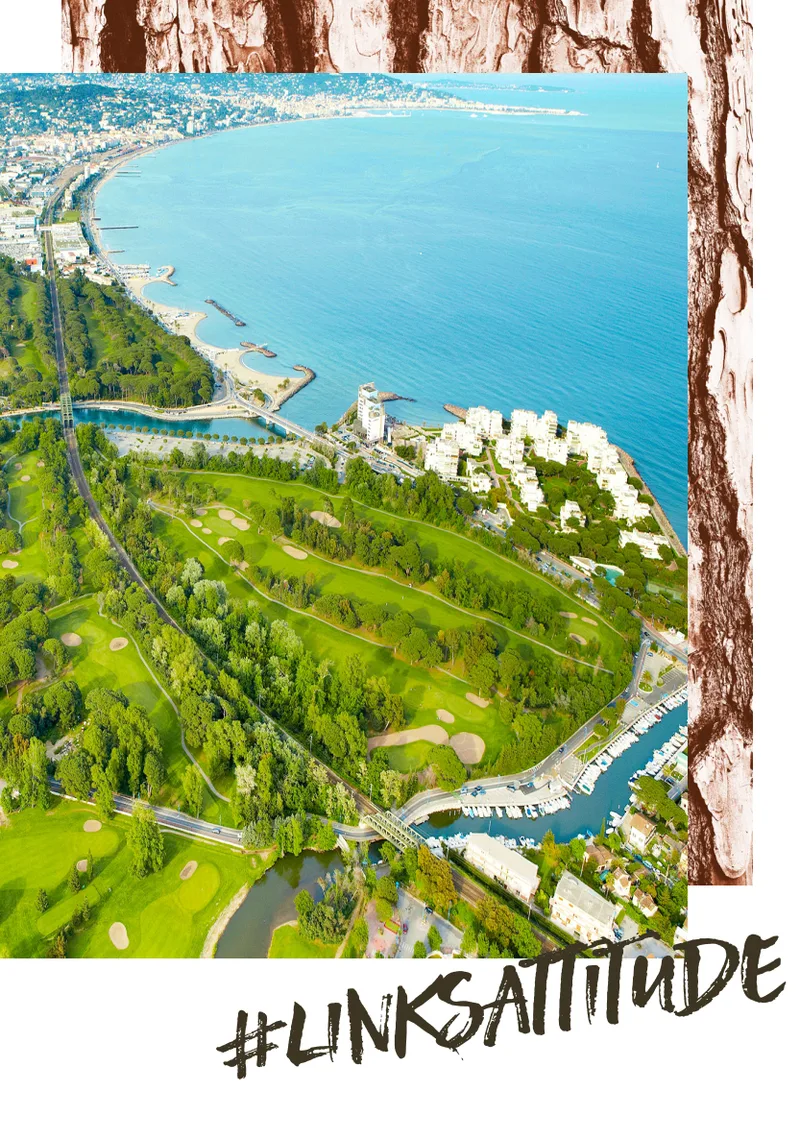
Mandelieu is two coastlines meeting. East is the soft, marina'd Riviera — Port La Napoule, the yacht masts, the flat blue bay shared with Cannes. West, almost immediately, the land turns volcanic: the Estérel, a massif of red porphyry that falls straight into the sea along the Corniche d'Or, the cliff road toward Théoule and Saint-Raphaël. It is one of the great Riviera drives, and it begins ten minutes from the port.
The water here is for using, not only admiring. The bay below the castle is a swimming beach; the marina is a working harbour with the chandlers and the coffee that implies. And inland, on the Route du Golf, sits the quiet headliner: Golf Old Course Mandelieu, laid out in 1891 by Grand Duke Michel of Russia and the oldest course on the Côte d'Azur. Umbrella pines, the Siagne river threading through, par on the card and a century of play in the turf. Even if you do not golf, the clubhouse lunch with the eighteenth green in front of you is a very civilised way to spend a Riviera afternoon.
Where to eat
This is a port town, so eat like one — lunch long, dinner on the water.
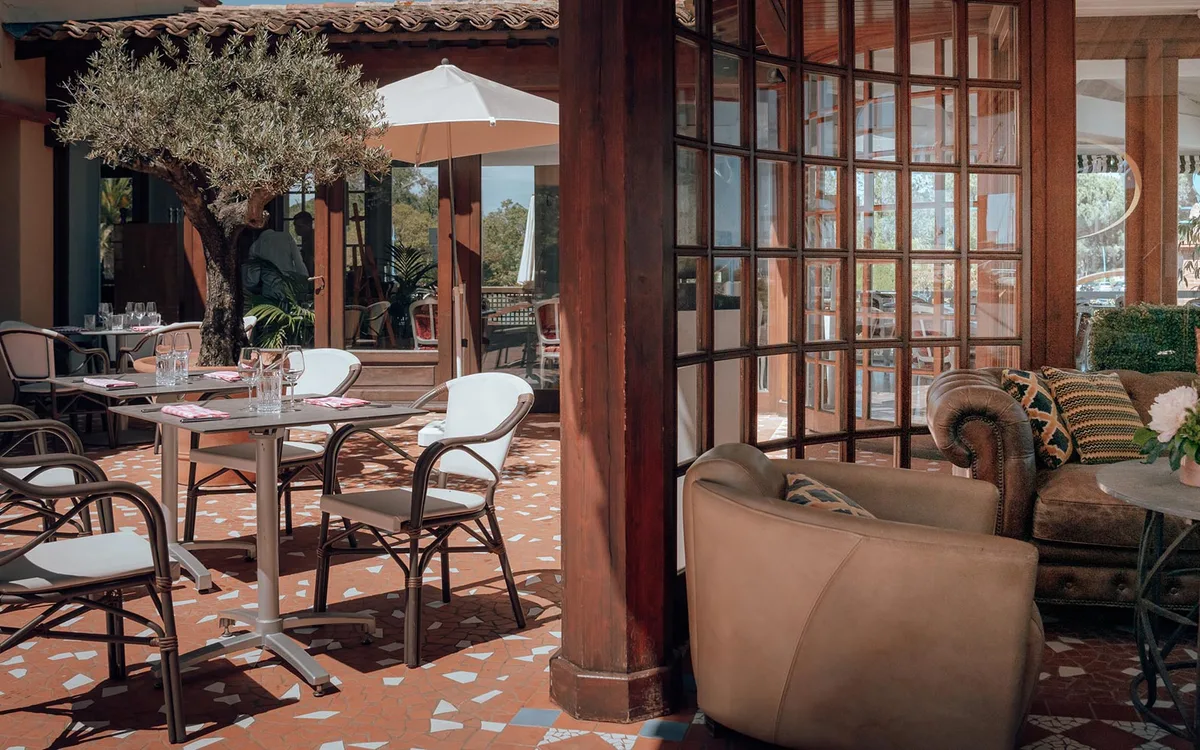
The grande dame is L'Oasis on Rue Jean-Honoré Carle: a Riviera gastronomic address of long standing, a patio of plane trees and Mediterranean cooking with real ambition under chef Alain Montigny. It changed hands and registers a few years back, so come for what it is now — a serious, garden-set kitchen — rather than a memory of what it was. Book it; reservations go by phone and the room is not large.
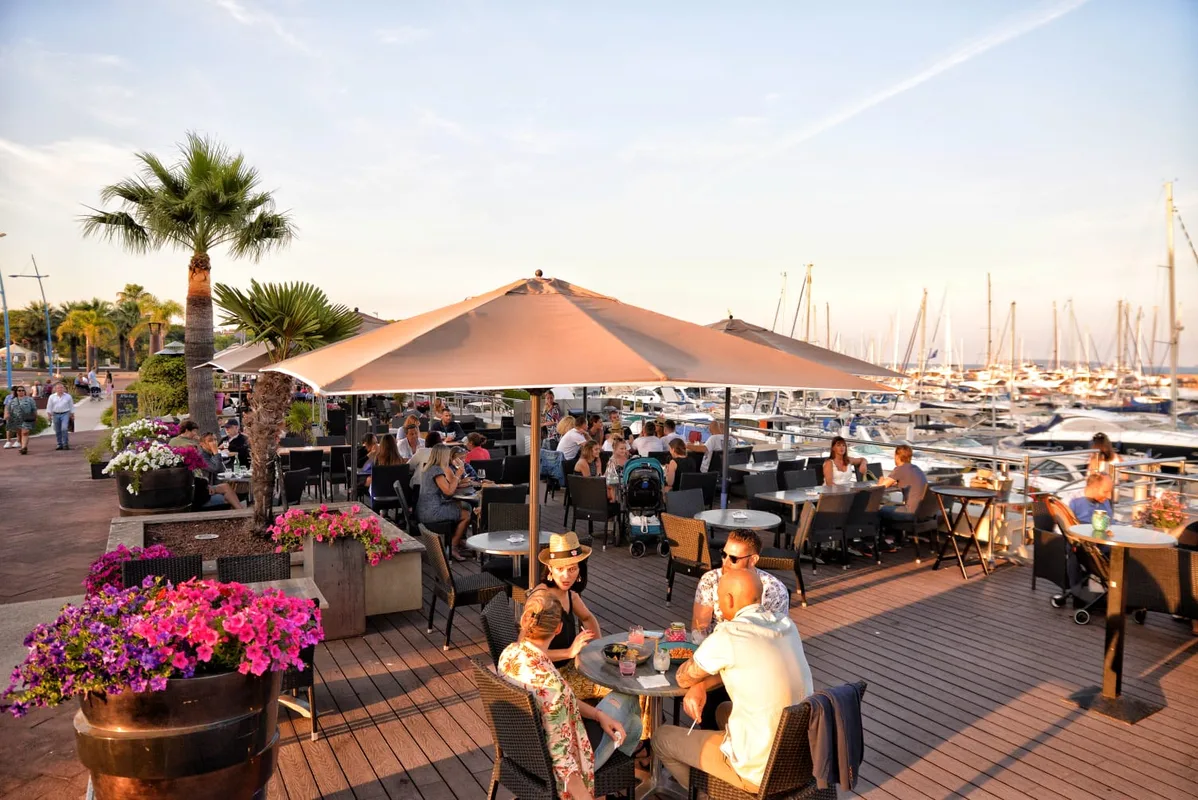
Down at the harbour, the register relaxes. Le Bistrot 21 works the port with a first-floor terrace that catches the masts and the light — the kind of place you settle into for a slow plate and an apéro as the boats come in. A few berths along, Le Voilier does the harbour-front classic: fish, a parasol, the water at your feet. And Pépite, on Avenue Henry Clews facing the castle, is the all-day port brasserie — the morning espresso, the lunch, the early-evening glass, open from nine to midnight. It is the table you use when you do not want to decide.
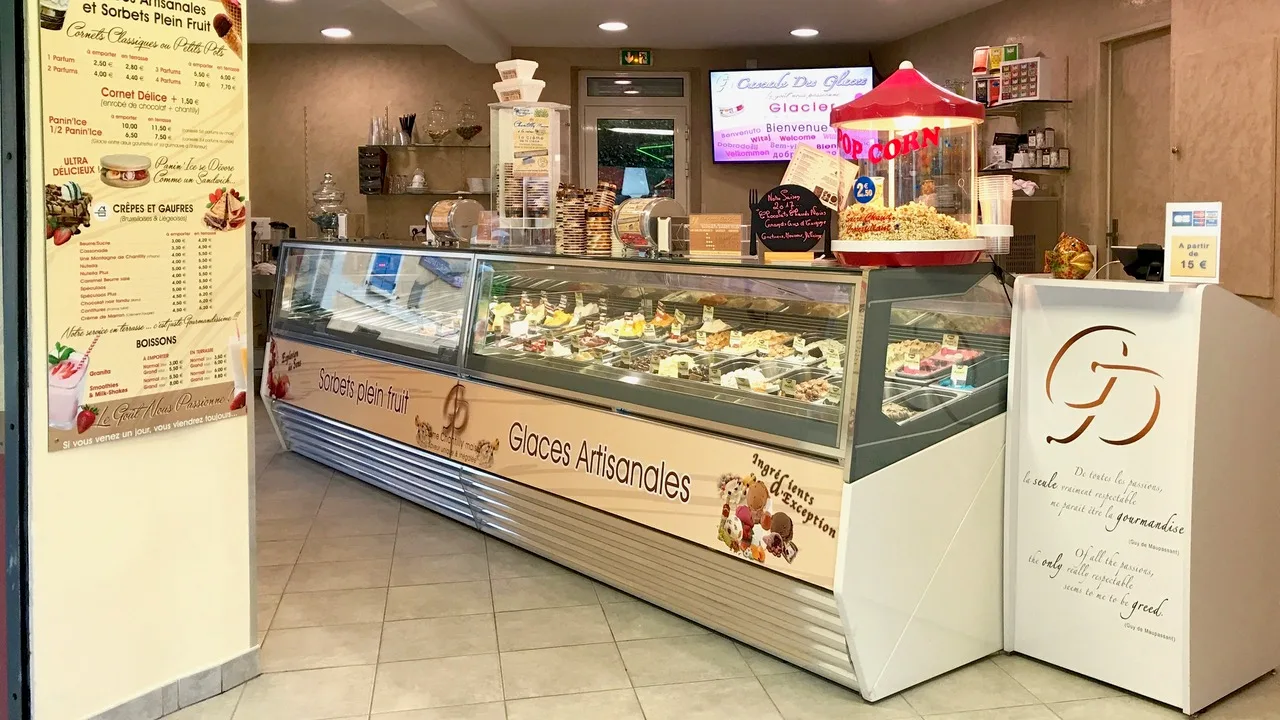
For the in-between hours, the town keeps two small institutions. Maison Fred on Boulevard des Écureuils is the proper boulangerie — sourdough, organic flours, a sandwich counter that solves lunch-on-the-go without a thought. And in the old village, on Place de la Fontaine, Cascade des Glaces is the glacier worth the detour: master ice-cream maker Stéphane Vindret, sixty-odd flavours, full-fruit sorbets and a charcoal-black house signature called the Gaillette. Eat it walking back toward the sea.
Where to stay
The anchor address is the Pullman Cannes Mandelieu Royal Casino at La Napoule — a resort hotel with a private beach, a casino, and the Royal Bay restaurant looking out over the bay. It is the local late axis as much as the local bed: dinner, a flutter, a nightcap, all under one roof, with Cannes a short drive east when you want the Croisette's volume. For a stay here, that proximity is the quiet luxury — you keep the marina's calm and borrow Cannes's energy only when you choose to.
What to know
- Getting around — you want a car. The Corniche d'Or, the golf, the back-country Estérel trails all reward it. The A8 and the Cannes train are both close.
- One town, two faces — La Napoule (castle, port, Pullman) is the seafront; Mandelieu proper sits a little inland and uphill. Decide which you came for.
- For nightlife and shopping — Mandelieu is calm by design. The Croisette, Rue d'Antibes and the late clubs are ten minutes east in Cannes.
- When to go — May–June and September are the window: warm sea, the castle on full hours, none of the August queue.
Come for a castle that should not exist, and stay for the red rock that does.