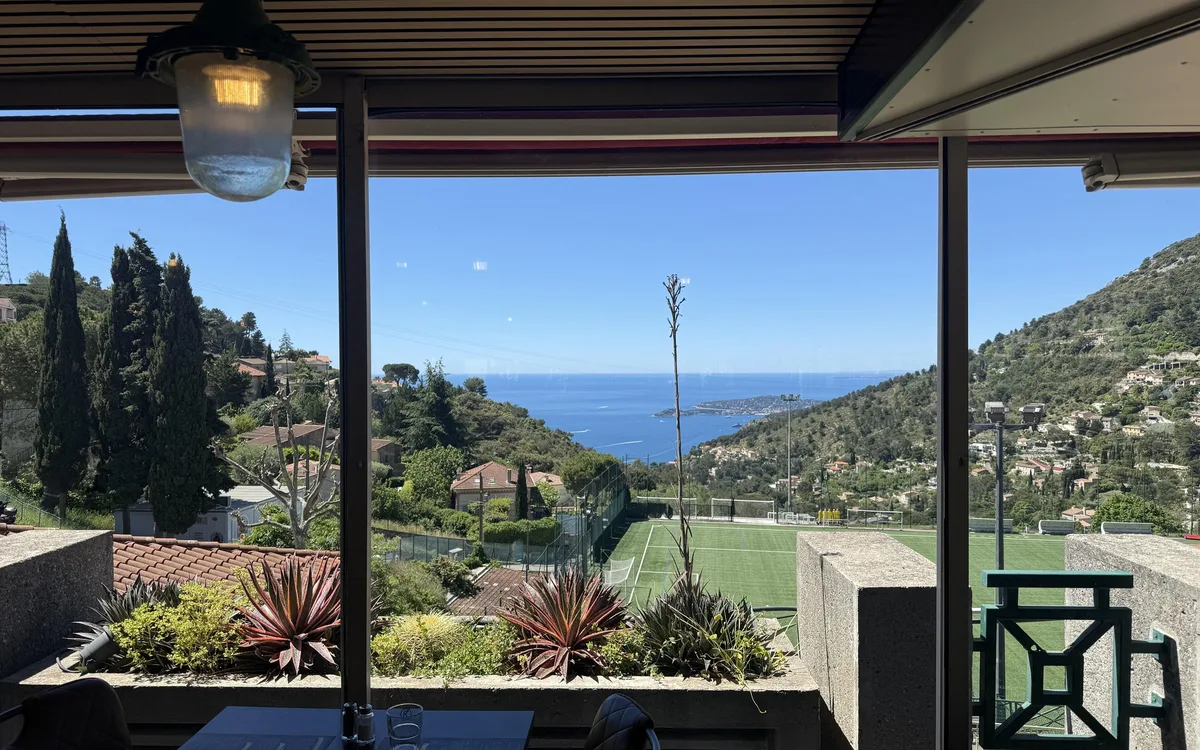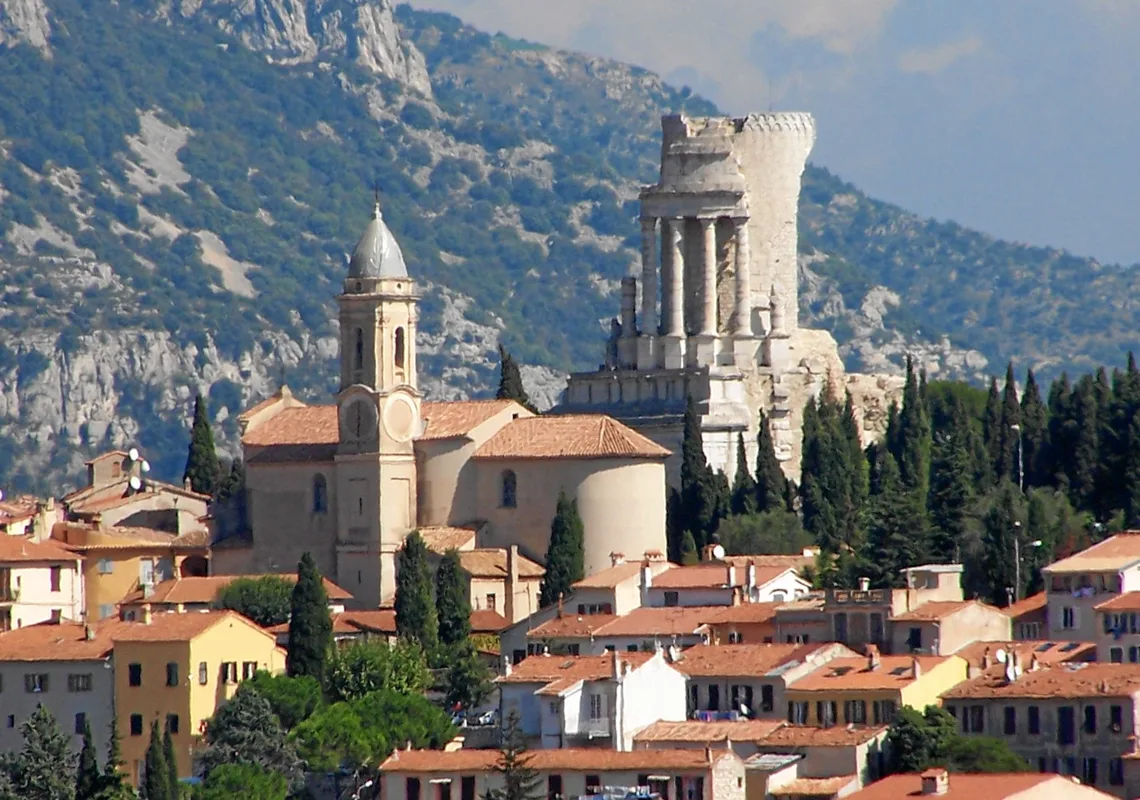
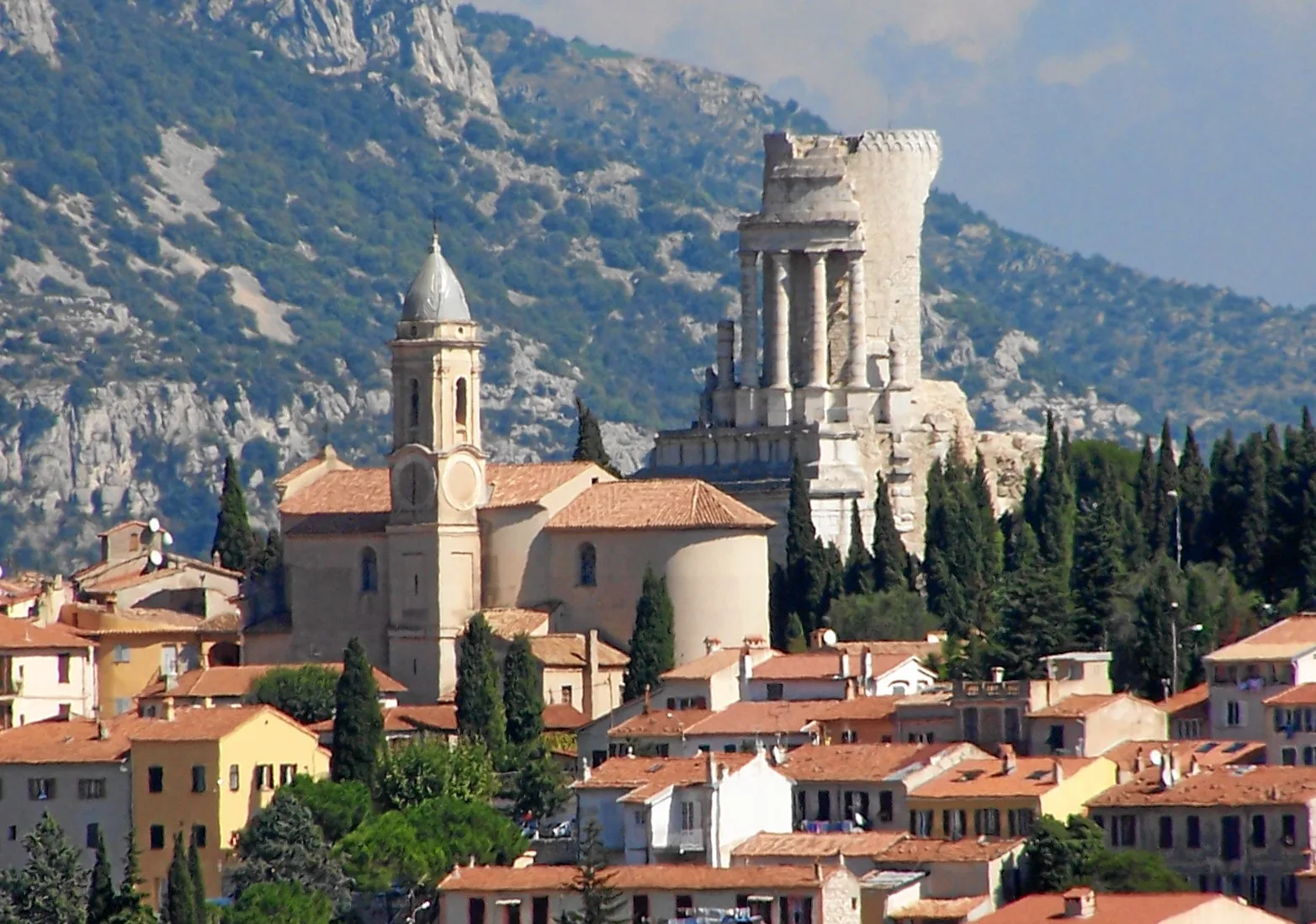
Monaco is four hundred metres below, and you can see all of it — the marina, the towers, the helicopters stitching the air above Fontvieille. La Turbie is the village that watches. It sits on the Grande Corniche where the Romans cut the Via Julia Augusta, and for most of its history its job was to look down on the coast and report what it saw. It still does. The principality is a city of glass and noise; La Turbie, fifteen minutes and four hundred metres above it, is a city of stone and silence, and the gap between the two is the whole point. People come up for the monument and the view. They stay because the village runs at a tempo Monaco lost a century ago.
The monument is the reason, but not the only one
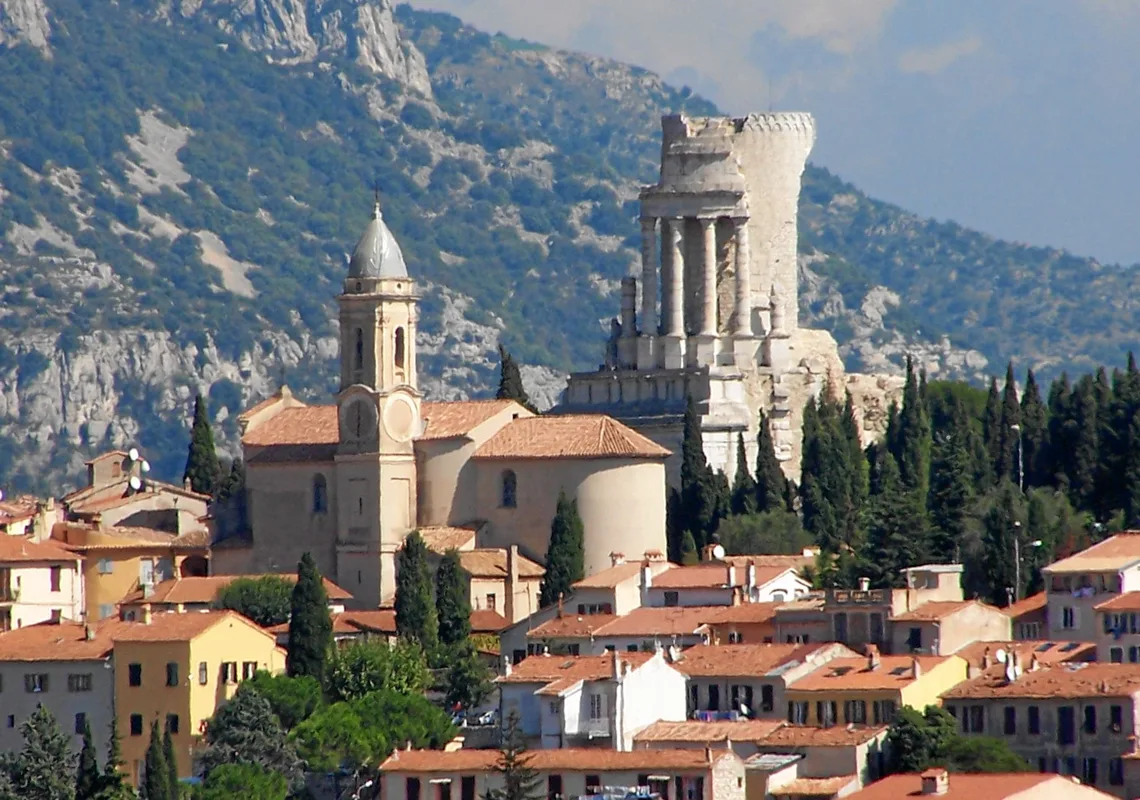
The Trophée d'Auguste — the Tropaeum Alpium — is why La Turbie is on the map at all. Augustus raised it around 6 BC to mark the subjugation of the Alpine tribes: a victory monument in white limestone, fifty metres above the village rooftops, listing the conquered peoples by name. It was quarried for stone in the Middle Ages, half-demolished, then half-restored in the last century, which is why it reads as both ruin and reconstruction at once. The terrace below it holds the cleanest single view of Monaco there is — not from a hotel rooftop, not through a fence, but from a Roman ruin, which reframes the whole coast as a footnote to an older story.
Come at six. The limestone catches the last light and turns the colour of old ivory, and the village empties of the afternoon buses. The site closes at 17:00 in winter and 18:30 in summer, so the golden-hour window is a summer privilege — plan around it. Park in the free village lot two minutes' walk away; wear shoes you can trust on uneven stone. On your way out, the Boutique du Trophée d'Auguste — the Centre des Monuments Nationaux's on-site shop on Avenue Albert 1er — is the only credible souvenir post in the village. Skip the magnets. Buy the Éditions du Patrimoine monograph on the Trophée; the print run is small and rarely reprinted between exhibitions. The boutique closes fifteen minutes before the monument, so do it before you walk back down, not after.
A day, the SOF way
Start with bread. Ma Première Boulangerie on Avenue de la Victoire is the village's serious bakery — opened in 2019 by Pierre Briand, a Compagnon du Devoir, who fires his breads in wood on organic flours. A pain au levain at nine-thirty, eaten on the bench outside while it catches the first sun, is the correct way to begin. It is also, pragmatically, the bakery you buy a baguette from to carry up to the Trophée. The village has no second option, and it doesn't need one.
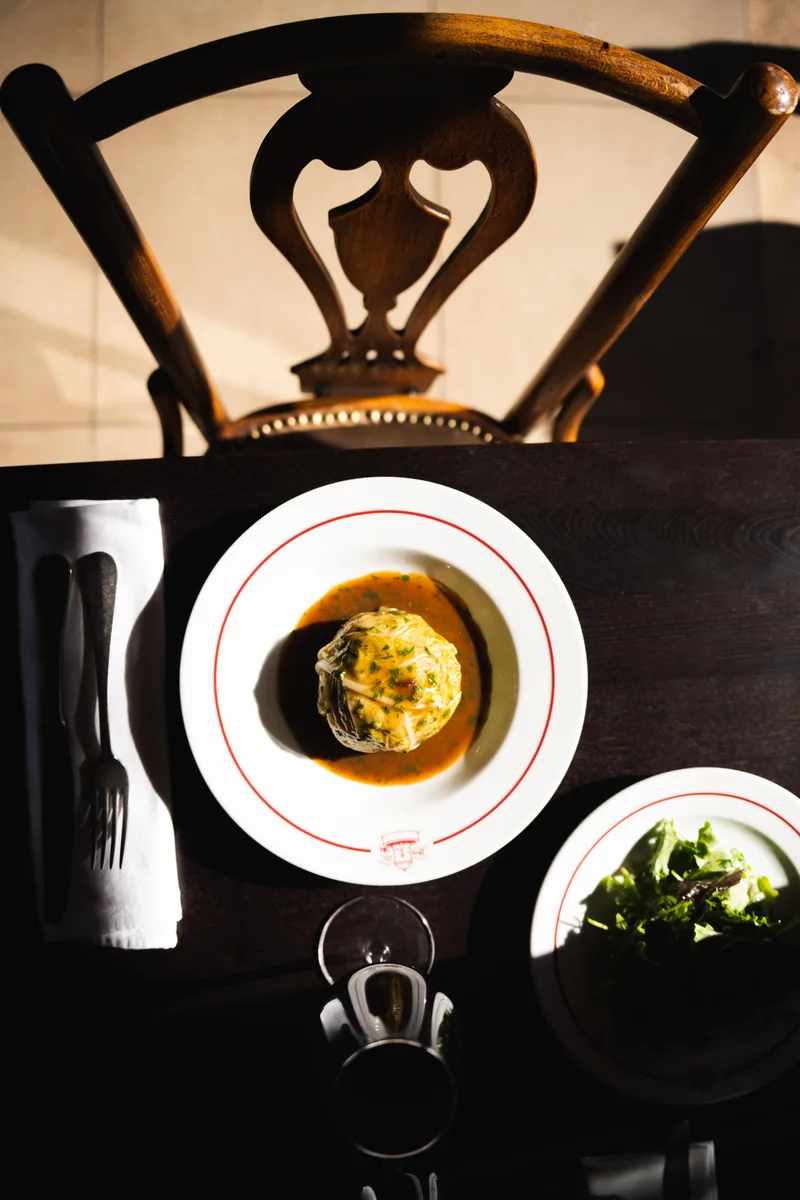
Mid-morning belongs to the old village: the lanes behind the church, the Romanesque arch, the way the houses lean into the rock. By noon you'll want Café de la Fontaine on Avenue du Général de Gaulle. Know the recent history before you go, because the internet hasn't caught up: this was Bruno Cirino's casual room for years, but he sold it in summer 2024, and it reopened on 27 September that year under chefs Michaël Abihssira and Sasha Dorfmann. The register is market-driven bistro; the cellar reportedly runs deep into Burgundy. It still sits on the Michelin Guide, no star. A weekday lunch is the move while the new kitchen settles its hand — the autumn-2024 menus are still finding their final shape, and that's the interesting moment to taste a place, not the cautious one.
The afternoon is the monument. The evening returns to the square.
After the light goes
La Turbie's social life happens on one square, and it has two names — Place Neuve to some, Place Théodore de Banville to the maps. Brasserie Pampérigouste is its anchor: a terrace facing the bay that pours coffee through the day, pivots to pizzas and charcuterie planches at lunch, and becomes the apéro post when the sun drops. The eighteen-hundred-hours terrace, as the Monaco lights start to come on four hundred metres below, is the single best free seat in the village. The view is the point; order accordingly, and stay.
A few doors along, La Cave Turbiasque on Place Théodore de Banville is the wine-bar alternative — a cave-à-vins with a short Mediterranean menu that doubles as light dinner. It's the second lunch register behind the Fontaine and a calmer apéro than the brasserie's terrace. Note the days: closed Mondays in July and August, Wednesdays from September through June. A Tuesday lunch is the insider's slot — the kitchen is unhurried and the cave gives more attention to what's open by the glass.
What to know
La Turbie is a commune of roughly 3,200 people, not a resort, and it behaves like one. Two restaurants, one wine bar, one bakery, one café-brasserie — that's the village, and the brevity is a feature. Nothing here is open late by Riviera standards; nothing is built for crowds. Drive up rather than relying on buses, which thin out by evening exactly when the village is at its best. The same Grande Corniche that brought you carries on toward Èze and Nice, so La Turbie folds naturally into a corniche day — but it rewards the people who treat it as a destination rather than a viewpoint, who park, walk the lanes, eat on the square, and let the principality's noise stay where it belongs, far below and slightly beneath them.
Monaco performs. La Turbie watches. After a day up here, you understand which one is harder to leave.