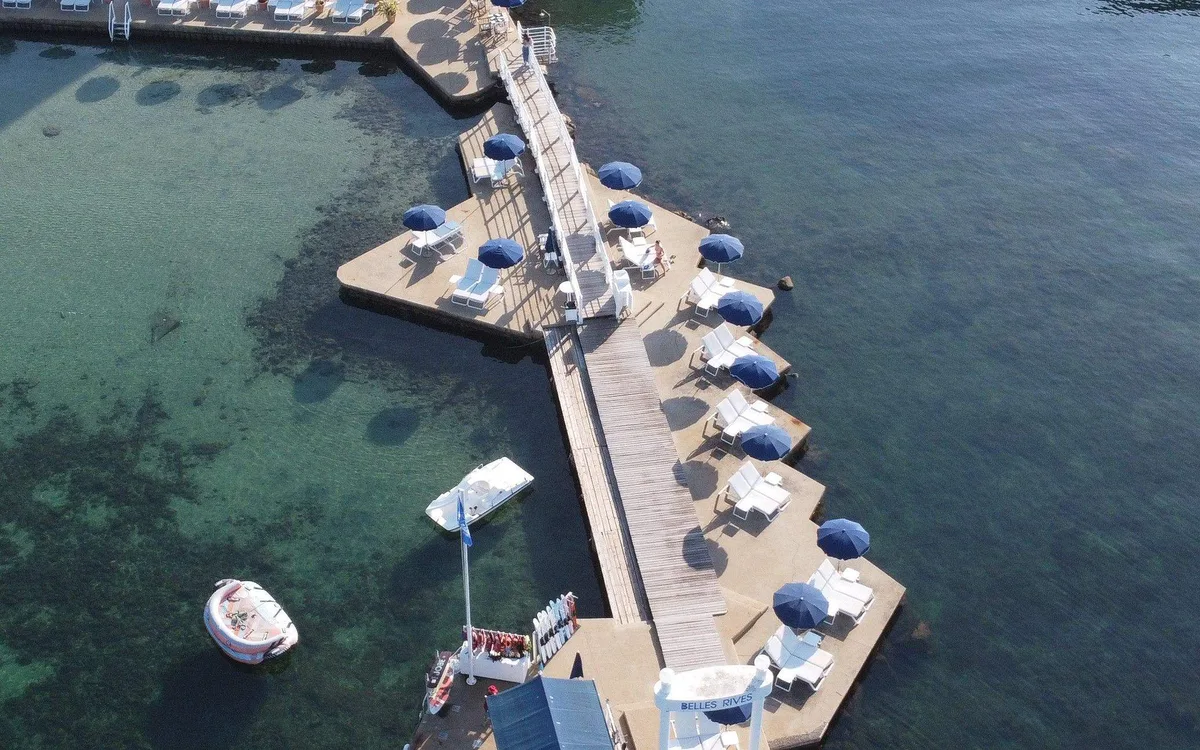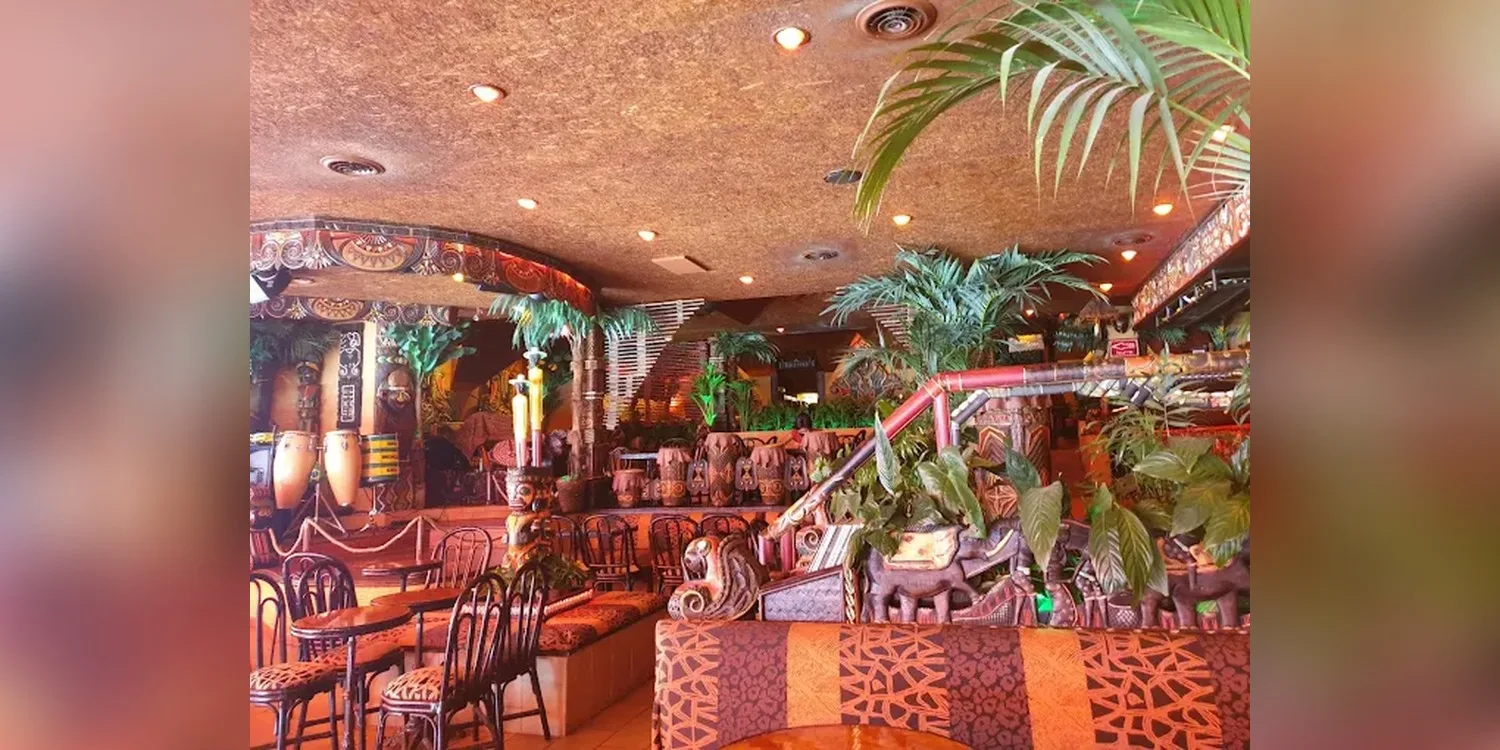
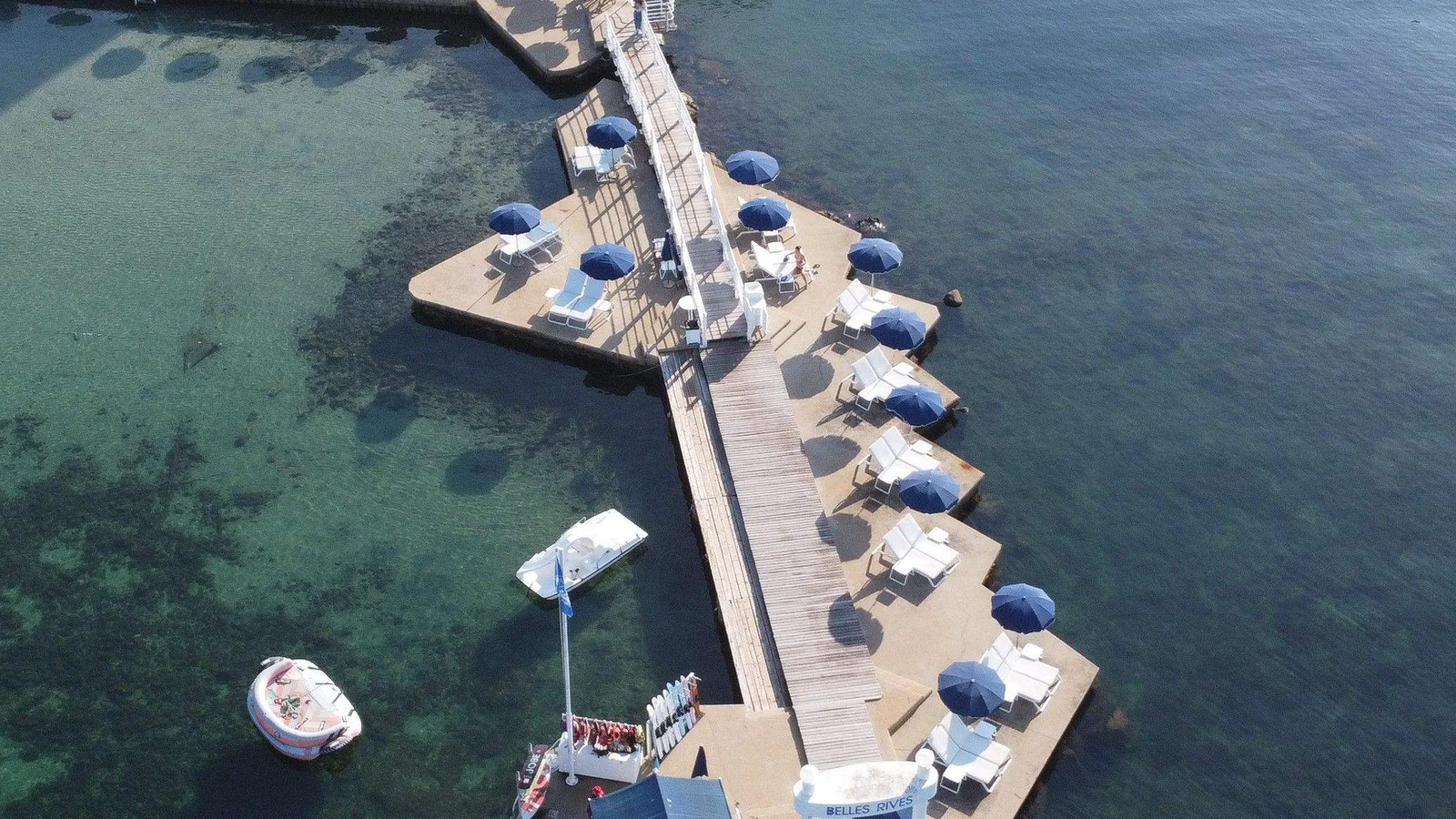
Juan-les-Pins is the Riviera's jazz town — a resort that fits a century of glamour into a few pine-shaded blocks and still knows how to stay up late. Most visitors arrive in July for the festival, hear a set under the umbrella pines, and leave thinking they have read the place. They haven't. The Juan that locals keep is the one that runs from a morning swim off the Belles Rives pier to a cocktail at a tiki bar that hasn't changed since the 1950s — the same stretch of coast where Fitzgerald wrote and Sidney Bechet played, worn soft by time and used daily.
Here is how SOF reads it.
The jazz is the bedrock, not the souvenir
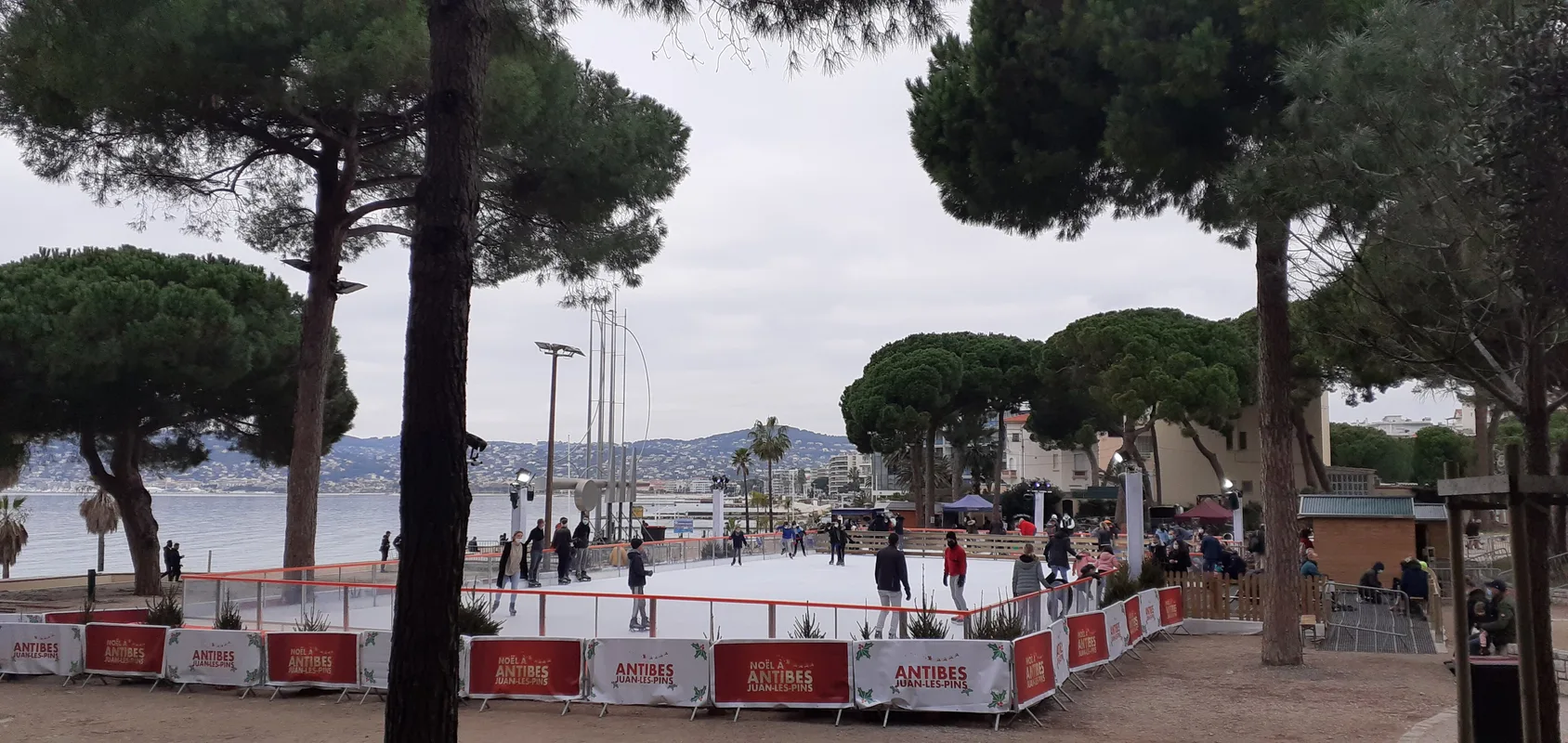
Juan-les-Pins did not borrow its music; it earned it. Jazz à Juan is one of Europe's oldest jazz festivals, and it still happens where it always has — in the Pinède Gould, the grove of parasol pines a few steps from the sand, where the stage sits and the sea breathes behind the last row. For a fortnight every July the whole town tilts toward it: set lists go up on café boards, the terraces fill between acts, and the pines do the acoustics. The festival's own shop, the Jazz à Juan — Official Boutique, sits on the Pinède itself; the annual poster, signed by the headline artist, is the only souvenir worth carrying home.
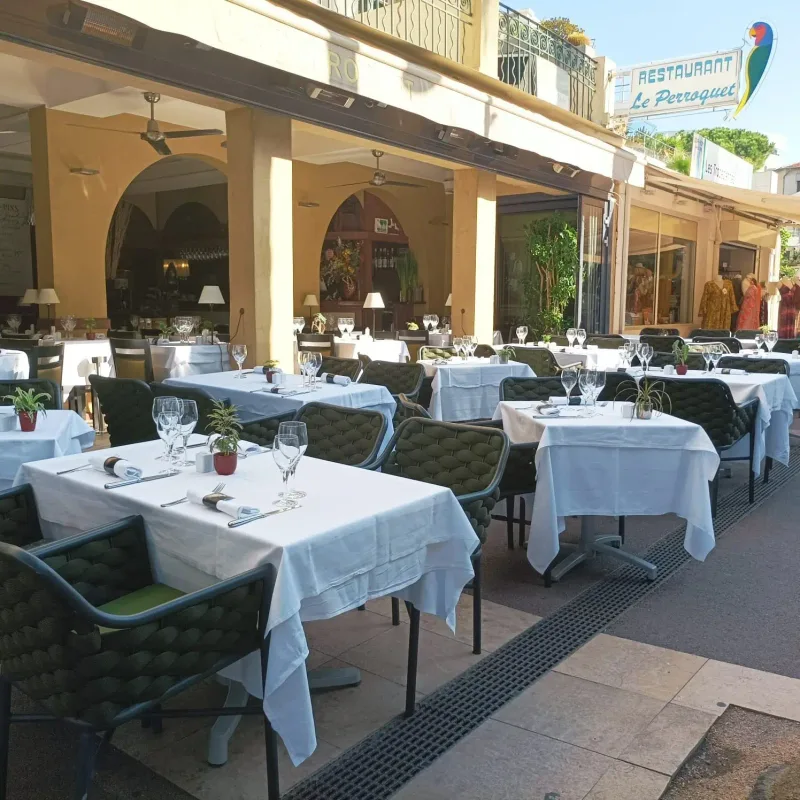
You feel the lineage even out of season. Le Perroquet, the 1920s institution facing the Pinède, has been open for over a century and still posts the day's jazz programme on its board each July afternoon. The Hôtel Juana, built in 1931, was the jazz age's address in Juan; its Le Bistrot Terrasse still looks across to the trees, and the off-season sitting is the local-only one. This is a town that treats its history as furniture — to be used, not displayed.
The Fitzgerald shore
The eastern edge of Juan, along Boulevard Édouard Baudoin, is where the legend concentrates. The Hôtel Belles Rives stands on the villa F. Scott Fitzgerald rented in the 1920s, and it has spent the decades since turning that pedigree into something genuinely lovely rather than merely marketed. Three of its rooms are worth your whole trip.
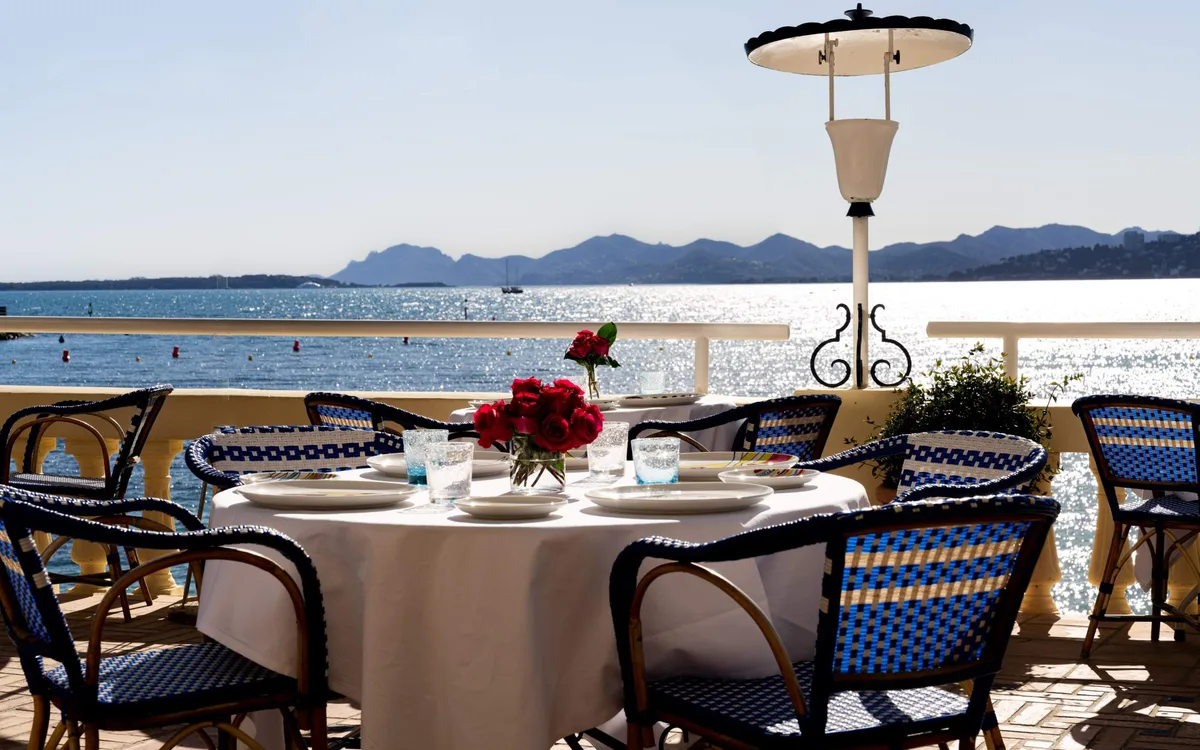
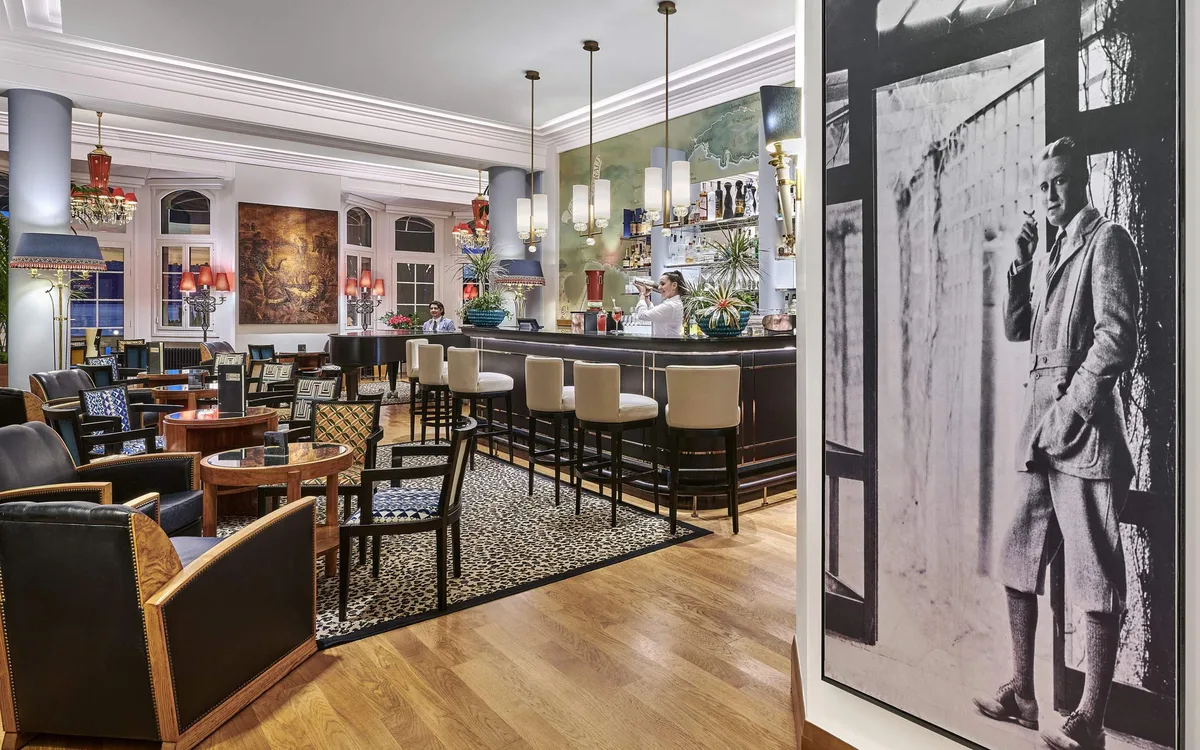
Bar Fitzgerald is the canonical Juan sunset — an Art Deco piano bar with bronze portholes that catch the last light off the bay. Take the seaward banquette around 19:30 and order without hurry. Upstairs in register, La Passagère is the hotel's one-Michelin-star dining room, an Art Deco space over the water where the dinner sitting is the experience to plan around. And below, the Plage Belles Rives is the private beach and its restaurant, La Plage — sunbeds, water-ski boats launching off the same Fitzgerald-era pier, a front-row lunch table if you book it. You can spend an entire day on this one property and never feel you've cut a corner.
One great beach, two ways to read it
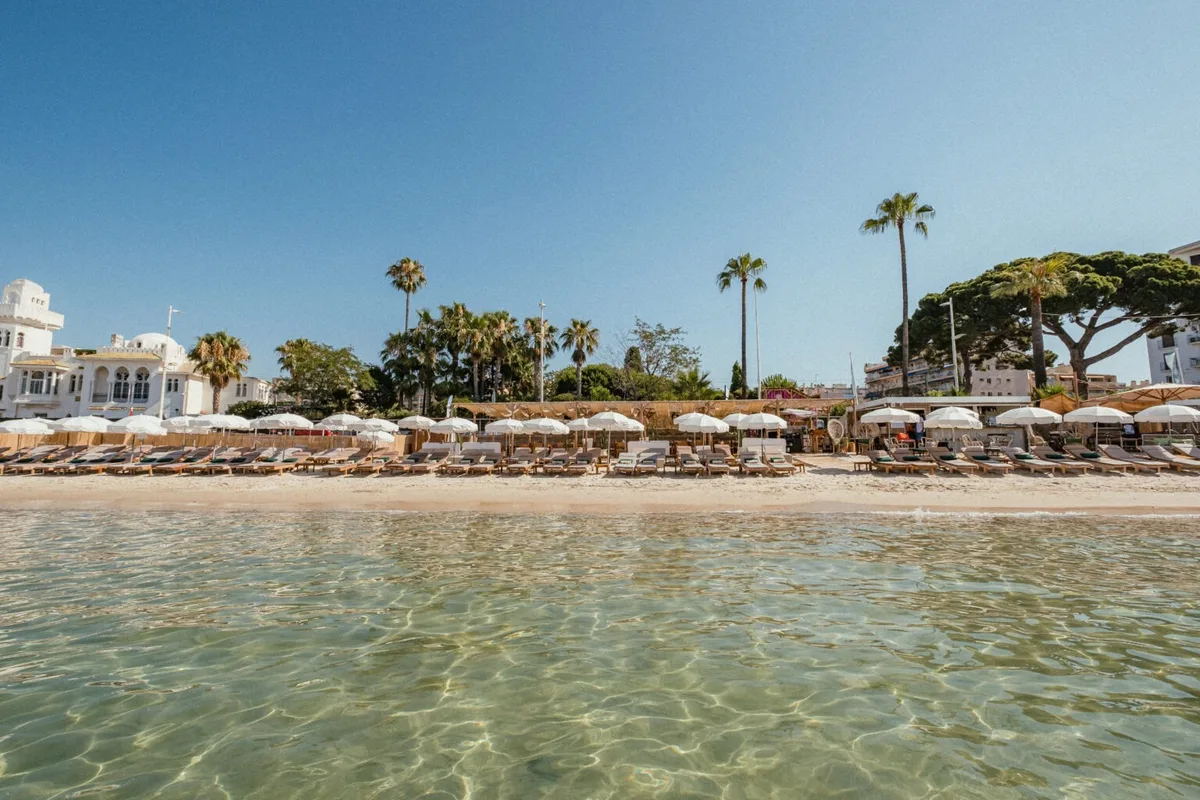
Juan's sand is short and famous, and it rewards knowing the registers. Plage de la Jetée has been a beach-restaurant institution since 1956; its pier sunbeds are the postcard image of the town, and the in-water access is the quiet bonus. Book a week ahead in July. At the other end of the mood, Yolo Plage, on the Promenade du Soleil, is the newer-generation operator — a private beach restaurant with a sunset DJ and a Sunday brunch on the loungers that runs June through September.
When the swim is done, the town's daytime axis is Boulevard Wilson, a few minutes inland. This is where you assemble the rest of the day: a pan-bagnat from Maison Saint Jalme, the artisan boulangerie whose sandwich is meant to be eaten on a Pinède bench with the set list in your hand; the resort-wear at Escales Paris, where the kaftans and breton stripes fit the post-beach silhouette; and, on the Pinède side along Baudoin, a cone from Xavier Recroix Artisan Glacier, forty-plus flavours made in the on-site lab. Ask for the sabayon tunisien — the unsung scoop, Juan's answer to a Provençal classic.
After dark
Few towns this size hold their nightlife so well. Pam Pam is the one everyone means when they say Juan stays up — a Polynesian-tiki cabaret on Boulevard Wilson, flaming cocktails and live show, unchanged in spirit for generations. Arrive before 22:30 to claim a banquette before the first set. For the modern counterpart, Villa Djunah runs two registers from one seafront Mauresque villa: a sundown lounge from around 19:30 that hands over to the Djunah Gardens DJ club near 23:00. And threading it all together is Le Crystal, the bar-glacier at the Pinède crossroads that opens at 08:30 and closes at 02:30 — Juan's morning coffee, its apéro, and its last hour, all at one corner terrace through the pine trees.
A quieter coda: the Tabac du Tropique — La Civette des Tropiques, on the Promenade du Soleil, keeps a proper cigar register — Cohiba, Montecristo, Punch, Hoyo de Monterrey. Walk in for a Robusto and an espresso at the counter; the terrace catches the late-afternoon shade.
What to know
- Getting there — Juan-les-Pins shares the Antibes commune; the station is a short walk from the Pinède, and the TER from Nice or Cannes is the unfussy way in. The car is more trouble than help in the centre.
- The shape of the day — Juan runs east-to-west by hour: the Belles Rives shore in the morning, the beach and Boulevard Wilson midday, the Pinède and the bars by night. Let the town set the pace.
- Reservations — the pier sunbeds and the Belles Rives tables go days ahead in July, and the festival fortnight books out the whole town. Call early or come in the shoulder season.
- When to go — May, June and September are the warm, uncrowded window. July is the festival at full volume — glorious and dense. Out of season the town turns to locals; that is its own reward.
Juan-les-Pins rewards the traveller who treats the jazz as the foundation and lingers past the last set.