Saint-Jean-Cap-Ferrat is the Riviera's quiet answer to all the noise around it. A green peninsula of pine and cypress, three kilometres long, hung between Villefranche and Beaulieu — close enough to Nice to drive in for dinner, far enough that almost nobody does. The great fortunes built their villas here precisely because the cap keeps its secrets: the houses you can't see from the road, the gates with no names, the money that prefers a hedge to a headline. There is no nightlife to speak of, and that is the point. Cap-Ferrat is not where the Riviera performs. It is where it goes to be left alone.
Here is how SOF reads it.
The shape of the place
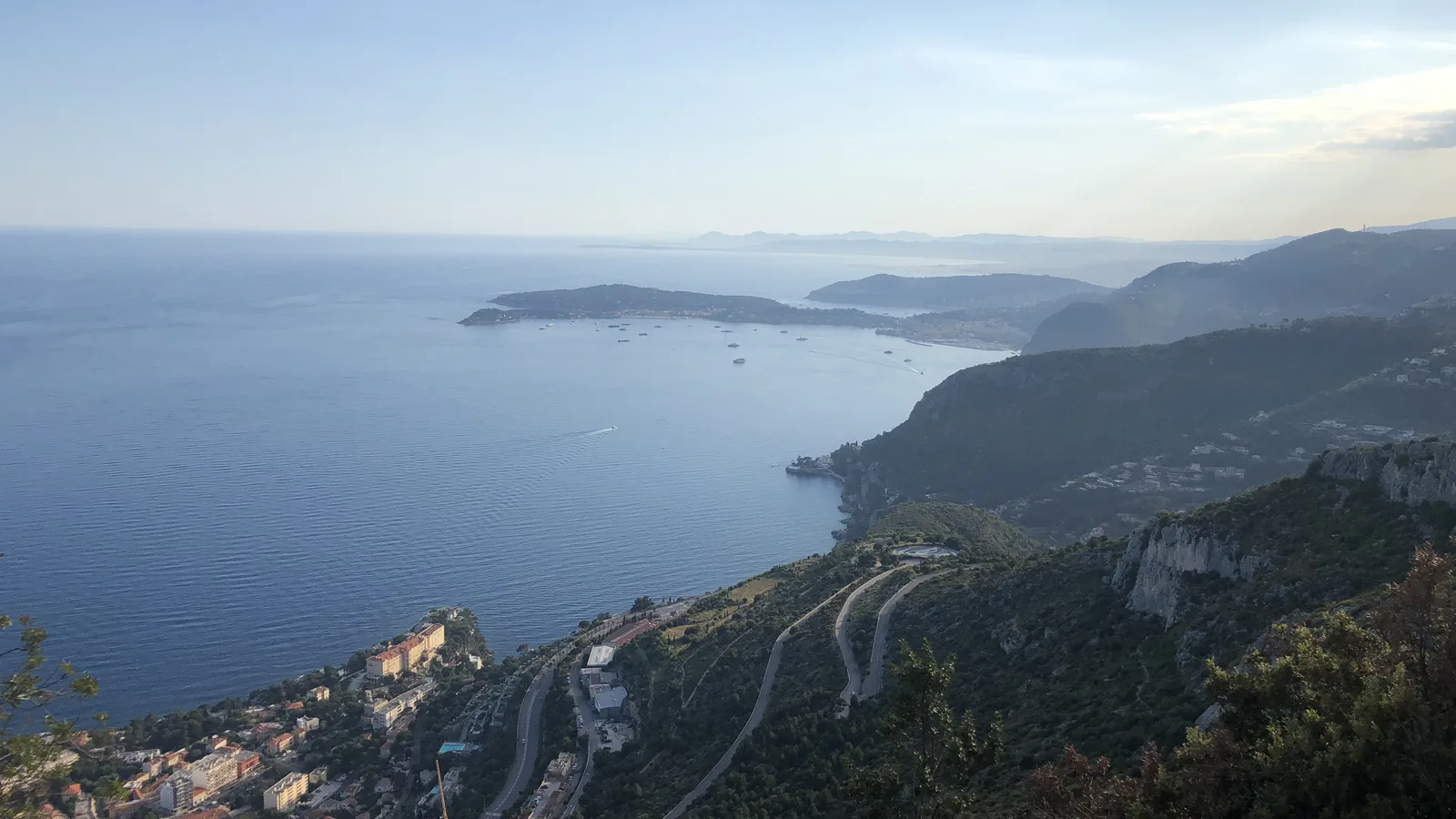
Understand the geography and the rest follows. The cap is a near-island, and life clusters at three points.
- Saint-Jean village — the working heart on the eastern neck: a small marina, a handful of cafés, the boulangerie, the morning. This is where you buy bread and watch the boats, not where you're seen.
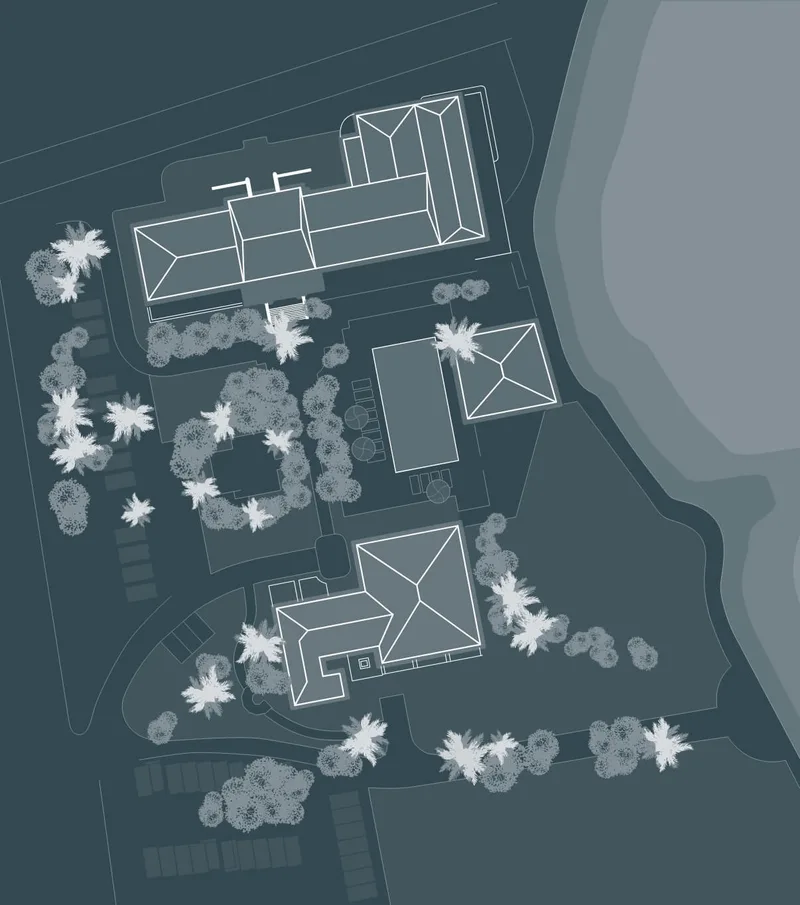
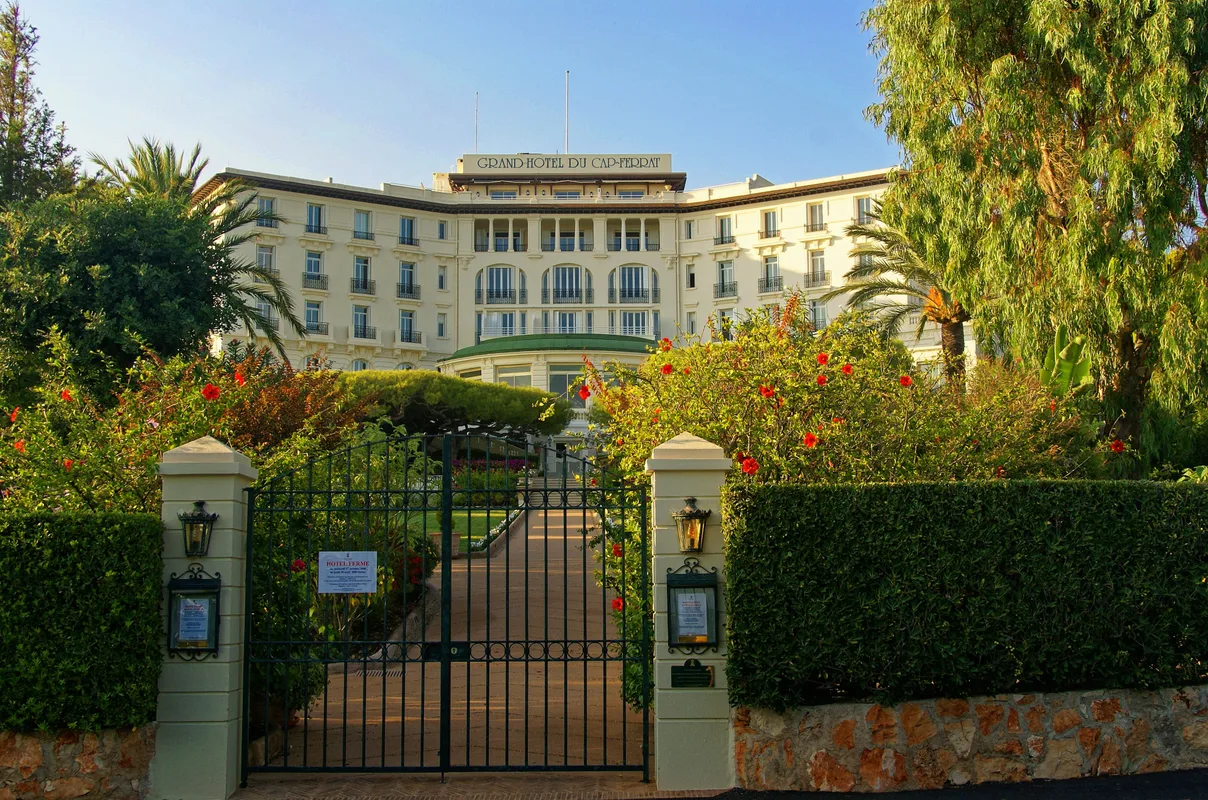
- The two shores — and this is the key. A palace hotel guards each one. The Grand-Hôtel du Cap-Ferrat sits at the tip, facing west and the open sea. The Hôtel Royal-Riviera holds the eastern flank, over the Bay of Beaulieu. They look in opposite directions, and choosing between them is the single most consequential decision you'll make here.
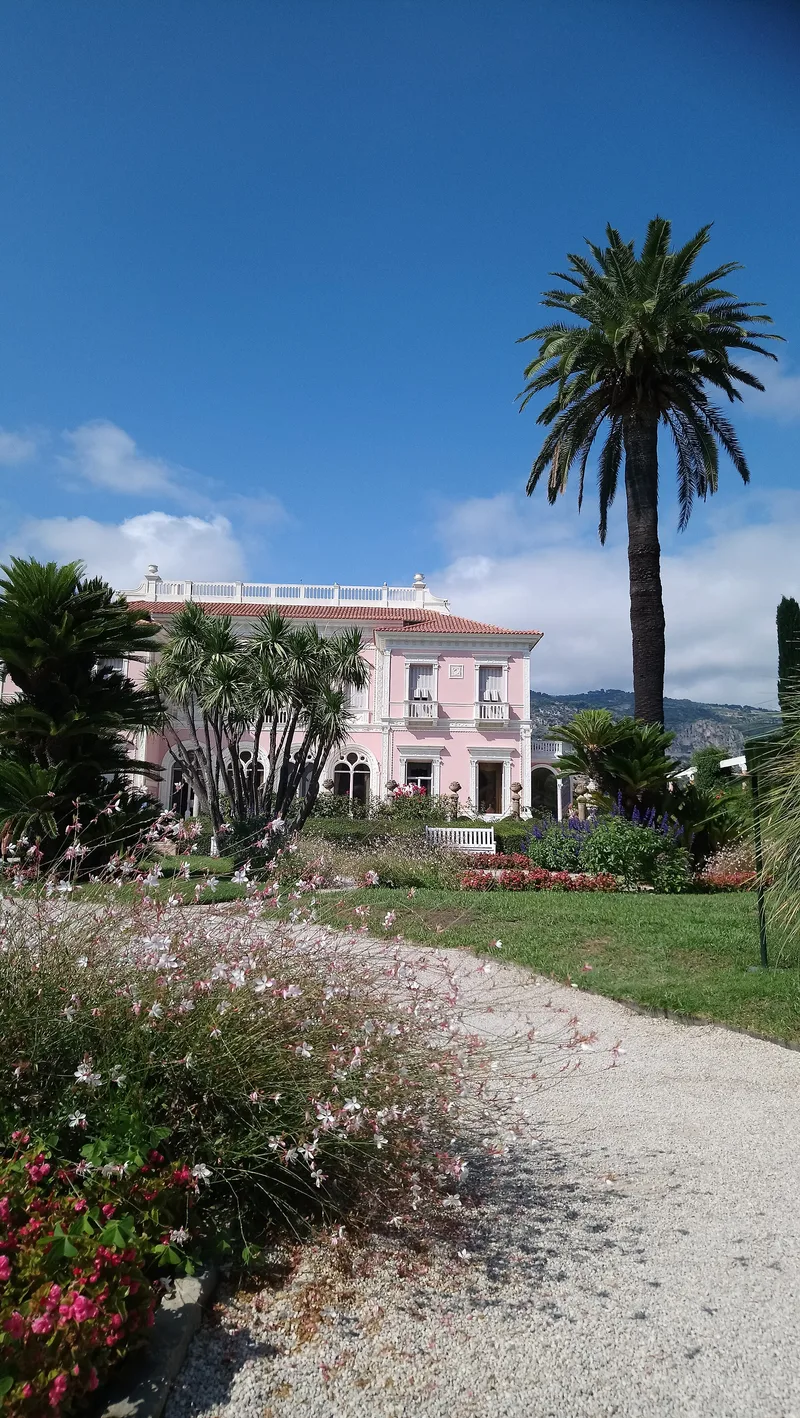
- The narrow waist — where the Villa Ephrussi de Rothschild stands on the slimmest part of the cap, sea on both sides, with the best gardens on the coast.
You don't tour Cap-Ferrat. You pick a base and let the peninsula come to you.
The two palaces
This is a place defined by its grand hotels, so decide deliberately.
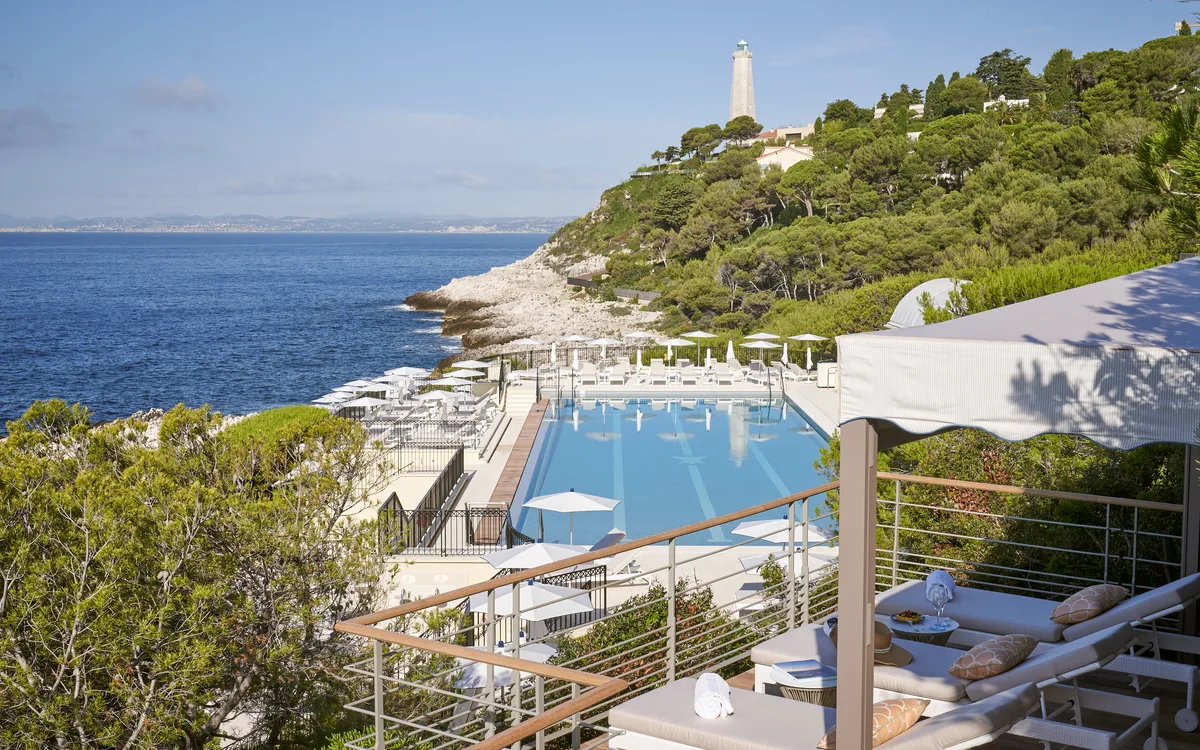
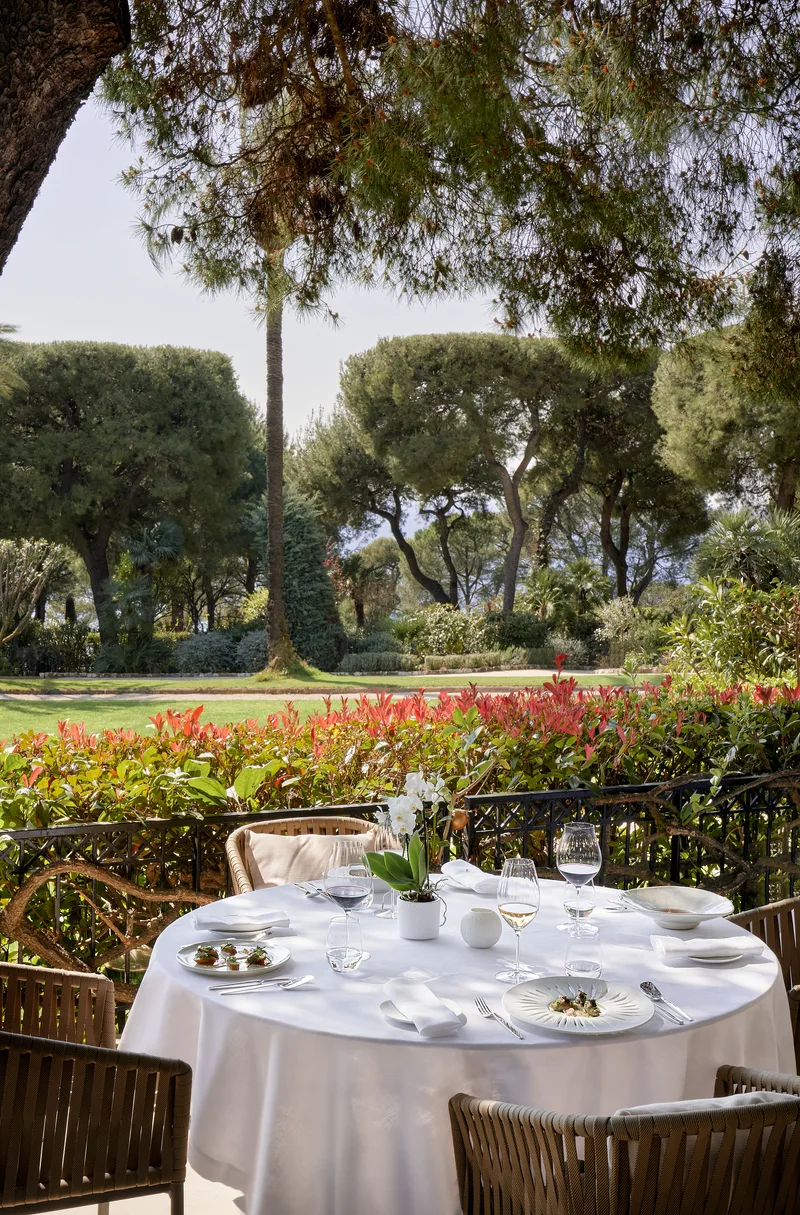
The Grand-Hôtel du Cap-Ferrat, a Four Seasons since 1908, owns seven hectares of pine at the very point. The mood is grand and unhurried; the architecture almost incidental to the setting. Below it, cut into the cliff in 1939 and reached only by the hotel's private funicular, is Club Dauphin — the rectangular seawater pool above the rocks, the white cabanas, the long pool-lunch that is the most photographed image on the cap. Upstairs, Le Cap carries one Michelin star, chef Yoric Tièche working a Provençal register on a pine-shaded terrace; it is the most considered lunch on the peninsula.
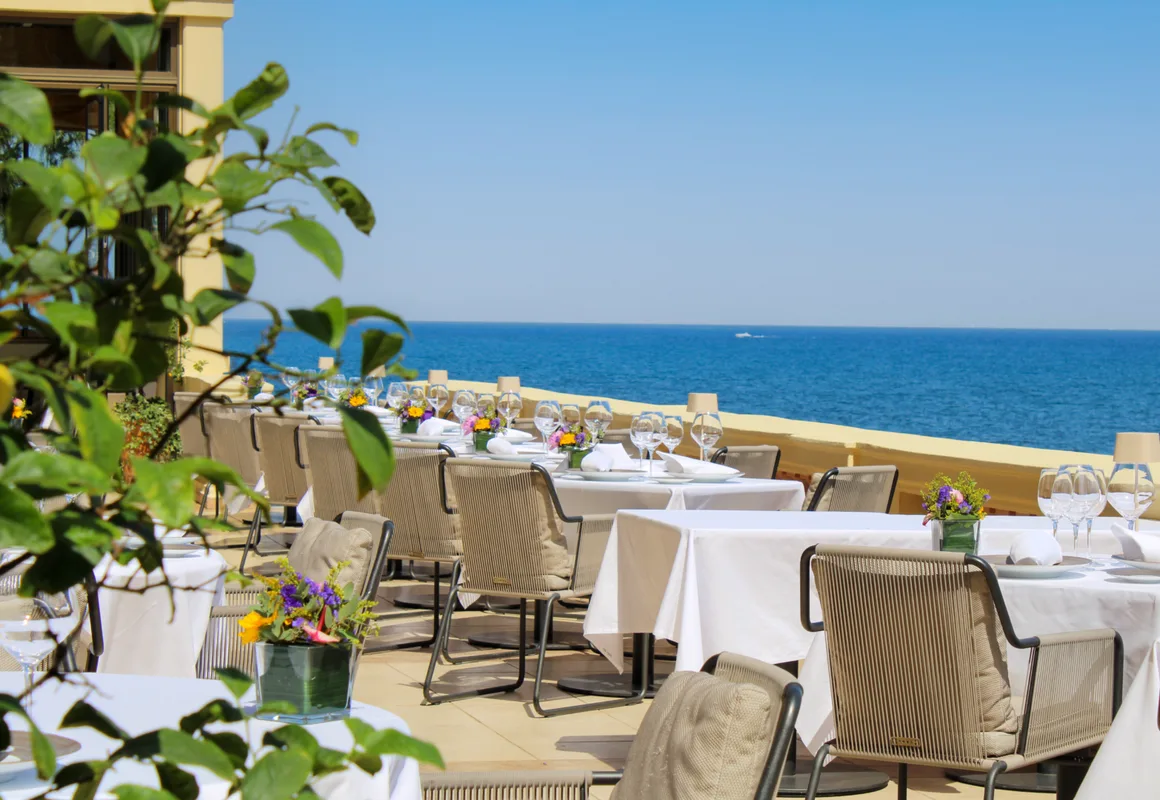
The Hôtel Royal-Riviera is the other temperament — a grande dame from 1904, restored and quietly modern, set in two hectares of palm garden on the eastern shore. Twin pools, one heated all year and one sea-water at the edge of the bay. The terrace is built straight onto the rocks, and La Table du Royal — Geoffroy Szamburski's kitchen, the bay running from Villa Kérylos through Beaulieu — is the reason you stay. In July and August the seasonal Pergola pool restaurant opens for lunch; the rest of the year dinner leads.
Grand-Hôtel for sunsets and the open horizon. Royal-Riviera for morning light and the bay. Neither is a wrong answer.
A day, the SOF way
Begin in Saint-Jean village, early, before the cap warms. Coffee on the terrace at La Civette on Place Clémenceau — a café since 1946, and the one honest answer to where the locals take their espresso. Collect the picnic kit at La Boulangerie du Port, the Bonfigli family bakery on avenue Jean Mermoz, open from half past six: pan-bagnat, fougasse, a tarte for later.
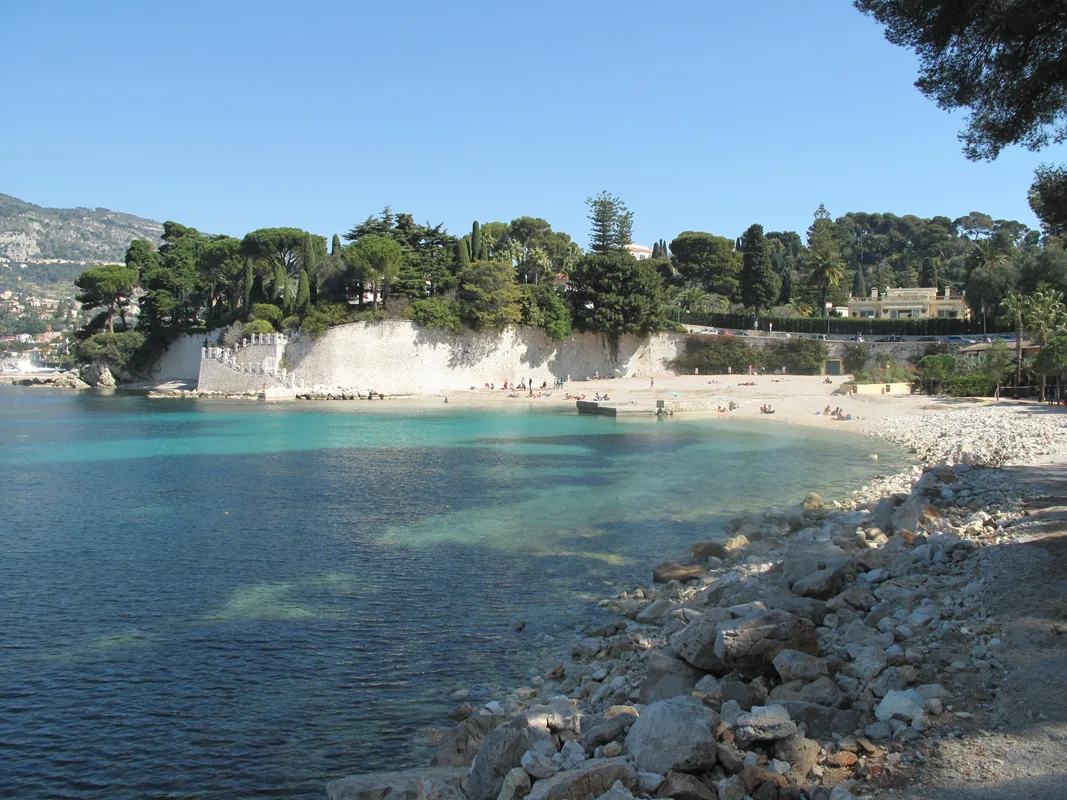
Then walk. The Sentier du Cap-Ferrat runs five kilometres of cliff path through pine, dropping to small coves of clear water you can swim from — and it stays nearly empty even in August. Start at the Pointe Saint-Hospice chapel and go anticlockwise; the climb is gentler that way. Spread the picnic on a rock.
Spend the bright middle of the day at the Villa Ephrussi de Rothschild. Béatrice de Rothschild built her pink house in 1905 and left it as she lived in it; the collections are interesting, but the nine themed gardens are the reason — French parterres, a Spanish patio, a Japanese stream, and fountains that perform to a soft Belle Époque waltz on the half hour. Buy the audio guide for the gardens, not the rooms. You'll want the names of the trees.
End at Plage de Passable on the northern shore, the only beach on the cap that faces the sunset. Reserve loungers for half past four and you get the best of the afternoon and the full descent of the light on one ticket — Villefranche bay opening to the north, the cap closing around you to the south, and rosé colder than at any larger club along the coast. Then a cone from Glacier du Cap on the marina quay, taken to the water's edge where the moored yachts and the headland read as one composition.
After dark, such as it is
Be honest with yourself: Cap-Ferrat does not do nights. There is no club, no late scene, no parade. The single verified late address on the entire peninsula is Le Bar inside the Grand-Hôtel — a library-panelled room with a summer terrace and a pianist most evenings, the Four Seasons cocktail list, open toward one in the morning in season. Take the terrace at golden hour, then move into the library room after ten, where the music sets the tone. If you want more than that, Nice is twenty minutes west and Monaco fifteen east. But the traveller who chose the cap chose it for the quiet. Lean in.
What to know
- Getting around — bring a car or rely on hotel transfers; the peninsula is spread out and the bus is infrequent. Saint-Jean's Parking du Port serves the village and the marina addresses.
- The hotels run the access — Club Dauphin, Le Cap and Le Bar sit inside the Grand-Hôtel, reached past the valet (the pool only by funicular). Both palaces are valet-only, no exceptions.
- Reservations — Le Cap a week or more ahead in season; sea-view rooms at either hotel book a month out for summer, longer for the best ones. The village cafés are walk-ins.
- The season — May, June and September are the window: warm sea, long light, the cap at its calmest. Both grand hotels close for part of the winter, so check before a cold-month visit.
- The dress code — crisp resort, linen over labels, a jacket for the dining rooms. A sweater for Passable after eight.
Cap-Ferrat rewards the traveller who wants less — one good base, one long walk, one slow lunch over the water, and the discipline to do nothing else.