Cannes is where the coast performs. For eleven days each May the world points its cameras at one curve of seafront, and the rest of the year the town quietly keeps the stage warm — the palaces, the red awnings, the long white promenade built for being seen. The cliché is the Festival. The Cannes that locals keep is the one underneath: the fishermen's hill above the old port, the morning market that has nothing to do with cinema, and the row of beach clubs where the performance is simply a good lunch that lasts until five.
Here is how SOF reads it.
The Croisette is a stage — learn the cast
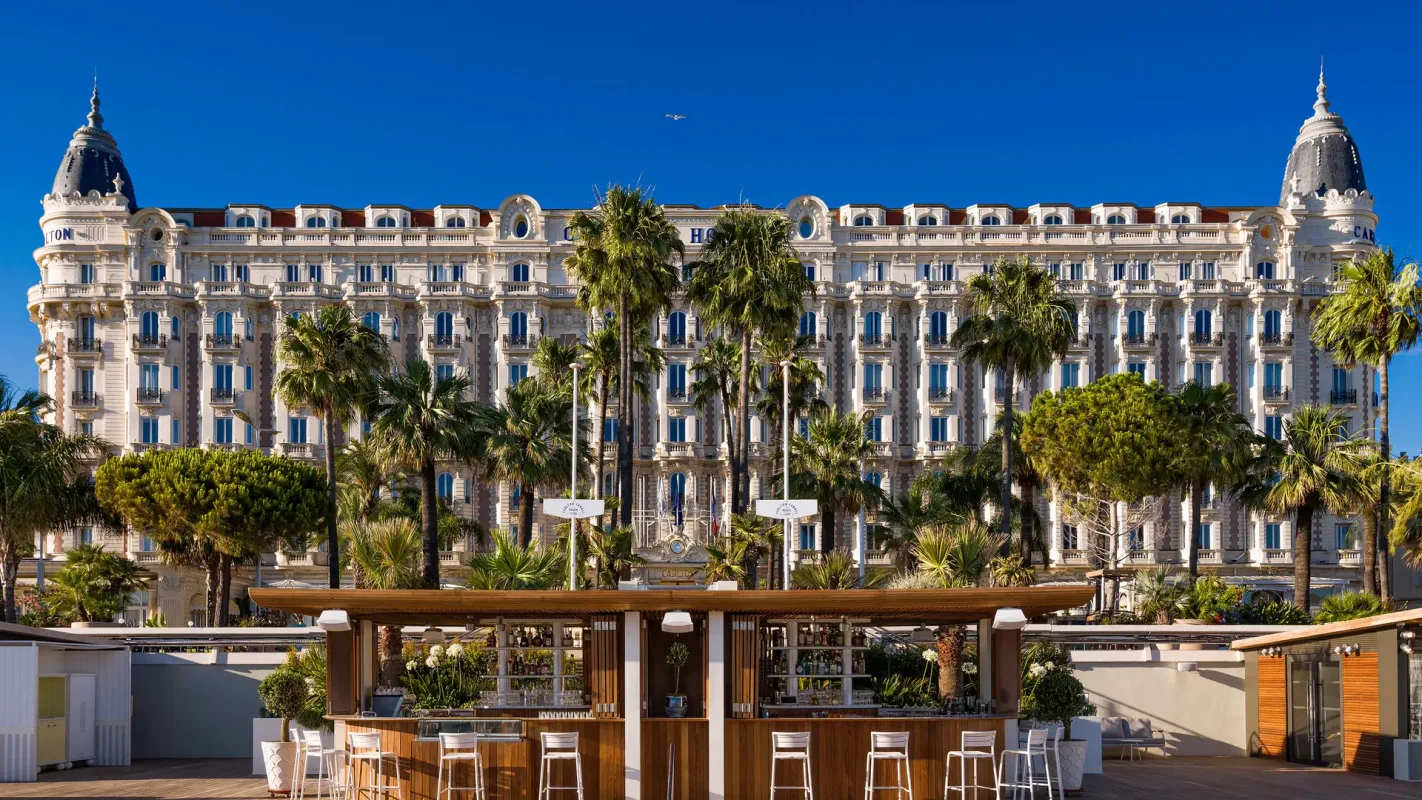
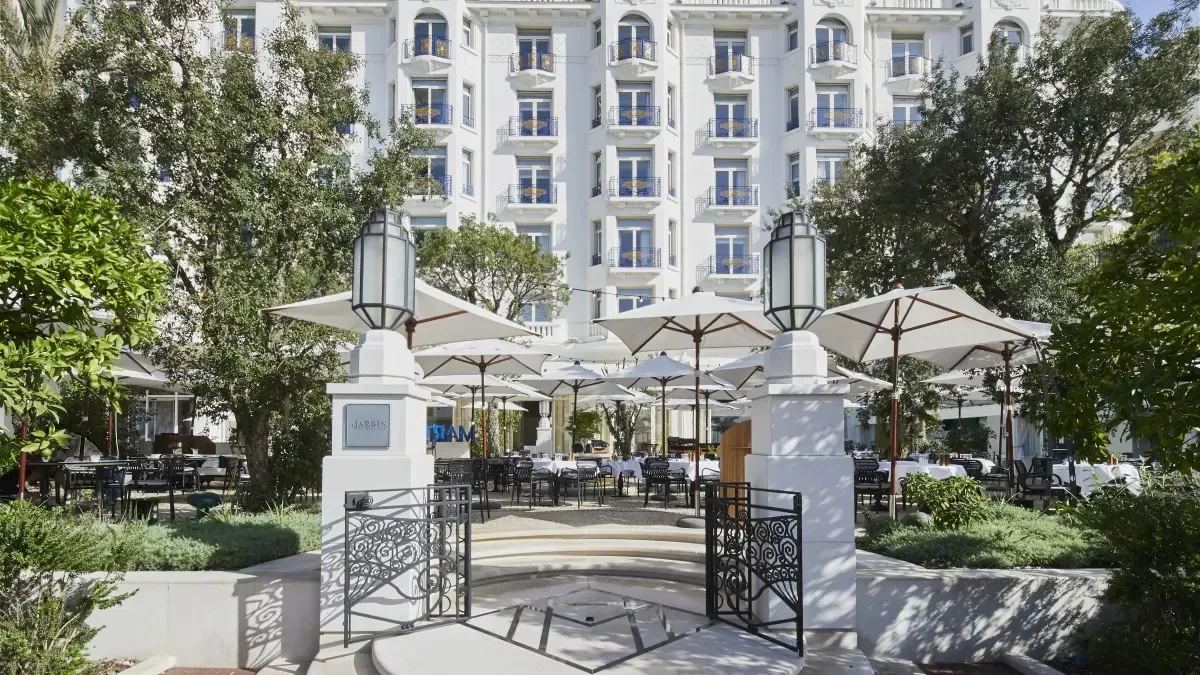
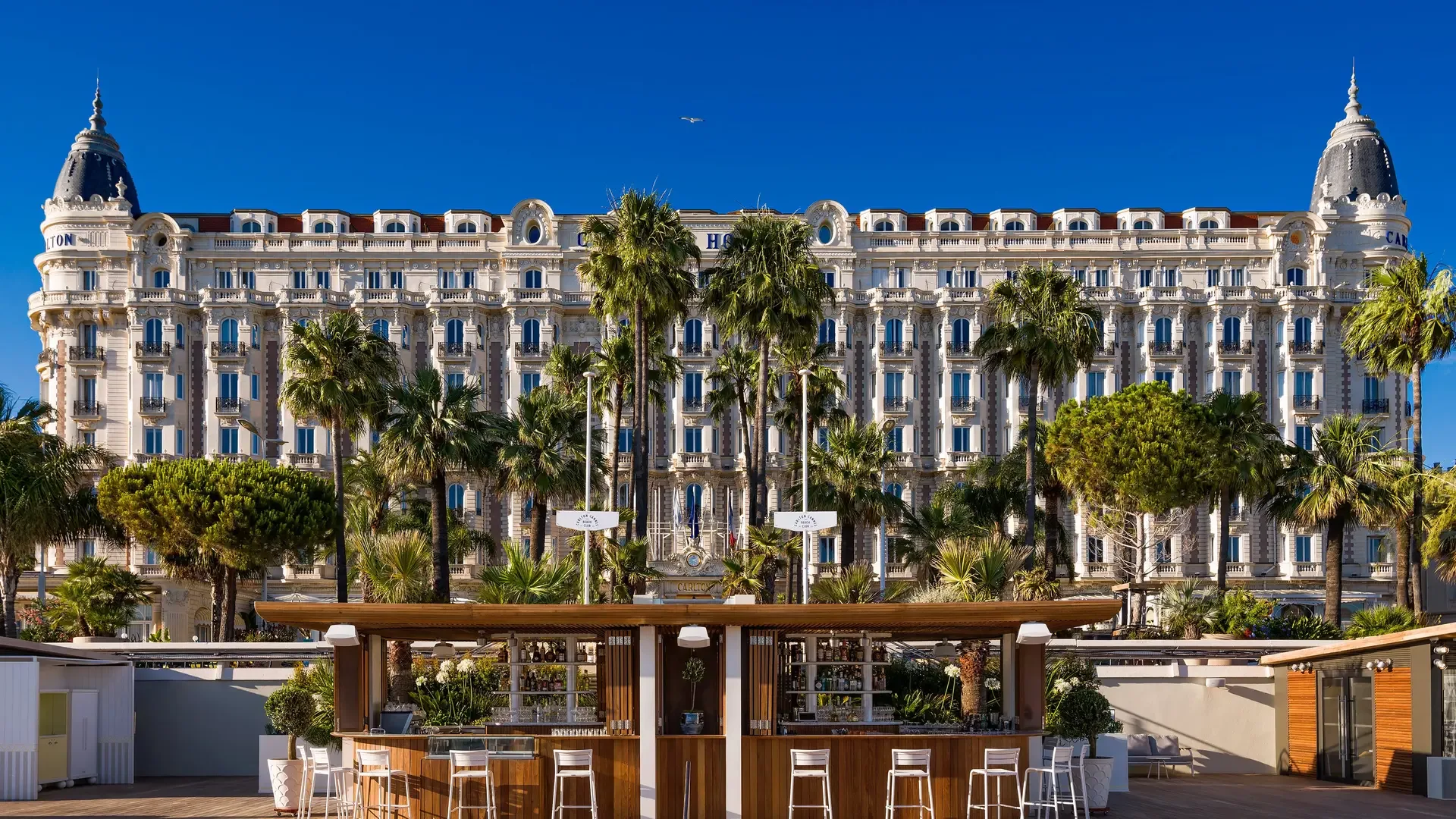
The Boulevard de la Croisette is the point. A two-kilometre seafront of palm trees, designer windows and grand hotels, walked slowly, on purpose. The buildings are the cast. The Carlton Cannes — belle-époque, its twin cupolas reportedly modelled on a courtesan's silhouette — is the diva at the centre. The Hôtel Martinez is the Art Deco counterpoint a few hundred metres east. Between and around them sit the boutiques: Hermès has its Cannes address right on the boulevard, and the Carré d'Or, the dense luxury grid just behind, holds the rest.
You don't need a room to take part. A coffee on a palace terrace, a slow turn past the windows, a look at the sea over the heads of the people looking at each other — that is the Croisette working as intended.
La Suquet, where the town began
Climb away from the boulevard and Cannes changes register entirely. Le Suquet is the old fishermen's quarter on the hill above the Vieux Port — narrow lanes, washing lines, a stone church at the top, and a view back down over the harbour and the bay that costs nothing. This is the antidote to the seafront. Cool, steep, lived-in.
At the foot of the hill the Vieux Port does the unglamorous, essential work: the boats, the Marché Forville a street back, and the seafood houses that locals have trusted for decades. Astoux et Brun, by the port on Rue Félix Faure, is the institution — a plateau de fruits de mer, oysters shucked at the counter, open long hours and rarely quiet. For a faster, market-driven plate, the stalls and counters around Marché Gambetta — the Kiosque among them — feed the neighbourhood that actually lives here.
The beach-club ribbon
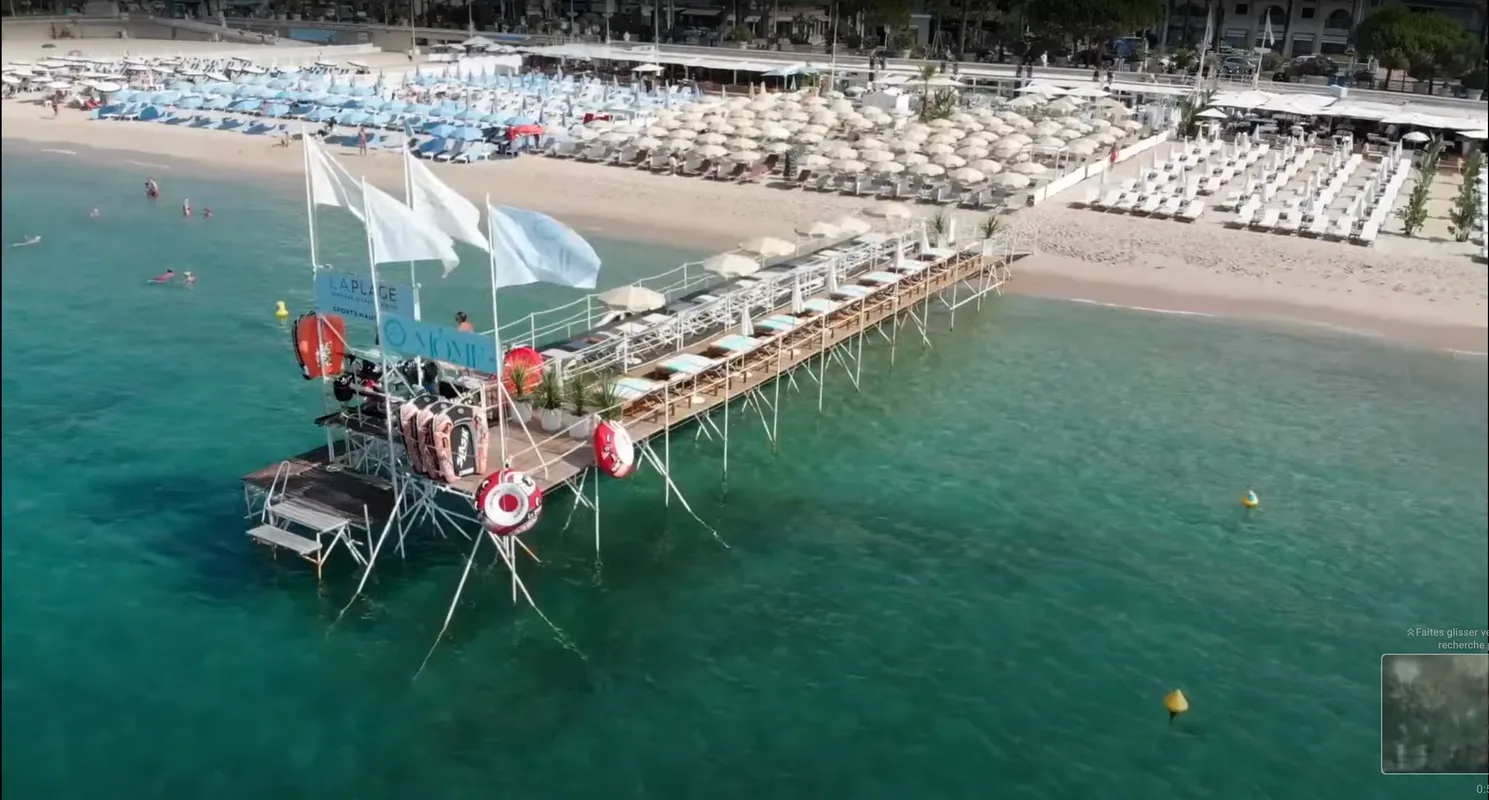
Cannes turned its sand into a profession. The clubs run in an almost continuous line along the Croisette, each a numbered or named stretch of loungers, parasols and a kitchen that takes lunch seriously. The register shifts by the hour and the door.
- La Môme Plage — the see-and-be-seen end of the ribbon, mid-Croisette, where the lunch drifts into afternoon and the rosé never quite runs out.
- L'Ondine — the long-running address paired with Vilebrequin La Plage, classic Croisette beach-club service with the swimwear house attached.
- Annex Beach — central, easy, a good first swim of the day.
- Bijou Plage and Bâoli's stretch sit east toward the Port Pierre Canto, where the boulevard quietens and the loungers thin out.
The move is to choose by mood, not by name. A loud lunch one day, a quiet swim and a paperback the next. You don't do both in one sitting.
The table beyond the red carpet
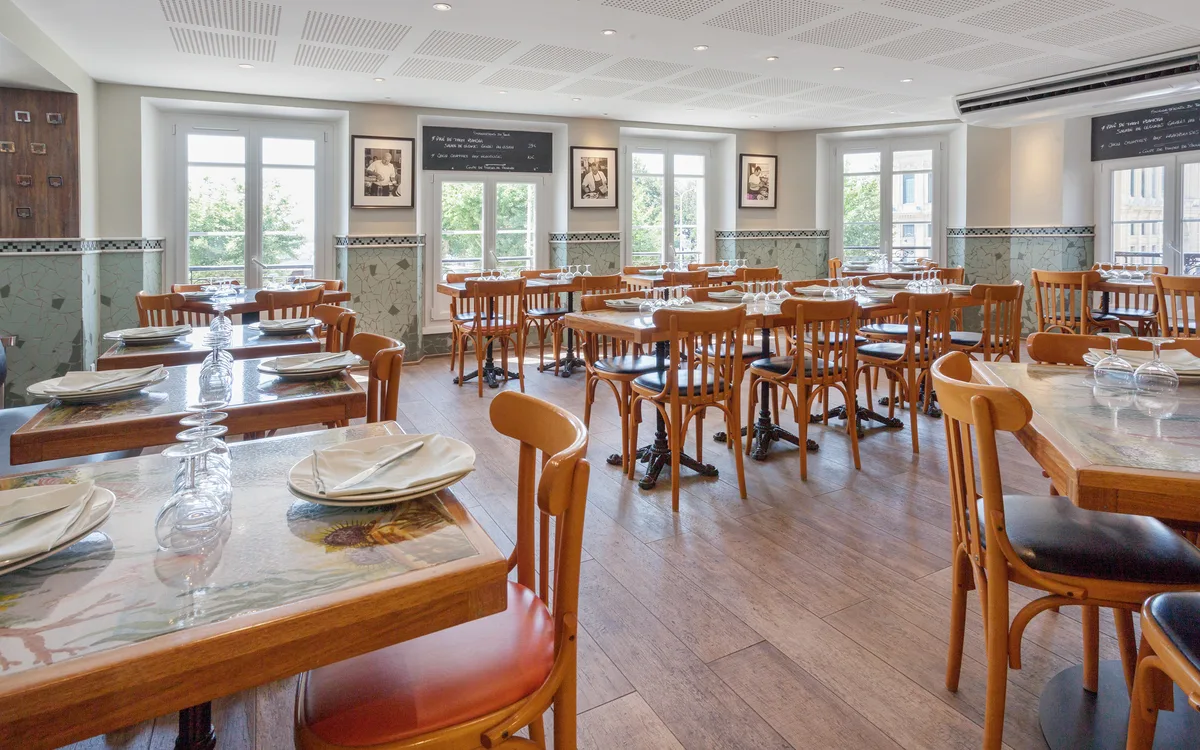
Cannes eats far better than its reputation suggests, and the best of it is not on the Croisette. In the Carré d'Or, L'Affable is the bistronomic address locals book — precise, modern, the kind of room that earns repeat tables. Itinéraire Café on Rue Hoche does the all-day, well-sourced register; Caffé Roma by Square Mérimée holds the old-port corner.
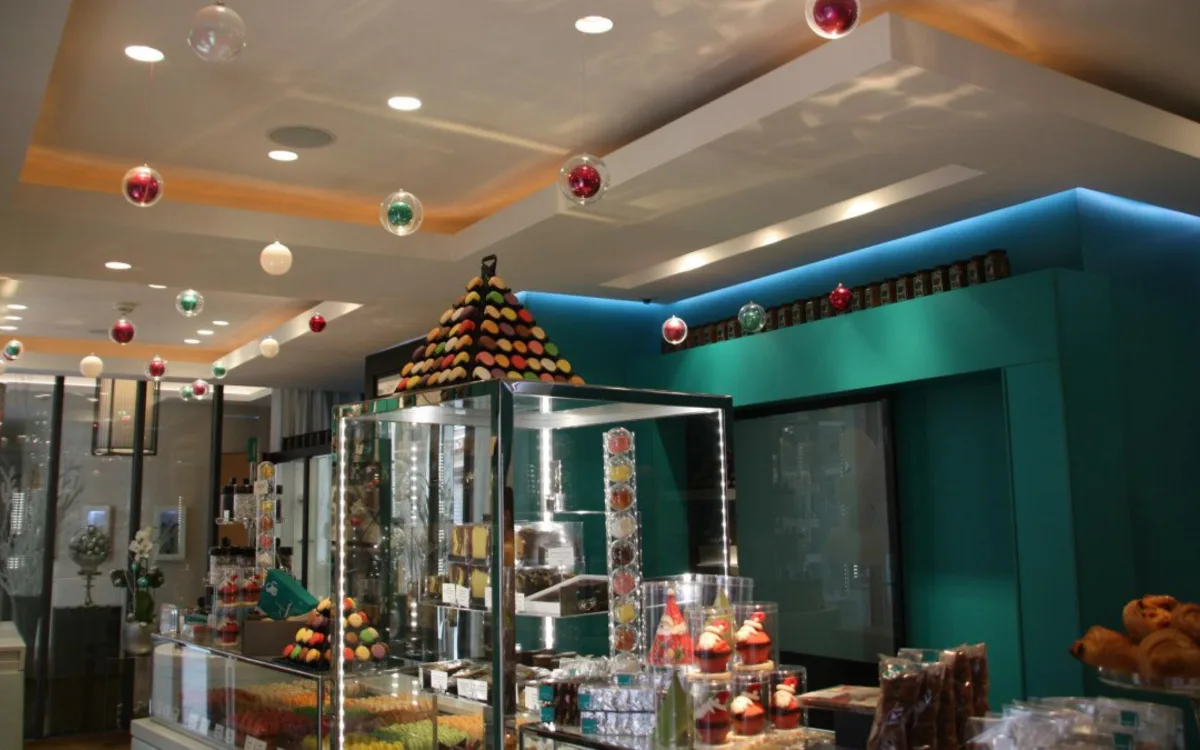
And then the sweet half of the city, which Cannes does with unusual seriousness. Intuitions by Jérôme De Oliveira — a world-champion pâtissier, on Rue du Bivouac Napoléon — is the destination patisserie. Jean-Luc Pelé on Rue d'Antibes runs the macaron-and-chocolate counter the town queues for. Calderon and Cannolive keep their own followings, and Glacier Vilfeu, père et fils, makes the ice cream you eat walking back toward the water. None of it asks to be photographed. All of it is better than it needs to be.
After dark
Cannes at night splits cleanly. The palace bars are the civilised opening — Bar°58 inside the Carlton, Bar L'Amiral at the Martinez, where the piano has heard every deal in the town's history. A negroni there, eye-level with the boulevard, is the right first move.
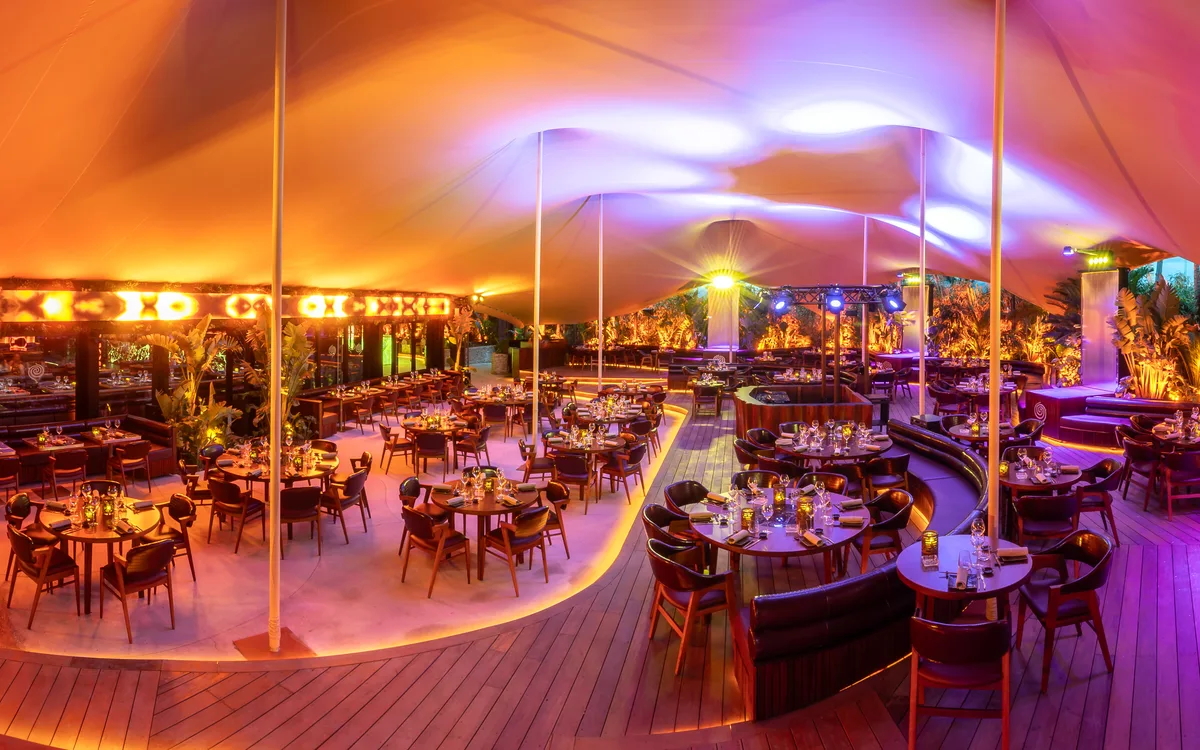
Then, when it tips later, the move is east. Bâoli, out by the Port Pierre Canto, is the dinner-into-nightclub institution — a long table under the open sky that becomes, by midnight, the room where the Festival's after-parties land. It is the coast performing at full volume. Pace yourself to it, or stay on the palace terrace and let the night come to you. Both are correct Cannes.
What to know
- When to go — May, June and September are the quiet-luxury window: warm sea, open terraces, none of the August crush. Avoid the Festival fortnight (mid-May) unless that is precisely why you came — the town is full, fenced and priced accordingly.
- Getting around — the centre is walkable end to end; the Croisette, the Vieux Port and the station are minutes apart on foot. The train along the coast reaches Nice and Antibes in under forty minutes and spares you the parking.
- Parking — the seafront and Palais garages fill in season; arrive early or leave the car at the edge.
- Reservations — the headline tables and beach clubs go days ahead in summer and during any Palais event; the rest of the year a morning call usually holds.
- The dress code — elegant-relaxed by day, a notch sharper at night. The Croisette notices. Lean into it or ignore it entirely; half-measures read worst.
Cannes rewards the traveller who plays both parts — the seafront performance and the quiet hill behind it — and never mistakes the stage for the whole town.