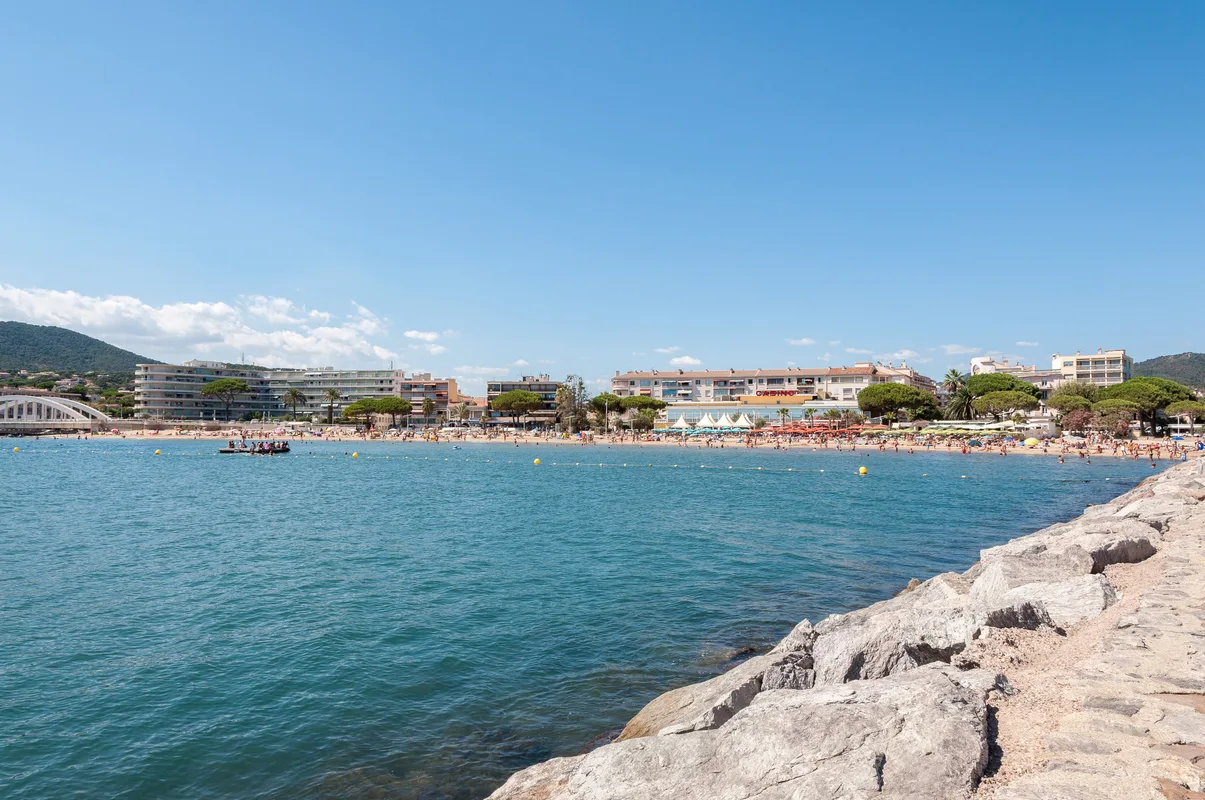
Sainte-Maxime is what Saint-Tropez looks like when you turn around. Stand on the front here and the famous village is right there, across the water — close enough to read its bell tower, far enough that none of its noise reaches you. That stretch of gulf does something useful: it keeps the crowds, the velvet ropes and the August queue for the car ferry on the other shore, and leaves this side facing south, into the light, a degree quieter. People treat Sainte-Maxime as the place you stay when Saint-Tropez is full. The ones who keep coming back have worked out it is the better address most of the time.
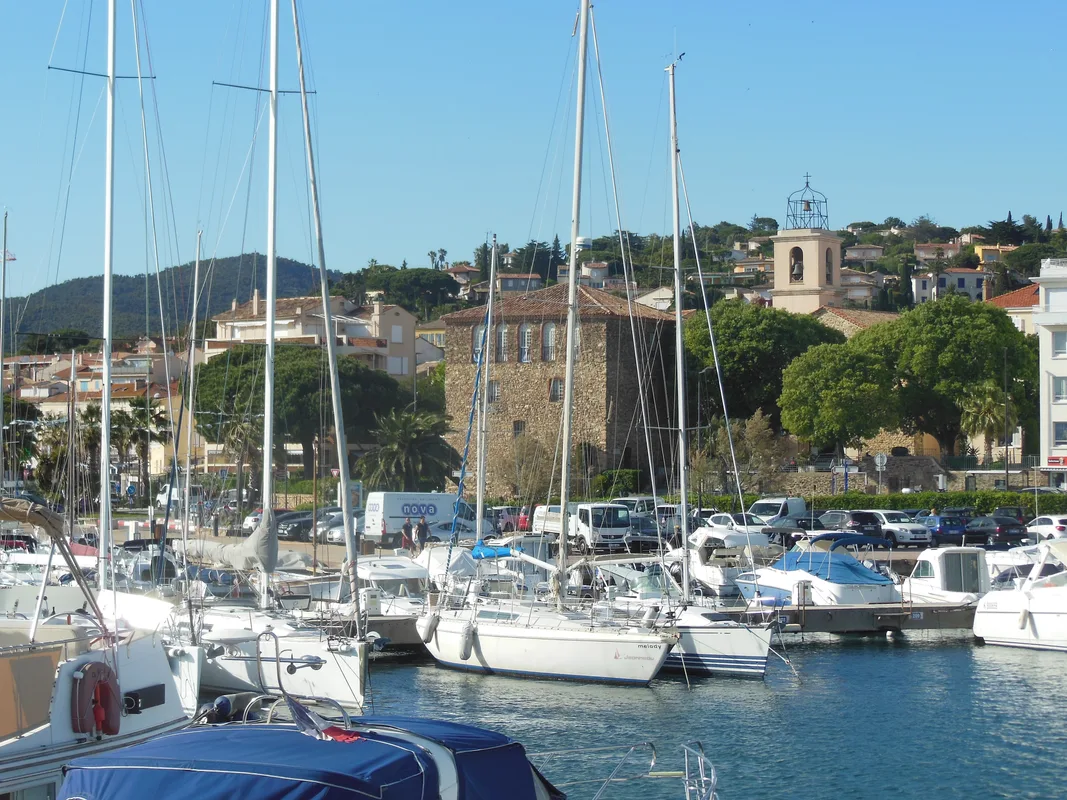
The town faces the wrong way for cliché and the right way for living. Saint-Tropez gets the morning sun and the evening crush. Sainte-Maxime gets a south-facing promenade, a working port that still smells of the morning catch, and a sunset that lands on the opposite hills rather than on your own. It was a fishing and timber port long before it was anything else, and the bones still show — a square stone tower in the old centre, a quay where the boats tie up, a beach a short way east that has been doing the same thing since before mass tourism existed. None of it is trying to impress you. That is the point.
The geography of calm
Understand the gulf and you understand the town. Saint-Tropez sits roughly twenty kilometres around the water to the south-west; in summer the road over the top jams solid, so the honest way across is the seasonal shuttle boat from the port — twenty minutes, no parking, and you arrive at the Old Port instead of a roundabout outside it. This is the move people miss. You sleep, eat and swim on the calm shore, and you dip into Saint-Tropez for an afternoon when you actually want it, by sea, on your own terms.
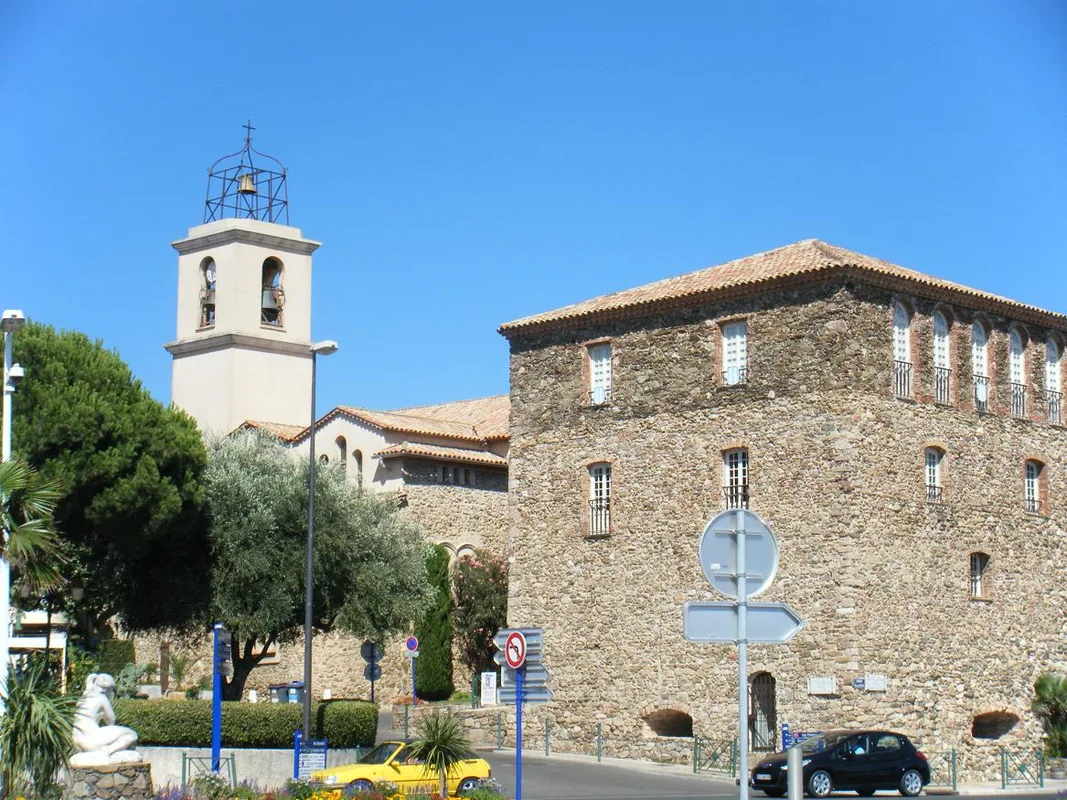
Sainte-Maxime itself reads in three pieces. The port and the central promenade are the daytime spine — cafés, the quay, the comings and goings of boats. The old centre behind it, a tight grid of streets around the church and the Tour Carrée, is where the town is oldest and least staged. And the beaches east of the centre, strung along the coast road toward La Nartelle, are where the day actually happens — sand rather than the village's pebbles, and room to breathe.
A day, the SOF way
Start late and on foot. Coffee belongs on the promenade, and Café Maxime on Promenade Aymeric Simon-Lorière is the unfussy register for it — a palm-shaded terrace facing the water, the place to read the day before committing to it. This is breakfast and the morning paper, not a destination; treat it as the spine and build outward.
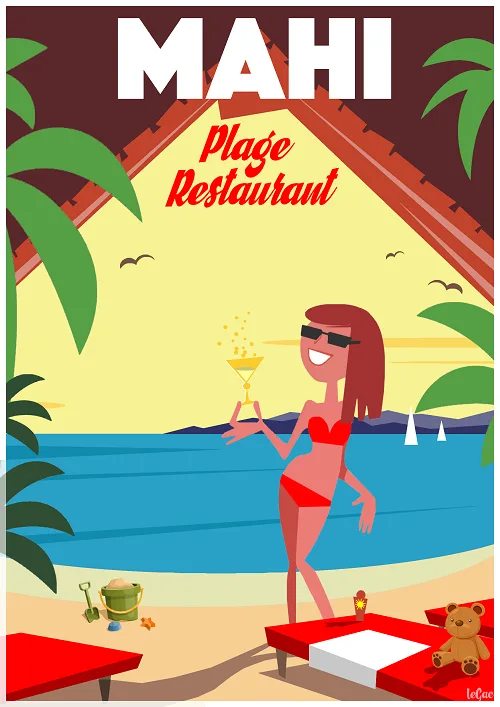
Spend the middle of the day on the sand. Drive or walk east to La Nartelle and Mahi-Plage, a family-tilted beach club that has been on this beach since 1956 — long enough that it is an institution rather than a concept. It runs from mid-March to the end of October, and on Thursday and Sunday nights it puts on live music, which is the tell: this is a beach for staying through the afternoon and letting it turn into evening, not for being photographed and leaving.
Lunch is the port's job. Restaurant L'Amiral sits on Quai Léon Condroyer, perched a few metres above the quay, and it is the most reliable seafood table in town for a simple reason — the morning haul lands and the terrace fills around half past one. Go then, not before. You want the boats below you and the catch on the plate the same day it came off the water. It is the kind of long port lunch the Riviera was built on, and Sainte-Maxime does it without the surcharge the other shore would add.
The rotunda hour
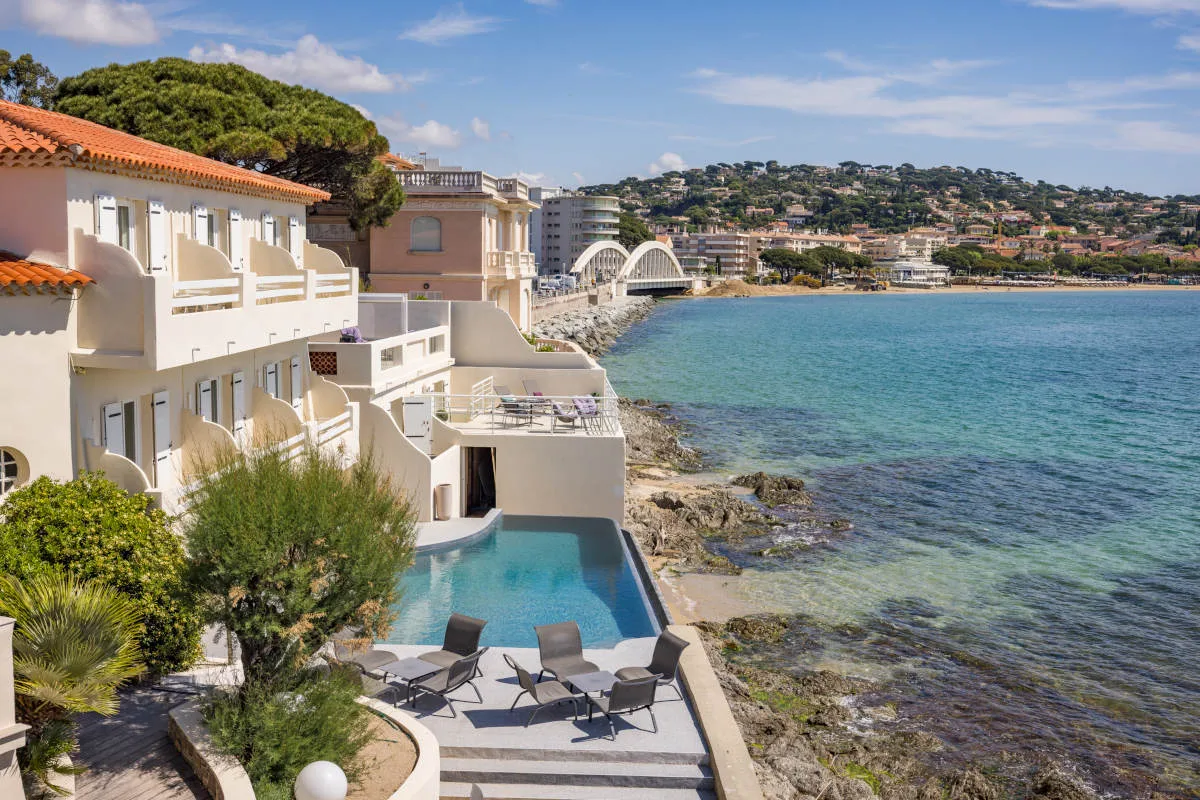
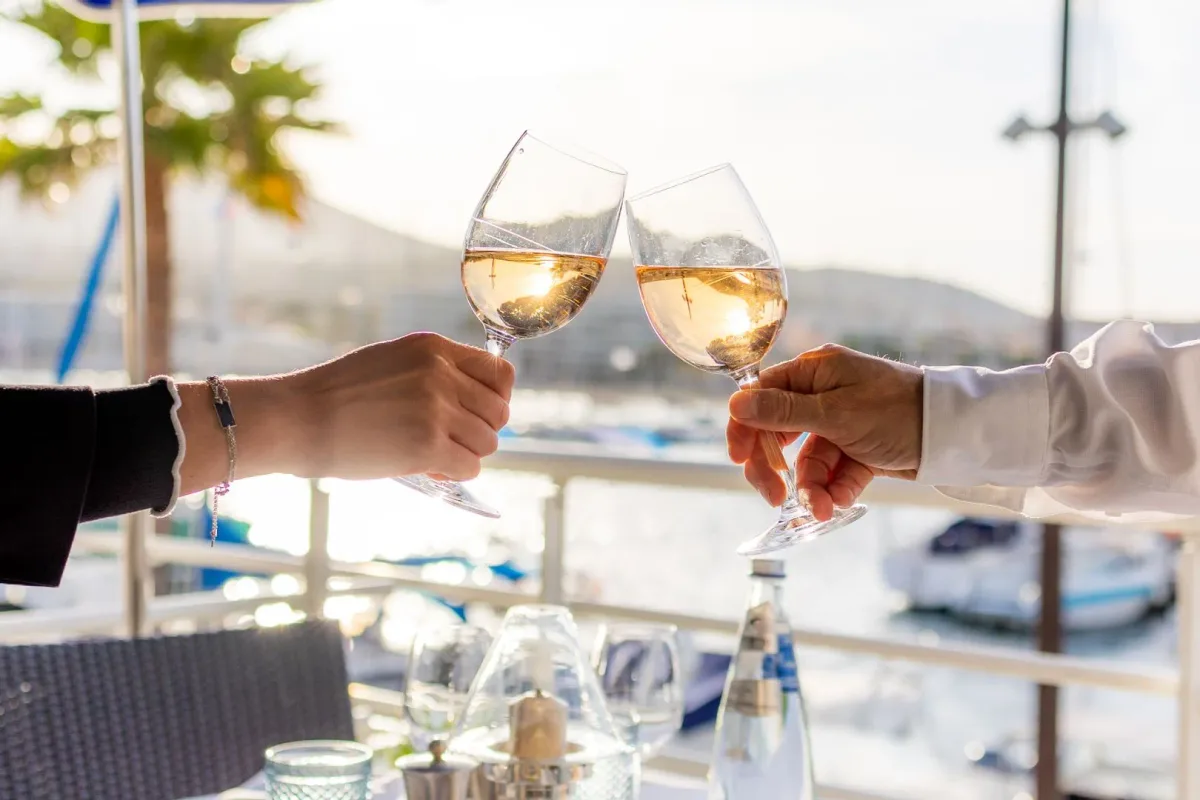
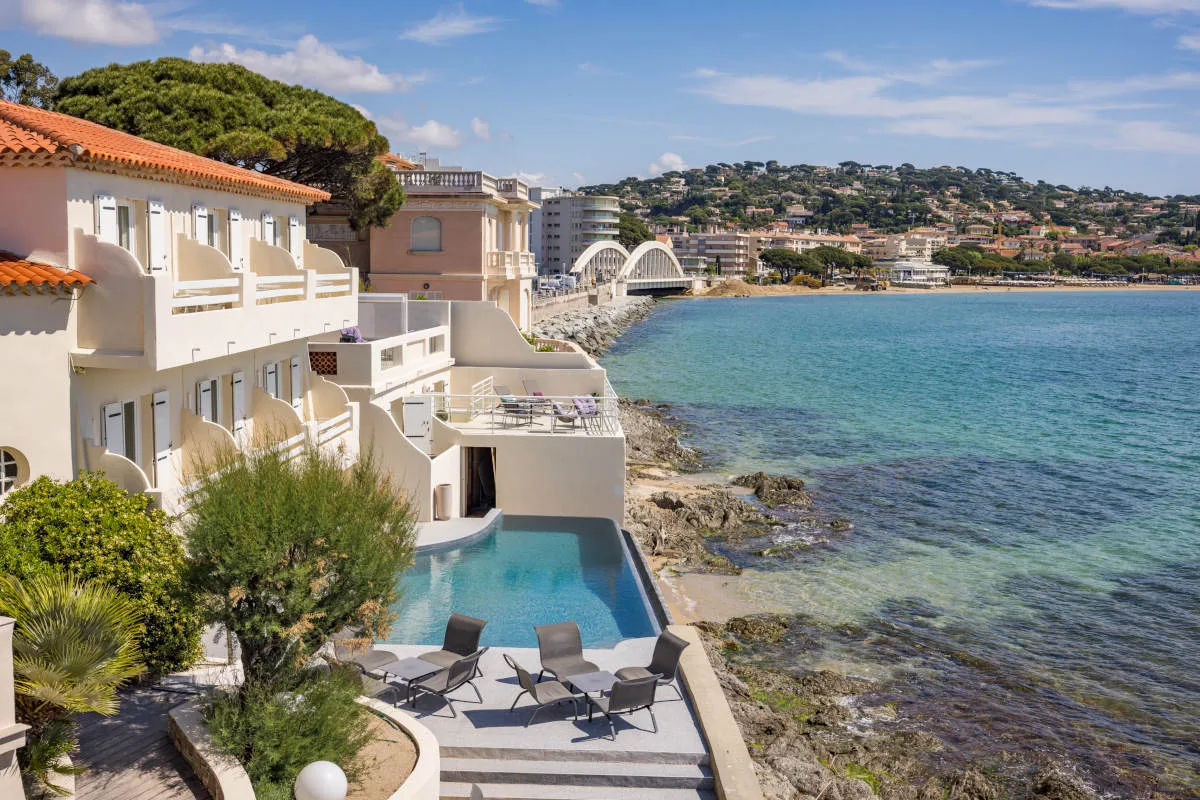
There is one view in Sainte-Maxime worth planning your evening around, and it belongs to Hostellerie La Belle Aurore on Boulevard Jean Moulin. The four-star sits right on the waterfront, and its rotunda dining room floats out over the gulf so that the whole opposite shore — Saint-Tropez itself — lights up across the water as the sun goes down. The trick of Sainte-Maxime is right here: you get the famous view of the famous place, in the calm, with a glass in hand, while the crush is happening over there. Book the golden hour. It is the single most SOF thing to do in town.
If you would rather eat closer to the streets, Hôtel Les Palmiers keeps Le First on Rue Gabriel Péri — a hotel dining room a step back from the front, steadier and more sheltered than the waterfront tables. It is the alternative on a windy evening or a night you want the town rather than the gulf.
After dark, and the old stones
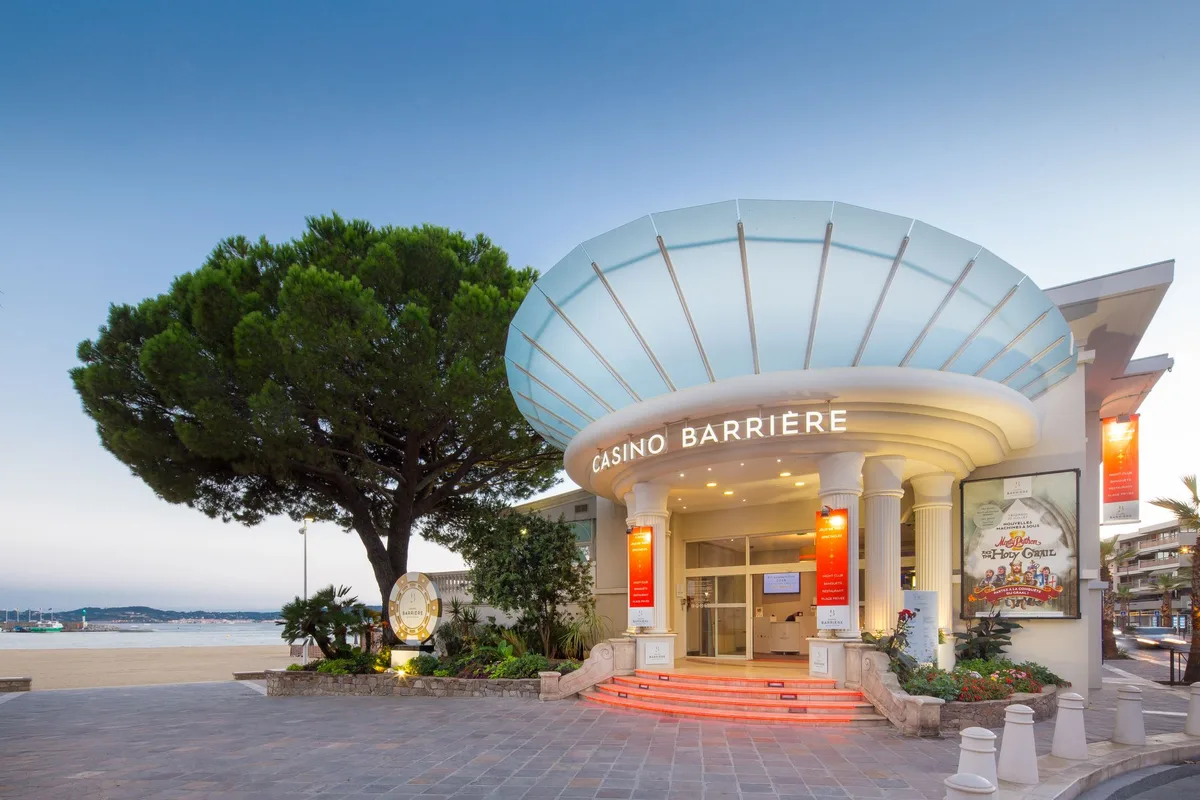
Sainte-Maxime's late hour is gentler than the village's and largely lives in one room. Casino Barrière Sainte-Maxime on Avenue Charles de Gaulle is more than a century old, recently renovated, with an Art Deco room, around a hundred and twenty-five slot machines and the Nino brasserie running late. It is the town's one proper late address — not a nightclub, a casino in the older sense, where the evening drifts on past dinner without anyone making an event of it.
By day, give the old centre half an hour. The Tour Carrée on Place de l'Église is a squat stone tower from 1520, a Monument Historique, now a small museum of Maximois traditions shown by guided tour only. The take-home is heritage, not a gift shop — and it is the quickest way to feel that this was a real place, a port that fished and traded timber, long before the gulf opposite became a name. It anchors the town to something older than the season.
That is Sainte-Maxime: the famous view from the quiet seat, on the better-tempered shore. The other side gets the photographs. This side gets the evening.