Everyone drives past La Croix-Valmer on the way to somewhere louder. The road from Saint-Tropez bends through it, the vineyards flash by, and the cars keep going — to the Place des Lices, to the clubs on Pampelonne, to the noise. That is the whole point. Ten kilometres from the most photographed harbour on the coast, the peninsula quietly empties out. The hills tip toward the sea in terraces of vines and umbrella pine, the last of the corniche traffic thins, and you arrive at Gigaro — a long, pale crescent of sand with nothing behind it but garrigue and two of the best hotels on the Riviera. La Croix-Valmer is what Saint-Tropez looked like before it became a verb.
The shape of the place
Understand the geography and the rest follows. The village sits up on the hillside, a working Provençal commune that happens to be surrounded by some serious wine. Below it, a winding descent through the pines, is Gigaro — the coast. This is the wild end of the Saint-Tropez peninsula, the side that faces away from the glamour and toward open water and the Îles d'Hyères on the horizon.
From Plage de Gigaro, the Sentier du Littoral — the old customs path — runs south toward three headlands: Cap Lardier, Cap Taillat, Cap Camarat. Cap Lardier is the most wooded of them, a protected stretch of coast where the development simply stops. Walk twenty minutes from the beach and you are alone with the sea and the cicadas. There is no club at the end, no DJ, no rental loungers in primary colours. That emptiness is the luxury here, and the two hotels above the sand were both built to frame it rather than fight it.
Where to stay
There are two addresses that matter, and they sit almost side by side on the Boulevard de Gigaro — siblings in setting, opposites in temperament.
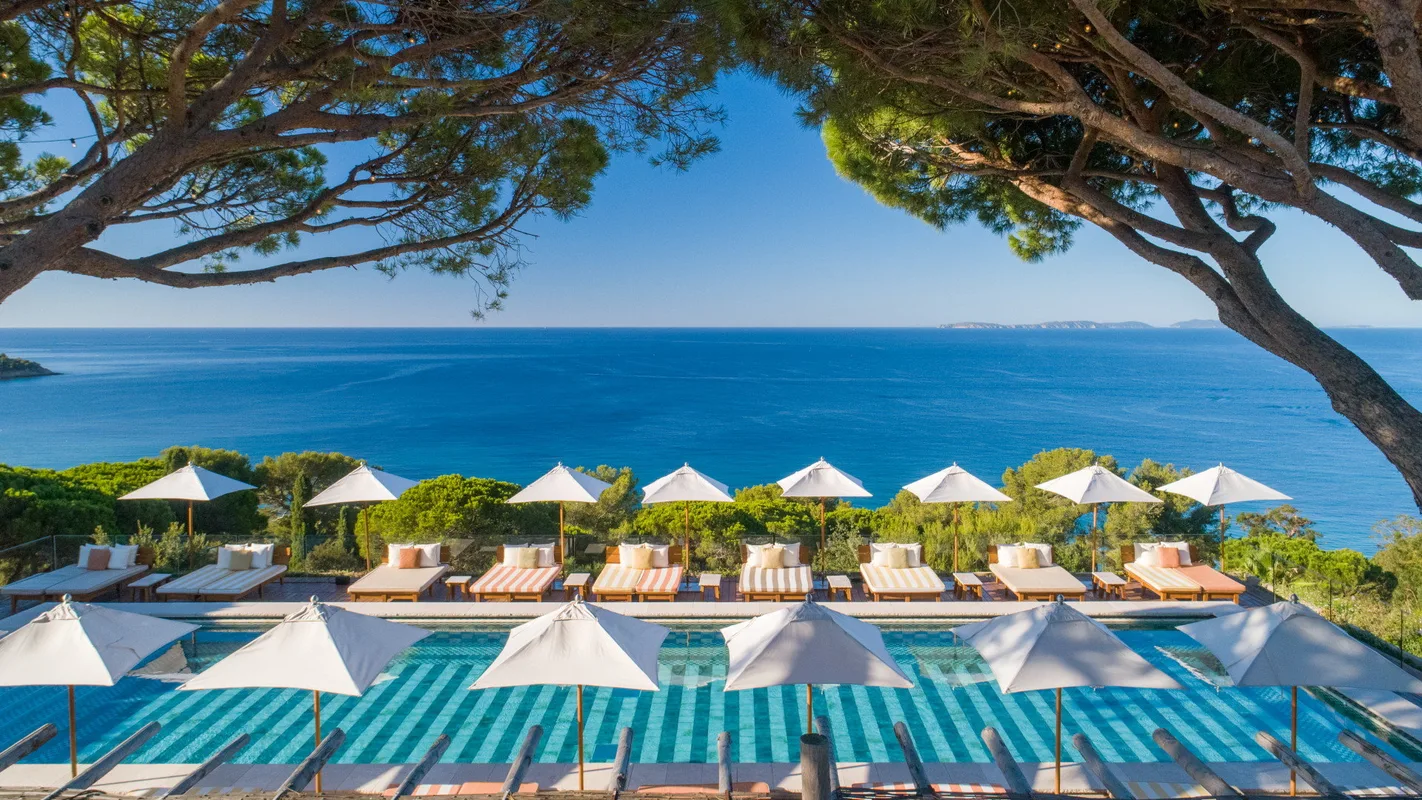
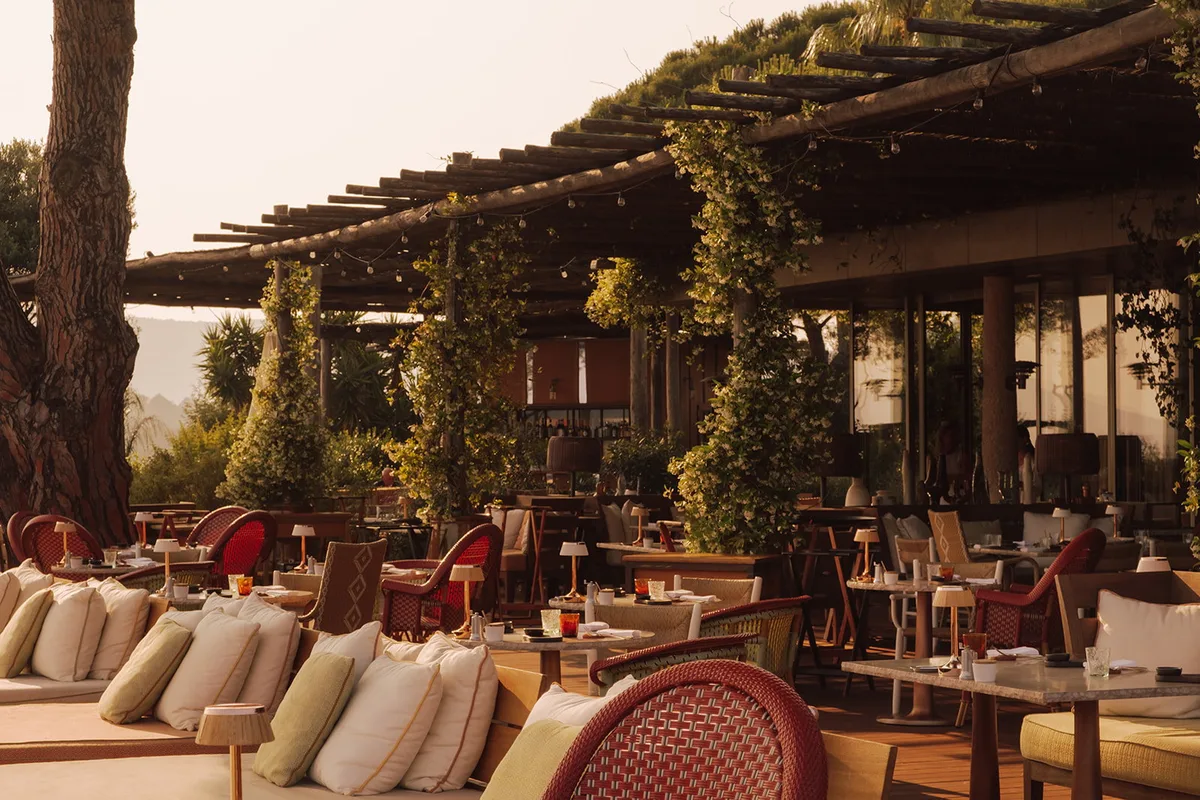
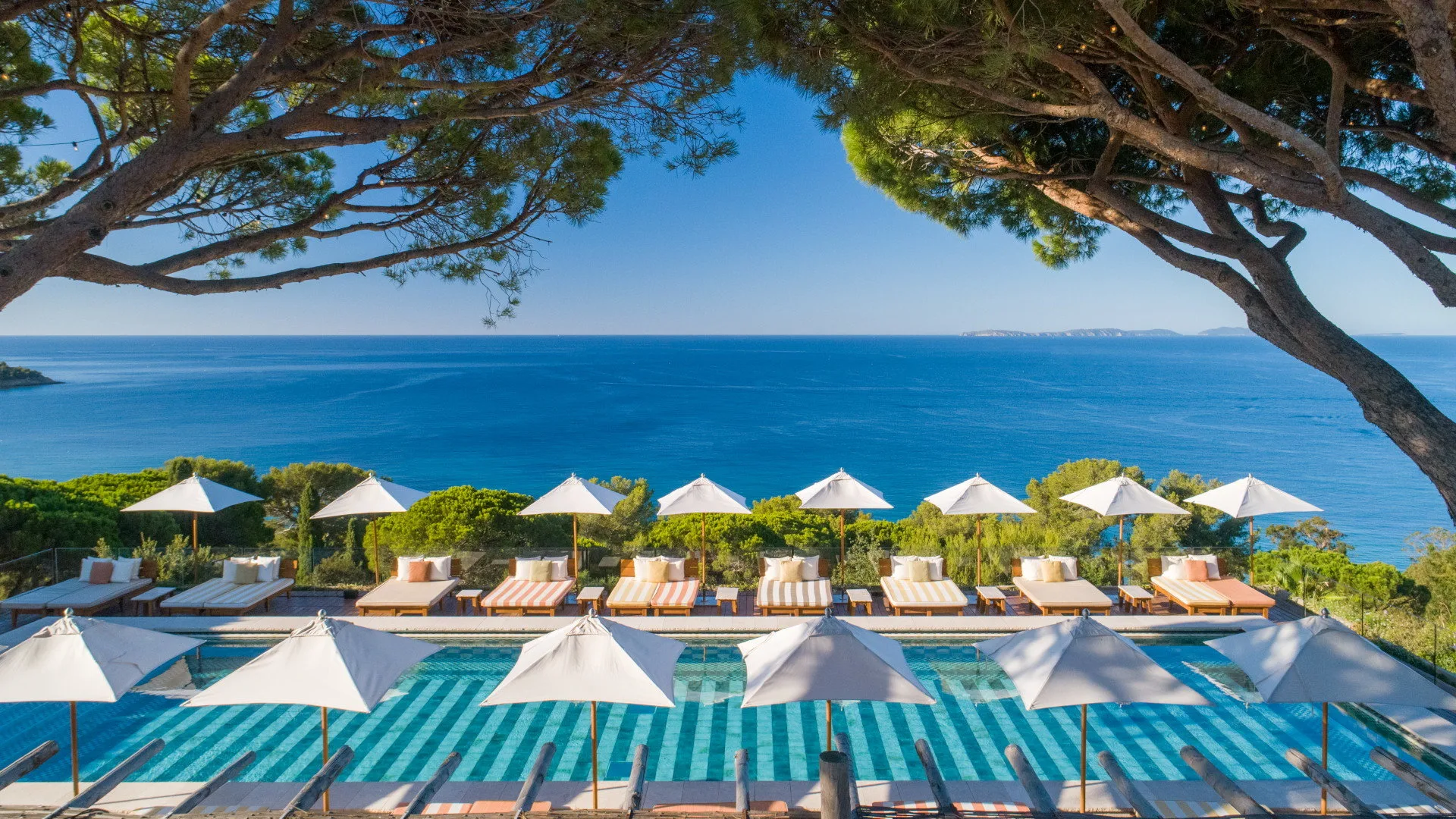
Lily of the Valley is the one people have heard of. Philippe Starck designed it, though it is unflashy about the fact: twelve hectares of garrigue cascading toward the water, three pools stacked at different levels of the hillside, the gulf of Saint-Tropez fifty metres below. It was built around long mornings and a longer siesta — a wellness villa that treats doing nothing as the headline event. Resort linen, bare feet permitted nearly everywhere, the kind of place where a week disappears without your noticing. Its dining room, Vista, is run by chef Vincent Maillard and has been Michelin-selected since 2021 — a 250-cover room with sea-and-pool panorama and a signature shoulder of Sisteron lamb. Take a weekday table and let the tasting menu arrive in sequence against the sunset; it lands cleaner that way.
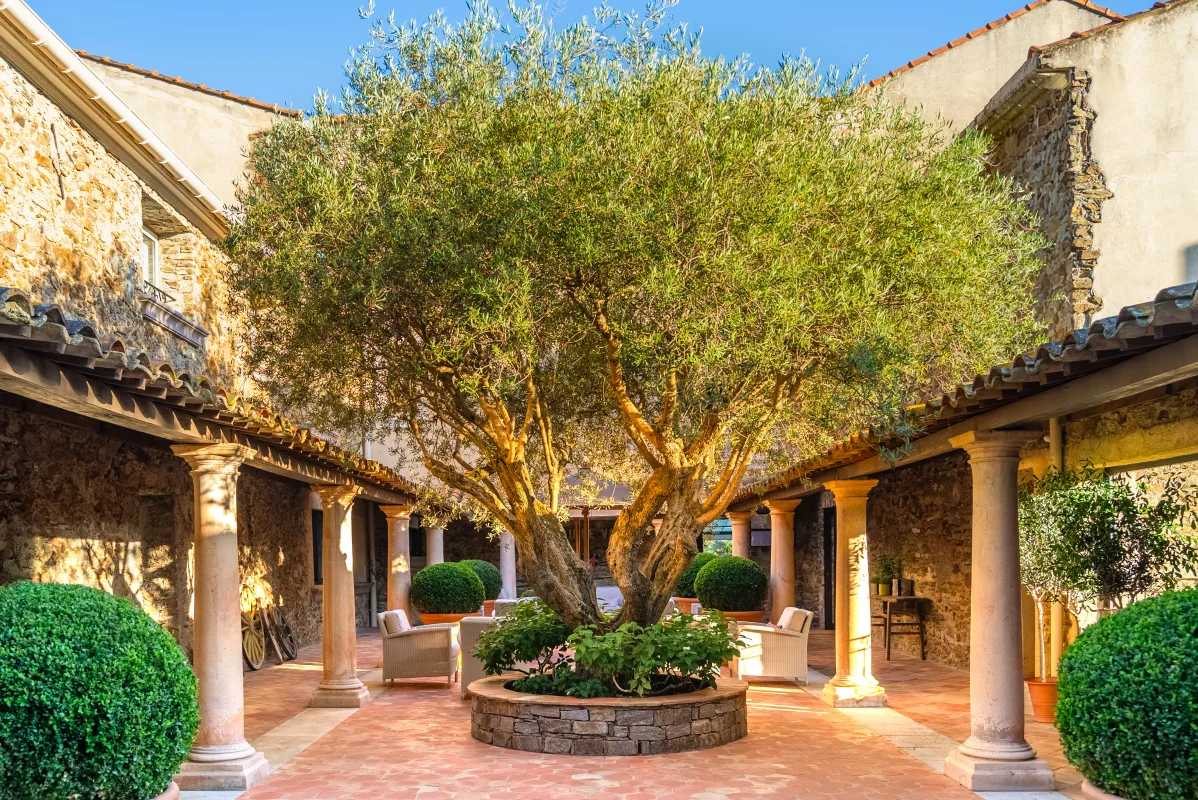
Next door, Château de Valmer is the quieter, older soul. A five-star Relais & Châteaux estate set in its own vineyards, with tree-houses among the palms, a 400-square-metre spa, and an organic-garden restaurant, La Palmeraie, that cooks largely from what grows on site. Where Lily is Californian and bright, Valmer is rooted and green — a wine estate that took guests in. Book a tree-house for late September, after the harvest, when the estate runs slower than it does in the July crush and the vines have just been picked. The wine is bottled and sold on site; it is the Gigaro hillside in a glass, and the most honest souvenir the commune offers.
A day, the SOF way
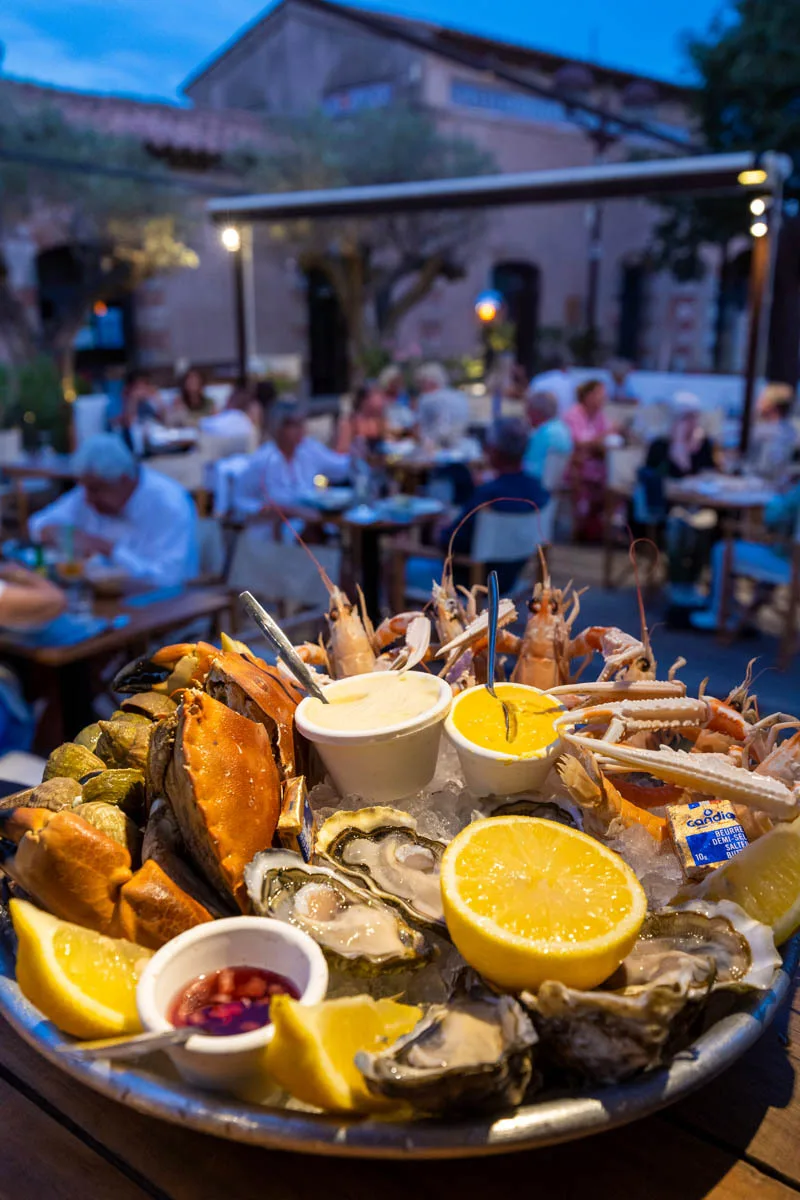
Start in the village, not on the sand. Café Valmer, on Rue Louis Martin by the library, has been the village-centre bistro since 2007 — a shaded terrace, an espresso that runs unhurriedly into a lunch of oysters and seafood platters and traditional French plates. The pacing is honestly Provençal: nobody is rushing you anywhere, because there is nowhere more urgent to be. This is the register the rest of the coast forgot.
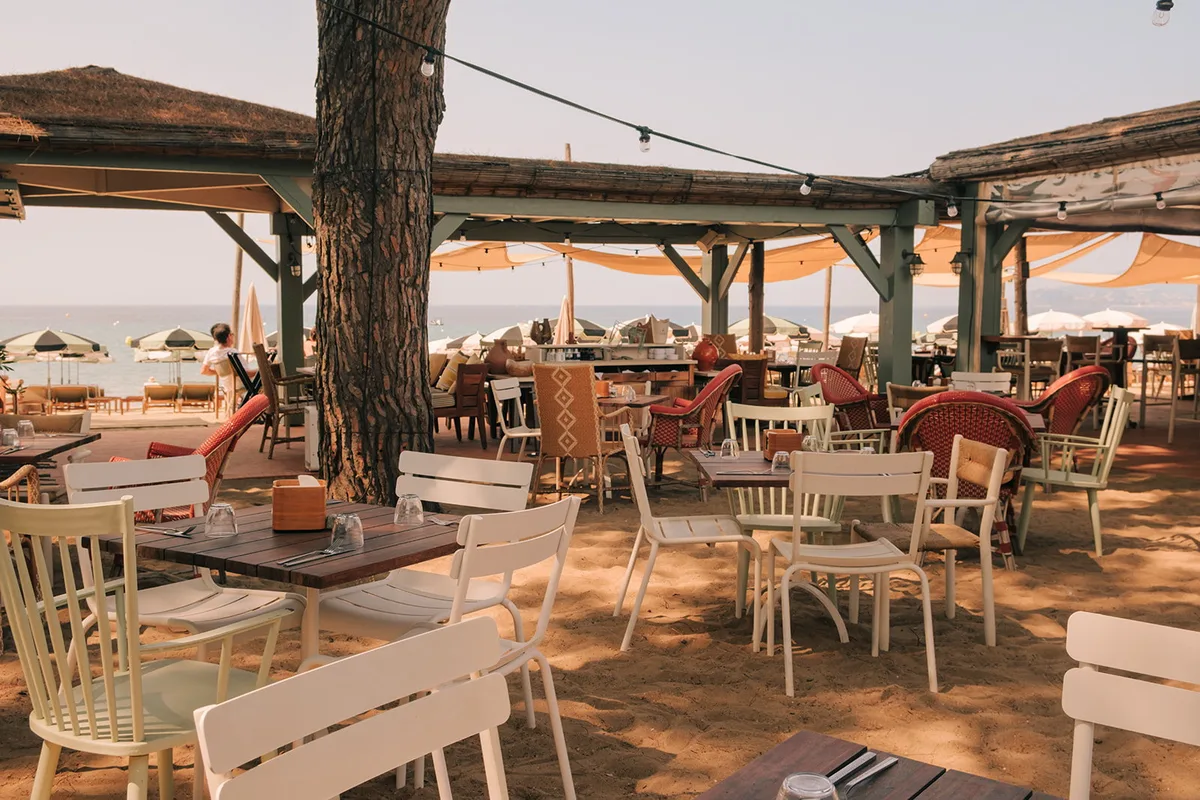
Then drop to the coast. For lunch on the beach itself, Pépé is the move — the beach club on Plage de Gigaro, operated by Lily of the Valley, with another Maillard menu but a lighter hand. His cooking reads cleaner on the sand than it does at dinner: a Friday lunch here, toes in the Gigaro grit, is the peninsula at its most undefended. Afterwards, walk the Sentier du Littoral toward Cap Lardier and earn the afternoon back. Twenty minutes out, twenty minutes home, and the only company is the maquis and the water.
Close the day high again. Dinner at Vista as the light goes — Maillard's lamb, the Gigaro coastline lit beyond the pool — or an aperitif on the village terrace at Café Valmer if you want the unbuttoned version. La Croix-Valmer does not stay up late. The village goes quiet after dinner, the hotel bars handle their own residents, and anyone hunting a 2am room is in the wrong commune — that hour belongs to Saint-Tropez, ten kilometres north-east. Here, the reward for an early night is an empty beach at eight the next morning.
When to go
This is a seasonal place and it does not pretend otherwise. The hotels run roughly April to October; the beach club is a May-to-September proposition. The sweet spot is the shoulder — late May to June, and September — when the water is warm, the light is long, and the peninsula has shed the high-summer surge. September is the connoisseur's month: the vineyards are in harvest, Château de Valmer slows to its proper rhythm, and Gigaro returns to the locals. July and August are gorgeous and busy; book Lily a month ahead, longer for July. The rest of the calendar, the village mostly sleeps — which, depending on what you came for, may be exactly the appeal.
La Croix-Valmer asks one thing of you: that you slow down to meet it. Do, and it gives back the rarest thing on this coast — quiet.