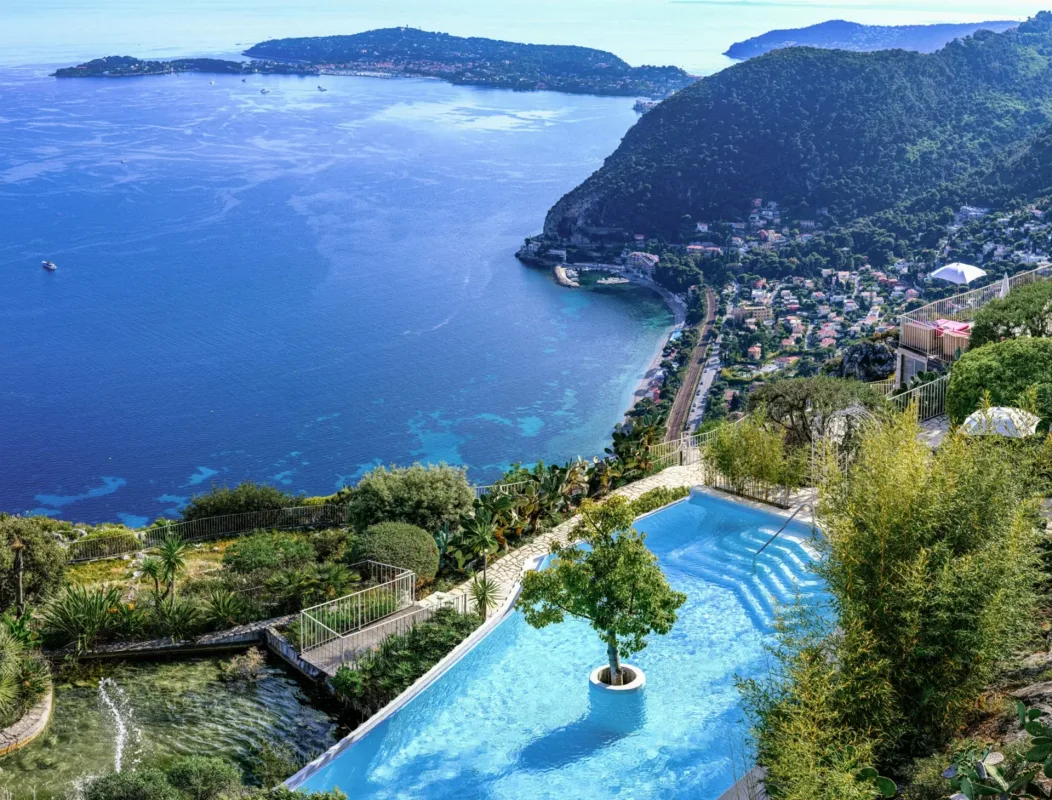
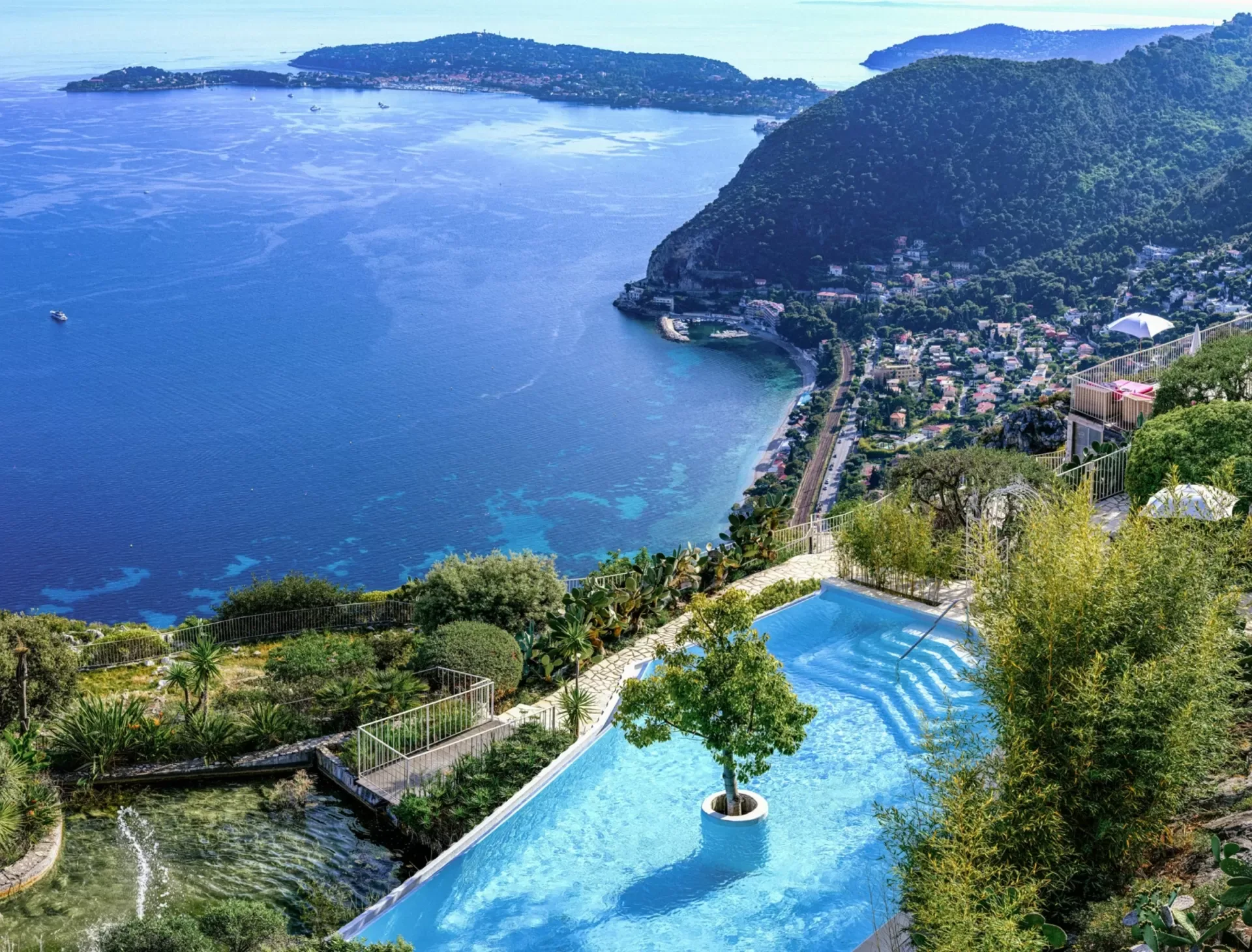
Most people meet Èze for ninety seconds, from a tour bus window on the Moyenne Corniche, and file it away as the pretty stone village on the cliff. That is the postcard, and the postcard is not wrong. But it misses the thing that makes Èze worth a day rather than a photo stop: it is built vertically, on a spur of rock 427 metres above the Mediterranean, so that everything here is a negotiation between the sky and the sea, and you spend the whole visit climbing toward one or descending toward the other. The village is a knot of medieval alleys with no cars, no straight lines, and a summit crowned by the ruins of a fourteenth-century château. Below it, by SNCF or on foot, sits a second Èze most visitors never reach — Èze-sur-Mer, the coastal hamlet with the sand. Two Èzes, one commune, half a kilometre of cliff between them.
The two Èzes
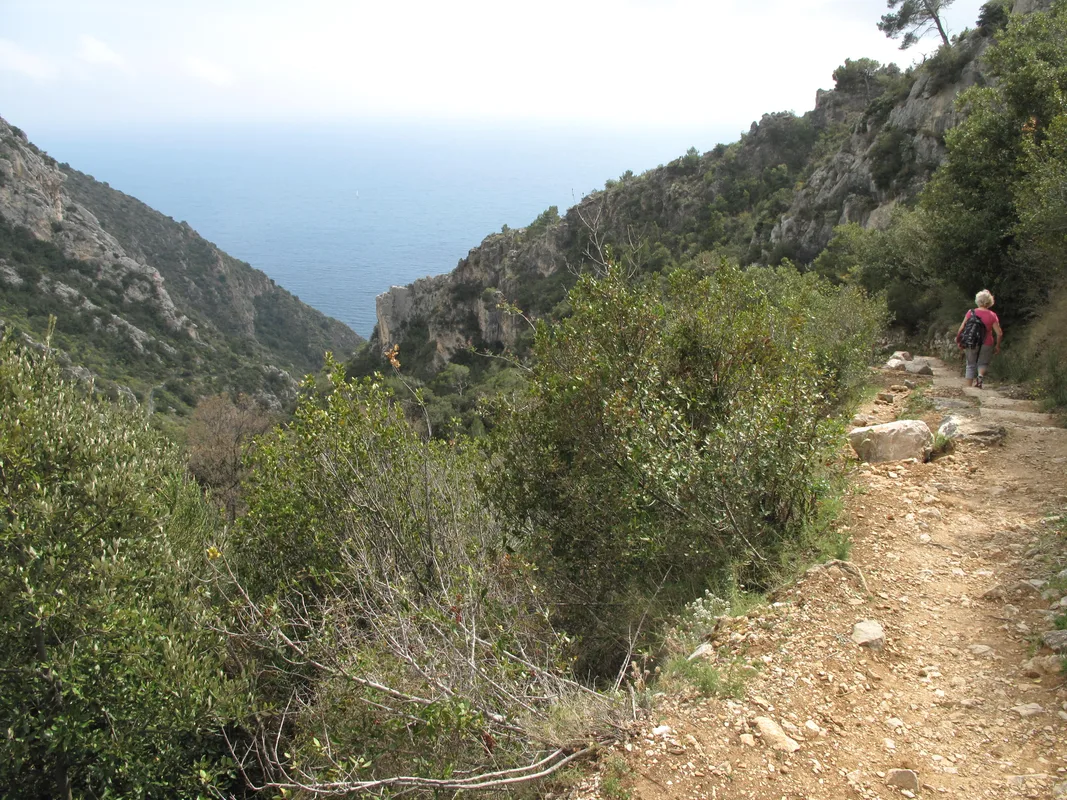
Understand this geography first and the rest of the village makes sense. Èze-Village is the citadel on the rock: the perched stone maze, the palace hotels, the perfume houses, the view that runs from Cap-Ferrat to Cap-Martin. It is small enough to cross in fifteen minutes and steep enough that you will not want to. Èze-sur-Mer is the strip of coast at the bottom — a train halt, a few houses, and one beach club. The hilltop has no sand and never pretends to; the seafront has no medieval glamour and does not try. What connects them is the Sentier Frédéric Nietzsche, the goat path the philosopher is said to have walked while composing part of Thus Spoke Zarathustra. It climbs from the shore to the village in roughly ninety minutes — pine, scrubland, switchbacks, and the sea dropping away behind you. Walk it uphill in the cool of the morning; do not attempt it at midday in August, and do not do it in the sandals you packed for the beach.
A village built upward
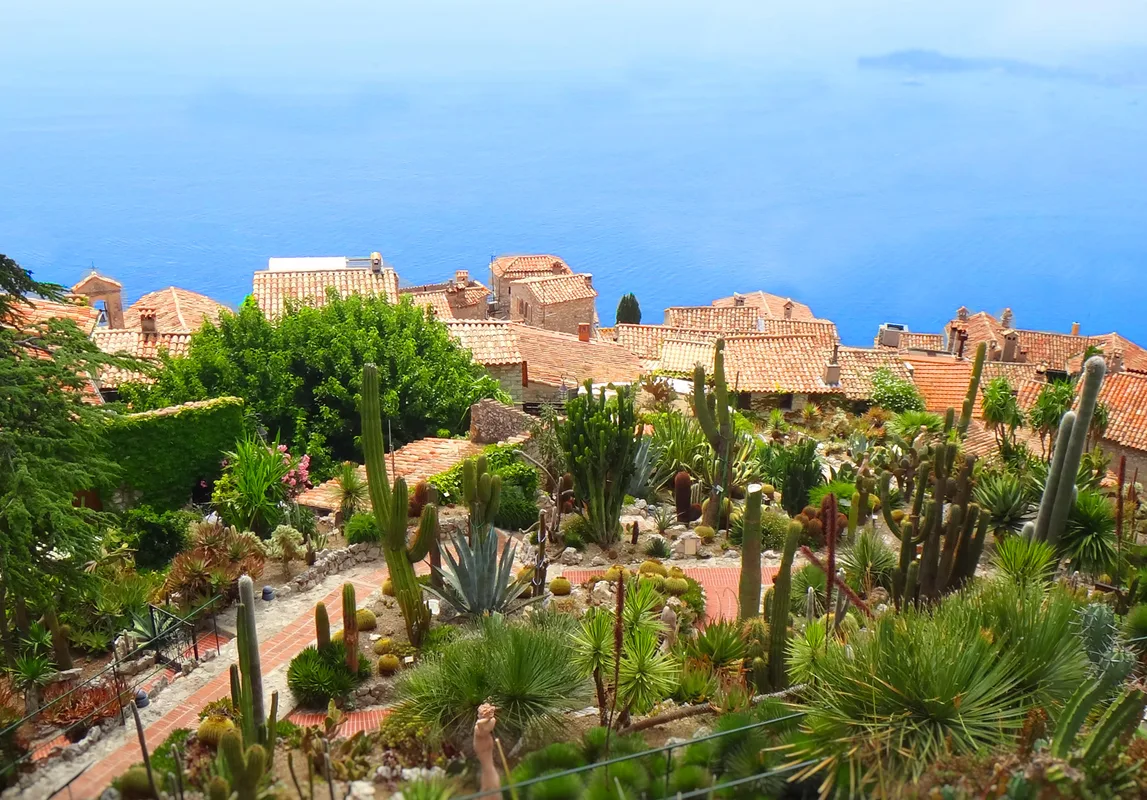
The pleasure of Èze-Village is that it resists you. There is no boulevard, no obvious circuit — just the Jardin Exotique d'Èze, the cactus garden planted across the château ruins at the very top, which is both the destination and the reason to climb. The succulents are improbable; the panorama is the point. From the summit terrace the coast unfurls in both directions, and on a clear day you can see Corsica. Aim to be up there mid-morning, before the buses, or in the last hour before it closes, when the light goes long and the crowds have gone down to dinner. Between the foot of the village and the garden, the alleys do the rest of the work — artisan doorways, vaulted passages, the occasional gallery — and you are meant to get a little lost. That is the design.
The perfume town
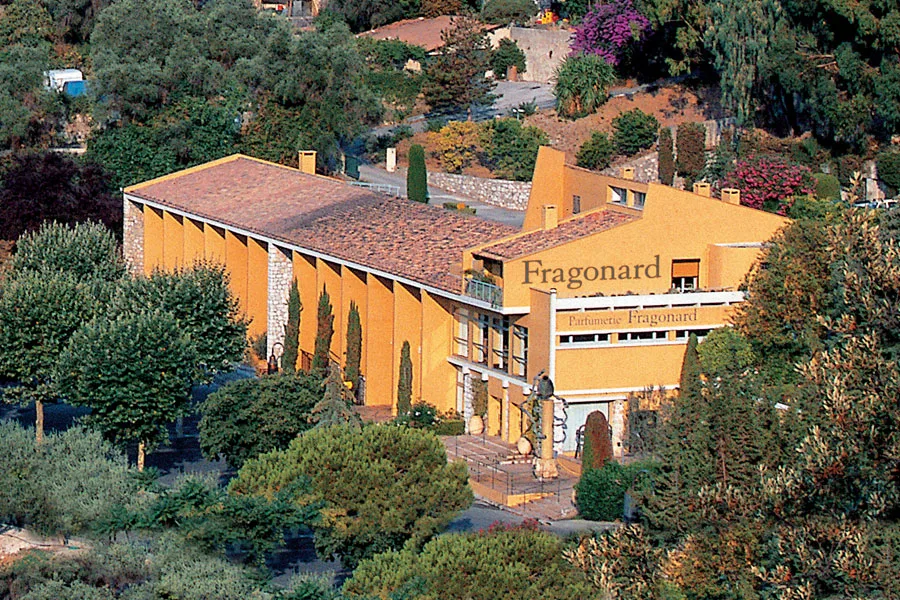
Èze is, quietly, a perfume village, and this is the souvenir worth carrying home. Fragonard runs a factory and boutique — the Usine Laboratoire — at the foot of the village, with free guided tours that walk you through how a scent is built from raw material to bottle. It is the painless, generous version of the craft, and it makes Fragonard the canonical Èze take-home. For the hands-on register, Galimard keeps its Studio des Fragrances on Place Charles de Gaulle, where the house — Grasse-founded, with roots reaching back to 1747 — runs workshops that let you compose and bottle a personalised fragrance under a perfumer's eye. Fragonard for the tour and the ready-made flacon; Galimard for the afternoon spent making your own. Two houses, two traditions, both honest to the place.
Lunch suspended over the sea
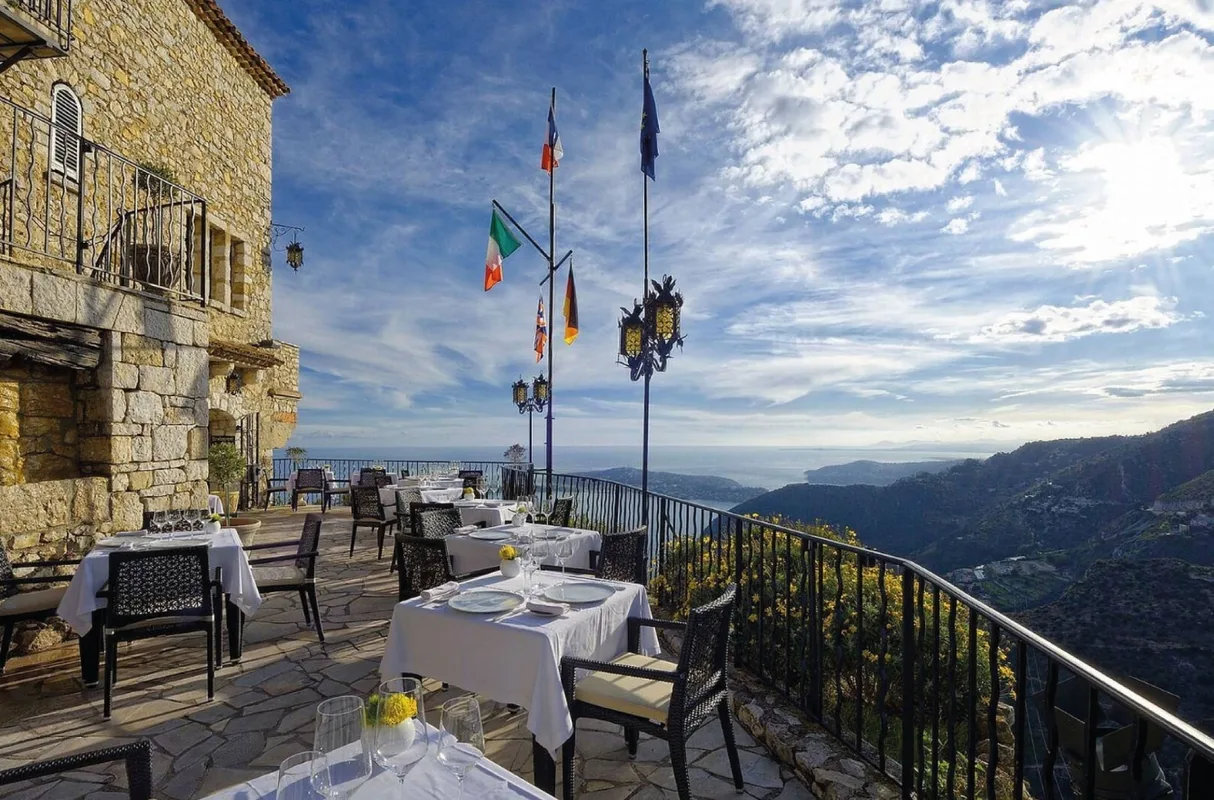
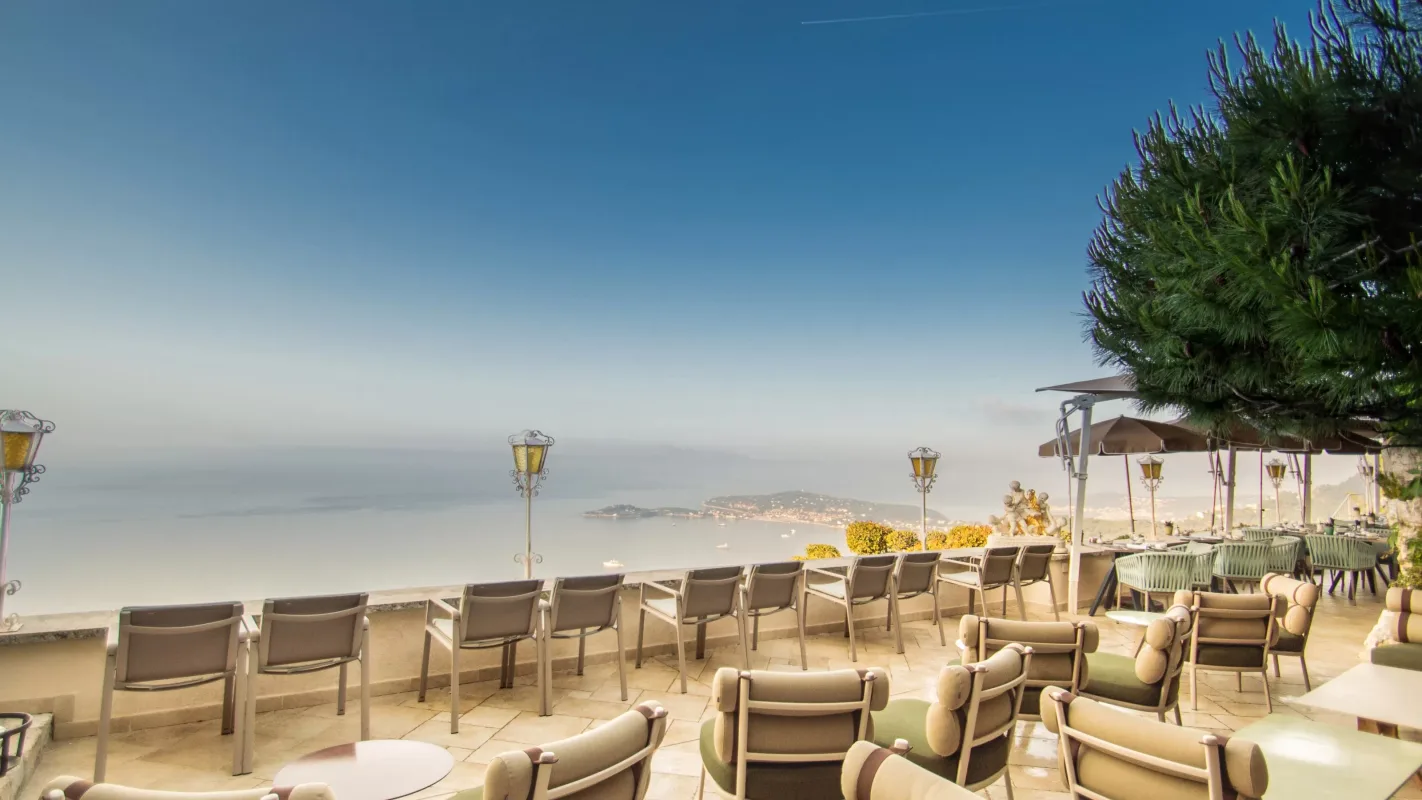
This is where Èze becomes serious. The village holds two five-star palace hotels on opposite flanks of the rock, and between them three of the most vertical dining rooms on the coast. Château de la Chèvre d'Or is the famous one — the cliffside hotel whose terraces seem cantilevered into open air, home to the two-Michelin-starred La Chèvre d'Or. For something a touch less ceremonious but the same impossible drop, Les Remparts, the Chèvre d'Or's terrace restaurant on Rue du Barri, puts lunch on the edge of the cliff with Cap-Ferrat laid out below. Across the village, Château Eza holds the eastern flank — a five-star counterpart with its own Michelin-starred table and a famously small terrace where the sea fills the whole frame. Book any of the three well ahead, ask for a table at the rail, and arrive around one for the long version. At the foot of the castle ruins, Le Nid d'Aigle is the gentler address — stone walls, the shade of an old mulberry tree, the same sea view without the white tablecloths — and the right place for a morning coffee before the climb or a plate at midday.
What to know
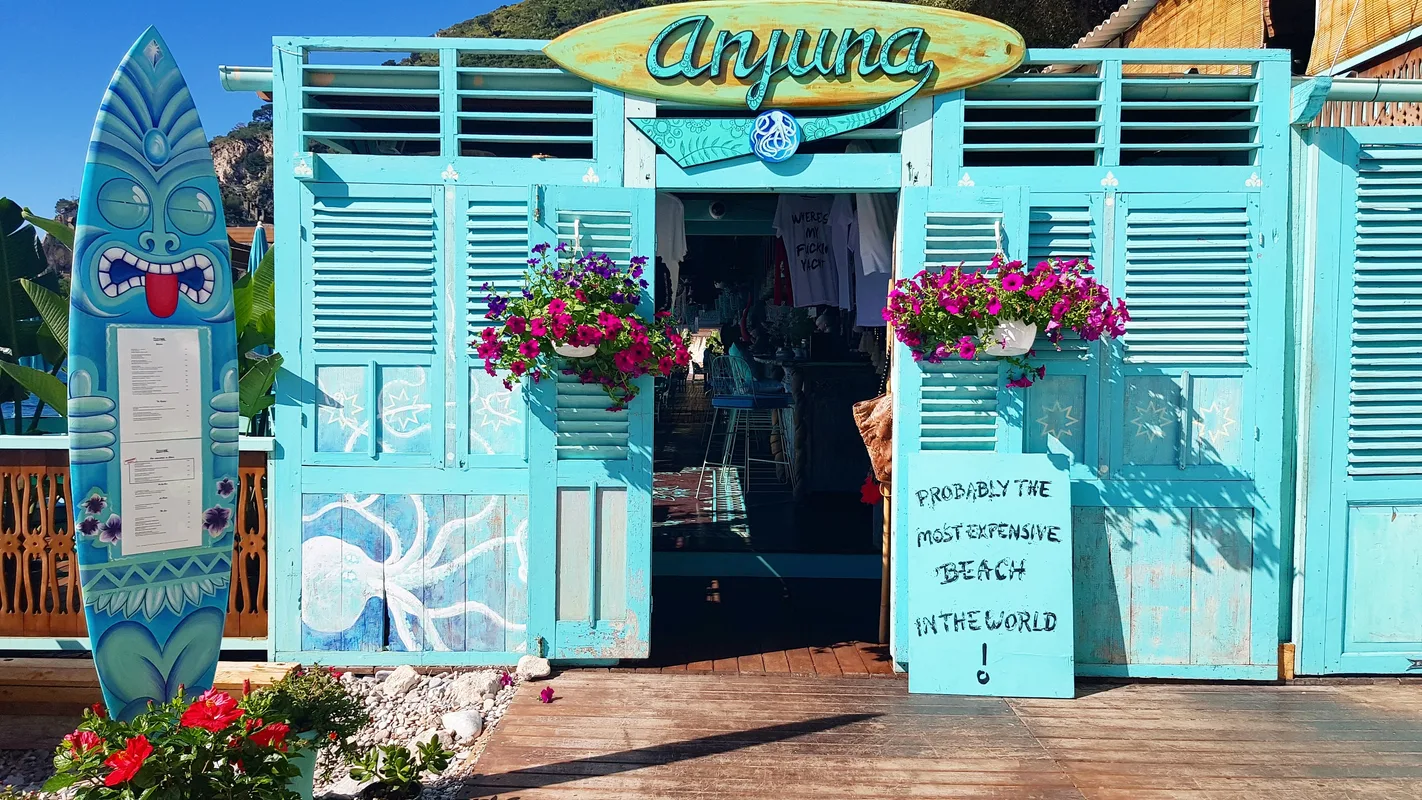
The medieval village sleeps early. There is no nightlife on the rock in the conventional sense; the one honest late hour in Èze-Village is the lounge bar at Château Eza, which runs to around eleven, the sea lights staying on after the alleys have emptied. For a proper evening on the water you go down to Anjuna Plage at Èze-sur-Mer, the commune's single beach club, which fills the gap in season. Provision for the day before you start: L'Atelier Gourmet, the bakery at the foot of the village on Boulevard du Maréchal Leclerc, is the picnic kit for the Nietzsche path — sandwich, focaccia, viennoiserie — because the citadel itself has no real sandwicherie. And keep Le Glacier on Rue Plane in reserve: the one artisan ice cream inside the walls, open roughly April through November, and the correct cone for the walk back down.
If you want the village at full scale, give it the Grande Corniche on the way in or out — the high road from Èze toward La Turbie on the D2564, the one Hitchcock filmed, with the whole coast falling away beneath you. Arrive that way and Èze stops being a stop. It becomes the village balanced between sky and sea, exactly as it looks from the road, and you will have earned the view from both ends of the climb.
A village you have to ascend to understand — so climb it slowly, and stay for the light.