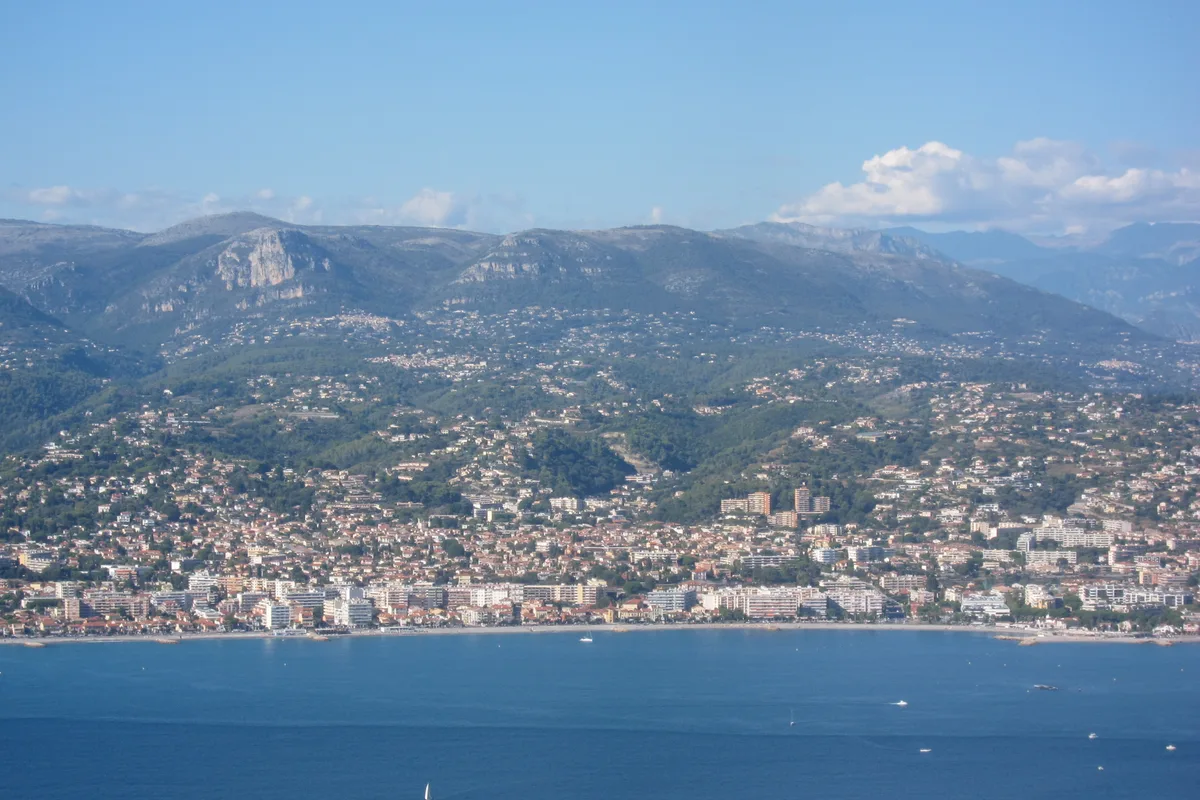
Cagnes-sur-Mer is three towns wearing one name, and most people only ever see the one that isn't worth stopping for. Off the coast road it reads as traffic and apartment blocks — a place you pass on the way to somewhere with a bigger reputation. That is the mistake. Climb a few minutes inland and you reach Haut-de-Cagnes, a medieval village stacked under a castle, where Modigliani and Soutine once kept rooms and the lanes are too steep for cars. Drop the other way and you hit Cros-de-Cagnes, a fishing shore that still hauls its boats up the shingle at dawn. And in between, on the flat, Renoir spent his last twelve years chasing the light through an olive grove. The cliché is the through-road. The town is everything you have to turn off it to find.
The three Cagnes
Hold the geography and the rest falls into place.
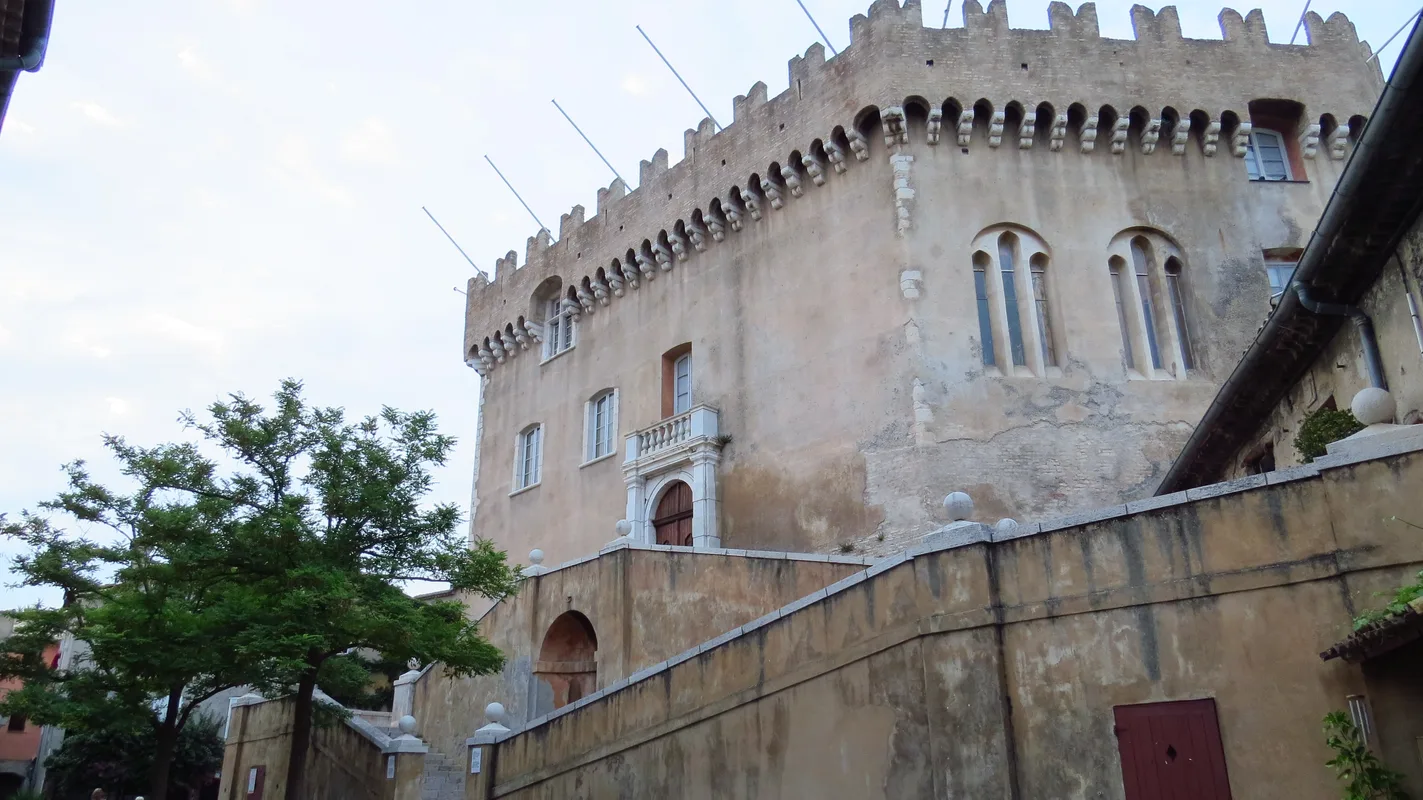
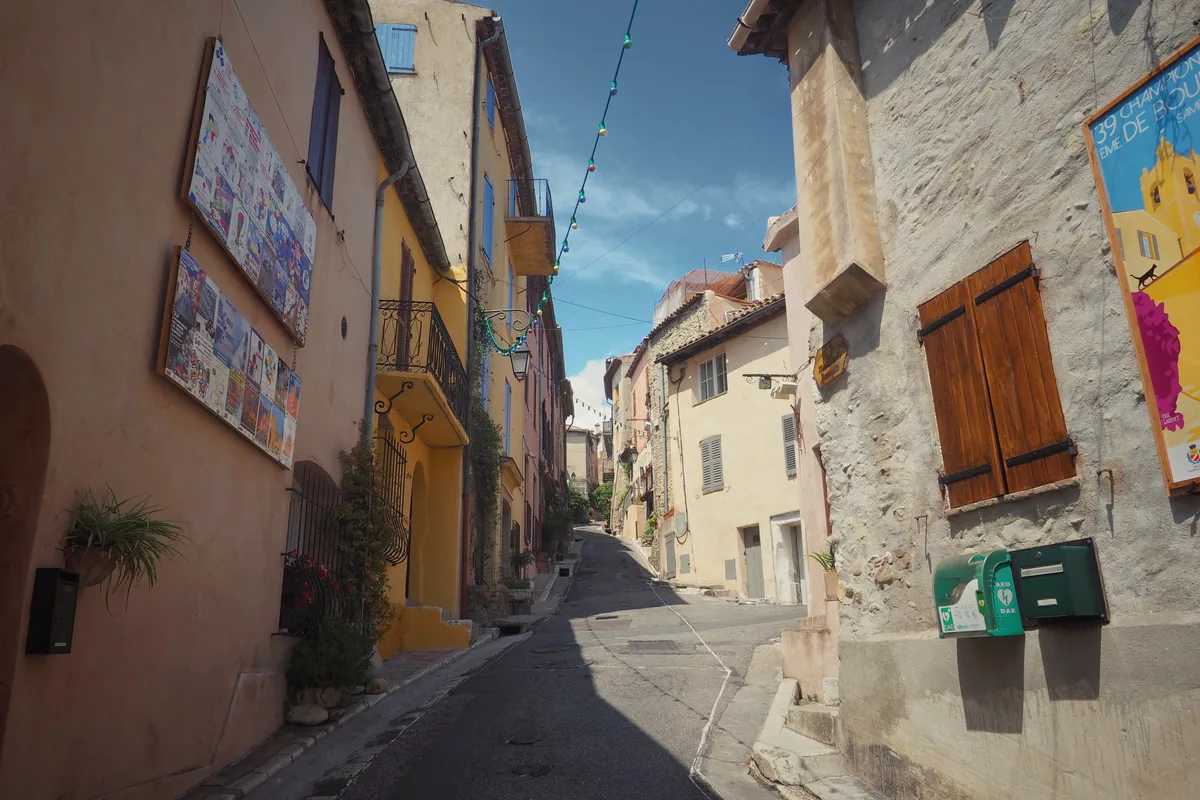
- Haut-de-Cagnes — the medieval crown: a tangle of vaulted passages and tiny squares climbing to the Château-Musée Grimaldi, the fortress the Grimaldi family raised in the fourteenth century and later softened into a Renaissance residence. Painters colonised it in the 1920s; it has kept the bohemian-with-a-view air ever since.
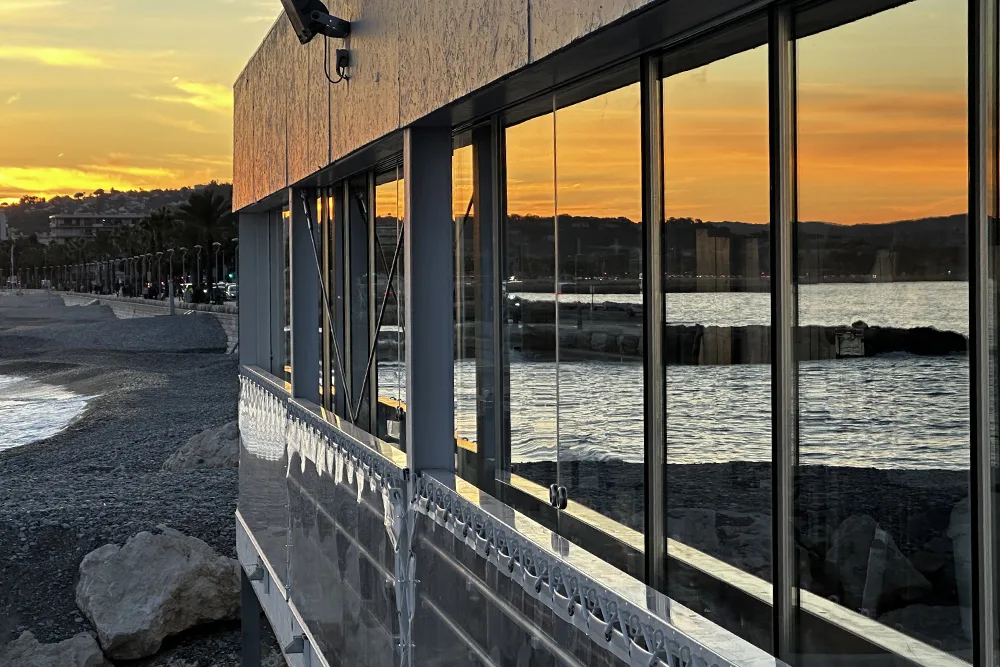
- Cros-de-Cagnes — the old fishing village on the sea: a working shingle beach, pointu boats drawn up on the stones, and a seafront where the catch still runs short and local.
- Cagnes-Ville — the modern, flat centre between them, with the train station, the market, and the racecourse. Useful more than lovely; you sleep and shop here, you linger up top or down by the water.
The hilltop, slowly
Haut-de-Cagnes is built to be walked and almost impossible to drive, which is its whole charm. The way up is the Montée de la Bourgade, a steep cobbled ramp that switchbacks past ochre houses and sudden sea views — leave the car below and climb it on foot; this is one of the best short walks on the coast. At the top, the Château-Musée Grimaldi rewards the effort twice: an arcaded Renaissance courtyard within, and from the tower a sweep that runs from the Cap d'Antibes to the Alps. Nearby, the Chapelle Notre-Dame-de-Protection holds frescoes worth the detour and a terrace that frames the whole coast.
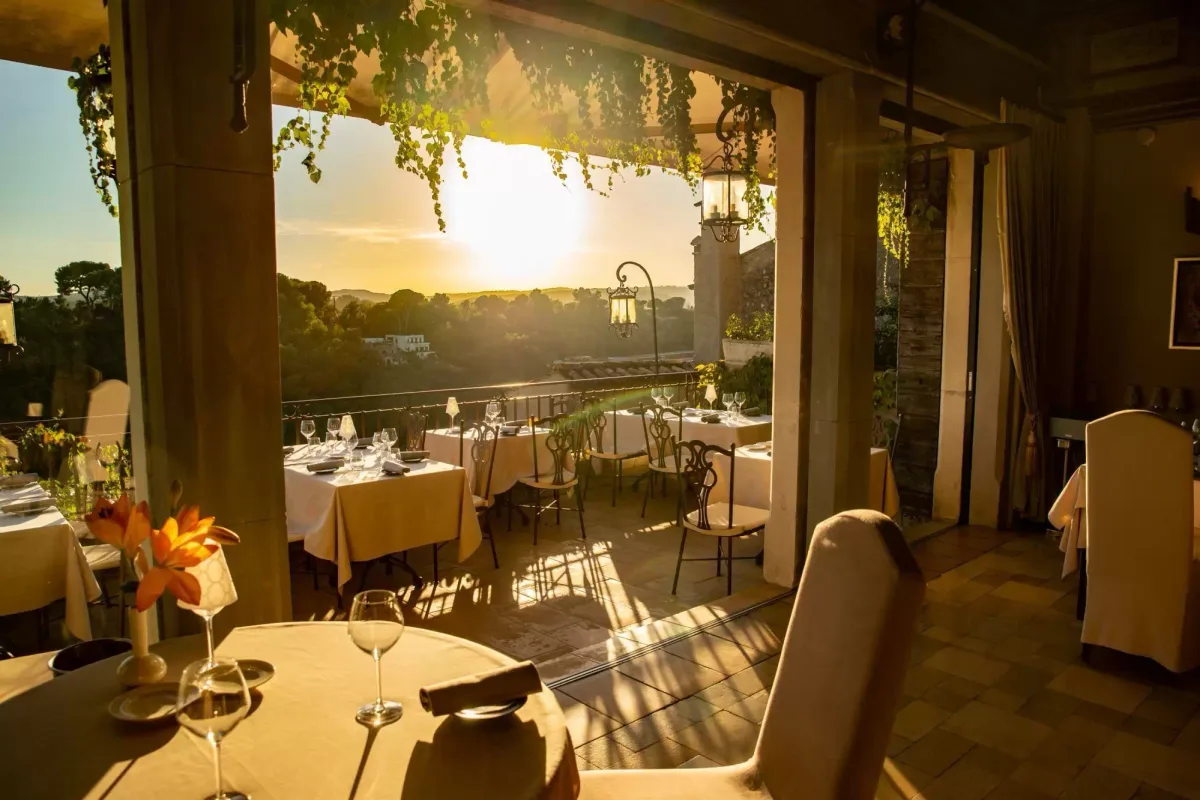
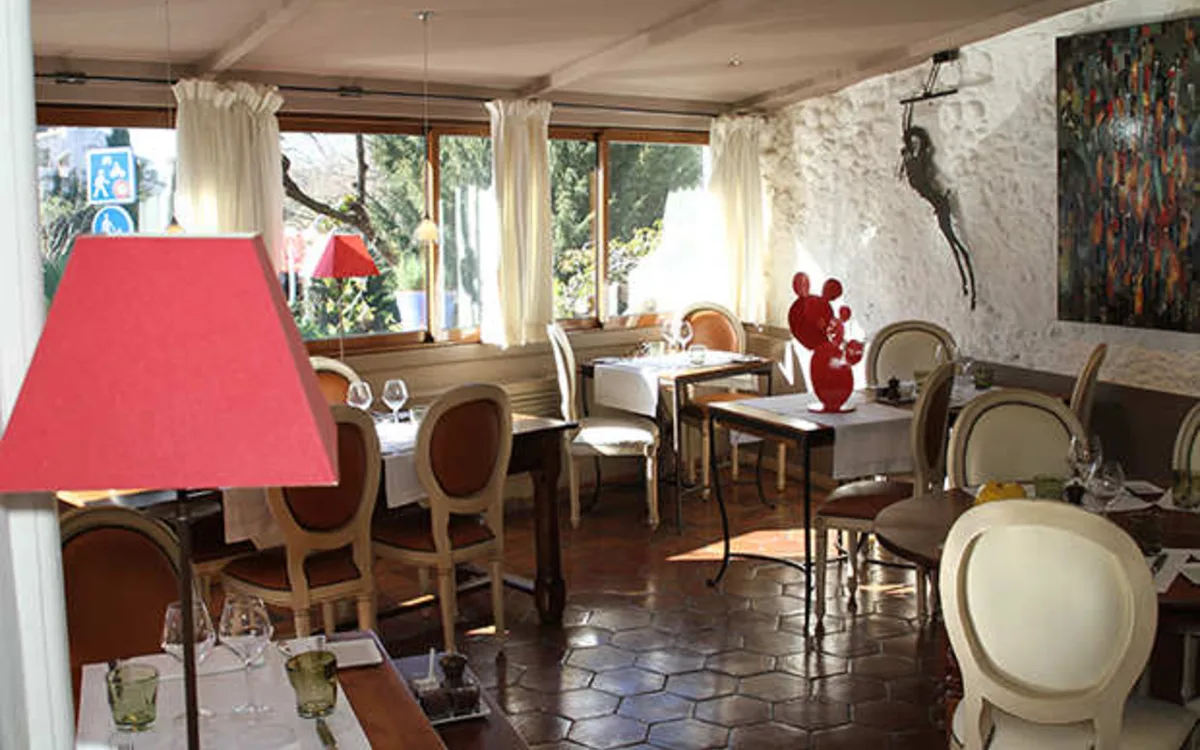
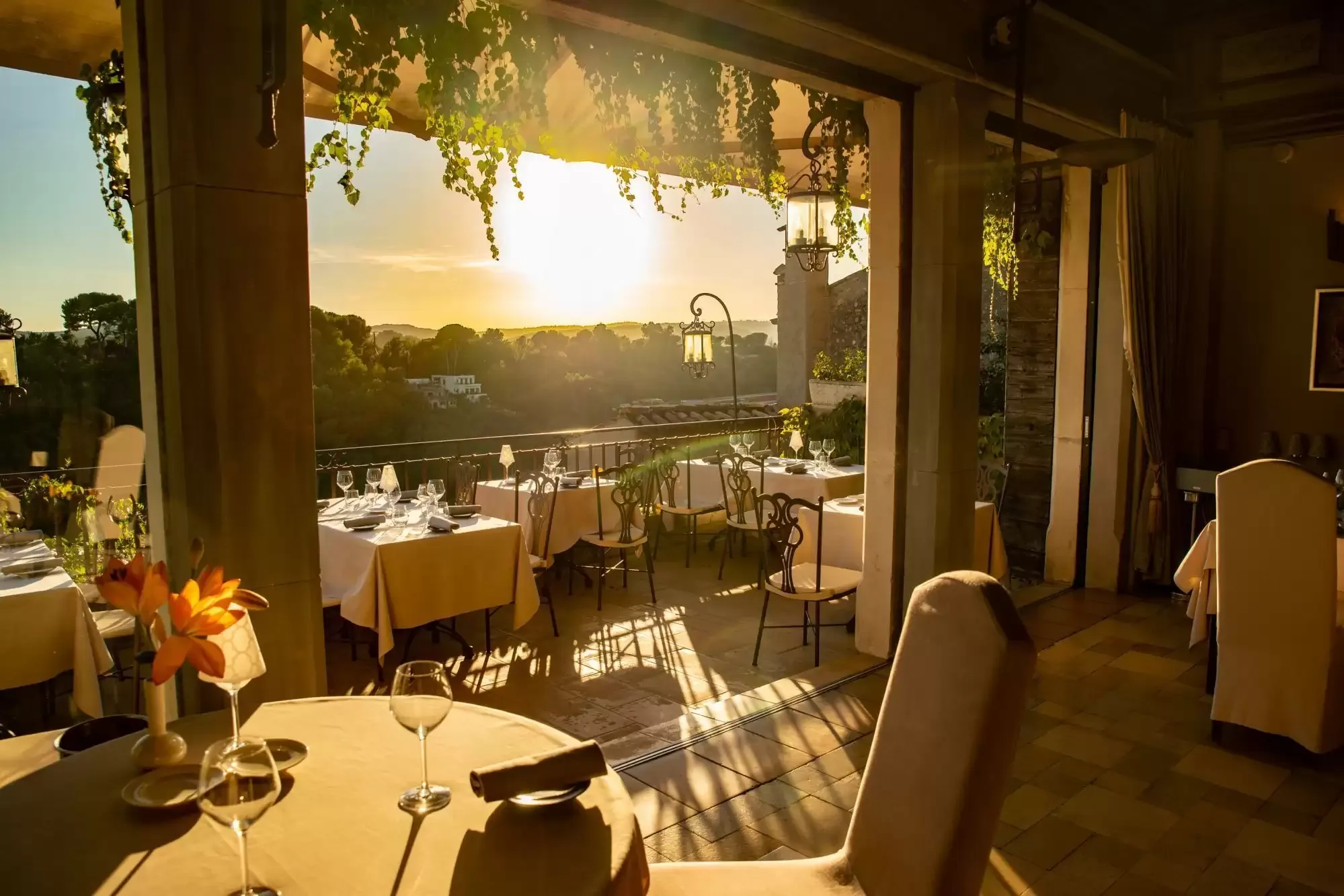
The village eats well for its size. Château Le Cagnard is the address — a restaurant set into the old ramparts with a retractable roof that opens to the sky, the kind of long Provençal lunch that justifies the climb on its own. For something quieter, Josy-Jo is the village institution, a grilled-meats-and-garden table the painters' descendants would recognise. Fleur de Sel keeps a small, serious kitchen on one of the upper lanes, and Le Village, on the Place du Château, is the everyday square table — the one you take when you simply want to sit out under the plane trees and watch the village be itself. For the apéro, L'Atelier on the same square pours well and lets the evening slow to the village's pace.
Renoir's light
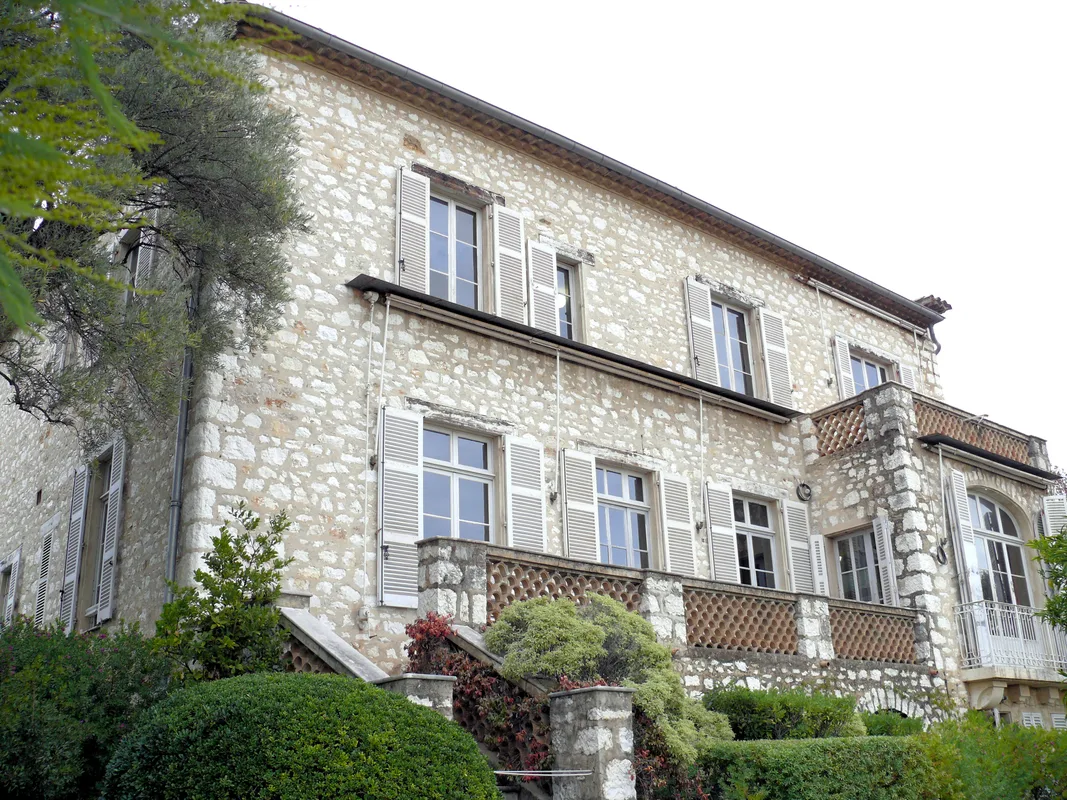
On the flat between the hill and the sea, the Musée Renoir occupies the Domaine des Collettes — the farmhouse and olive grove the painter bought in 1907 and lived in until his death in 1919. He came for the climate and the light, and for the ancient olive trees he refused to let anyone cut. The house is kept much as he left it: his wheelchair, his studio, the garden he painted again and again. Come for the canvases, stay for the grove — silver leaves, sea light, the South of France distilled into one quiet hillside. It is the most affecting hour in Cagnes, and the least crowded.
Down at the Cros
Cros-de-Cagnes is the antidote to everything polished about the Riviera. The boats are real, the beach is shingle not sand, and the seafront restaurants serve what came in that morning. The Cros-de-Cagnes seafront is where locals actually swim and eat — a row of tables facing the water, easy and unbothered. Le Bistrot de la Marine does the seafood straight and honest; Le Charlot 1er is the long-running neighbourhood table where regulars hold their corner. For a beach day with a lounger and a kitchen behind it, Le Cigalon Plage is the seafront's reliable beach club — a swim, a rosé, a plate of grilled fish, the afternoon gone before you notice.
A flutter, then dinner
Cagnes keeps a surprise on the flat: the Hippodrome de la Côte d'Azur, the region's racecourse, set just back from the sea. It runs meetings through the winter and again in high summer, and an evening at the races here is one of the Riviera's better-kept low-key nights out — floodlights, the rail, a glass in hand, none of the Monte-Carlo posing. Check the calendar before you come; a race night reshapes a whole evening.
What to know
- Getting around — the train on the Cannes–Ventimiglia line stops at Cagnes-sur-Mer, with Nice fifteen minutes east. For Haut-de-Cagnes, a free shuttle (navette) climbs from the centre; otherwise park below and walk up. Do not try to drive into the old village.
- Where it sleeps — Cagnes is best as a base for the central Riviera: quieter and better value than Nice or Antibes, with both an hour's reach. The character beds are up in the hill village.
- Timing — spring and early autumn are ideal; the hill village stays cool and walkable, the Cros shore stays calm. August fills the beaches but the heights keep their air.
- The order of a day — Renoir in the soft morning, the hilltop and a long lunch through the bright hours, the Cros for a swim and dinner facing the water.
Cagnes hides in plain sight — turn off the coast road, climb or descend, and it opens.