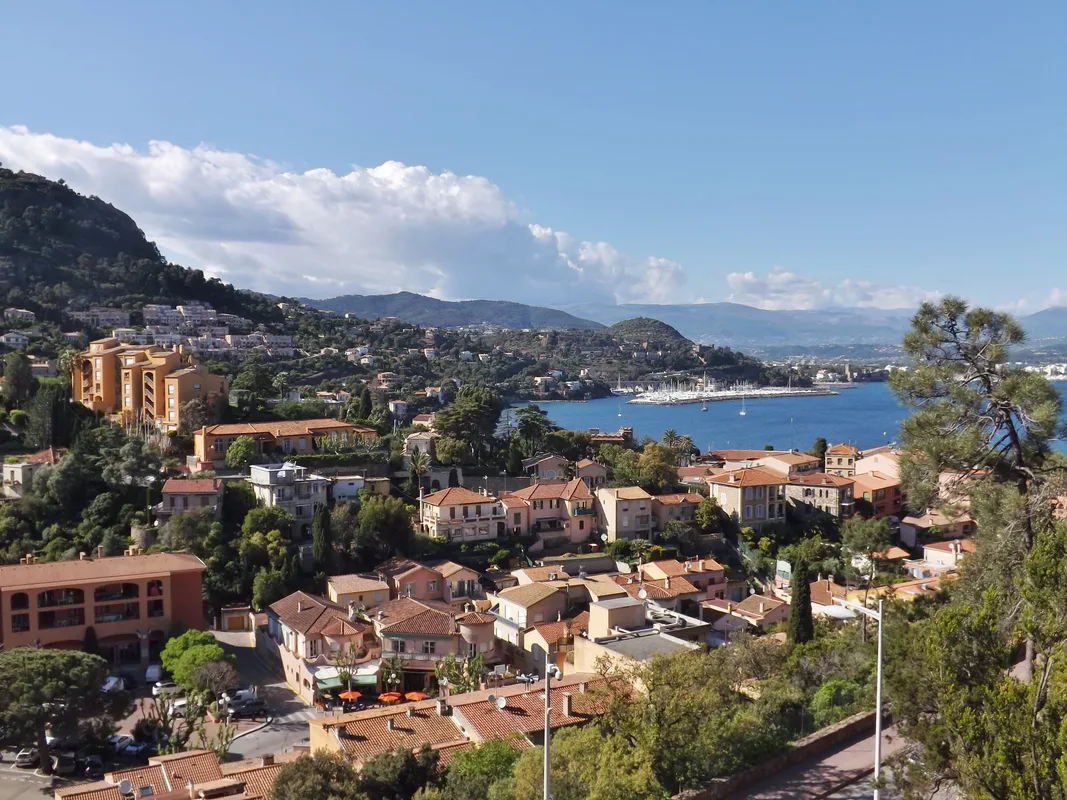
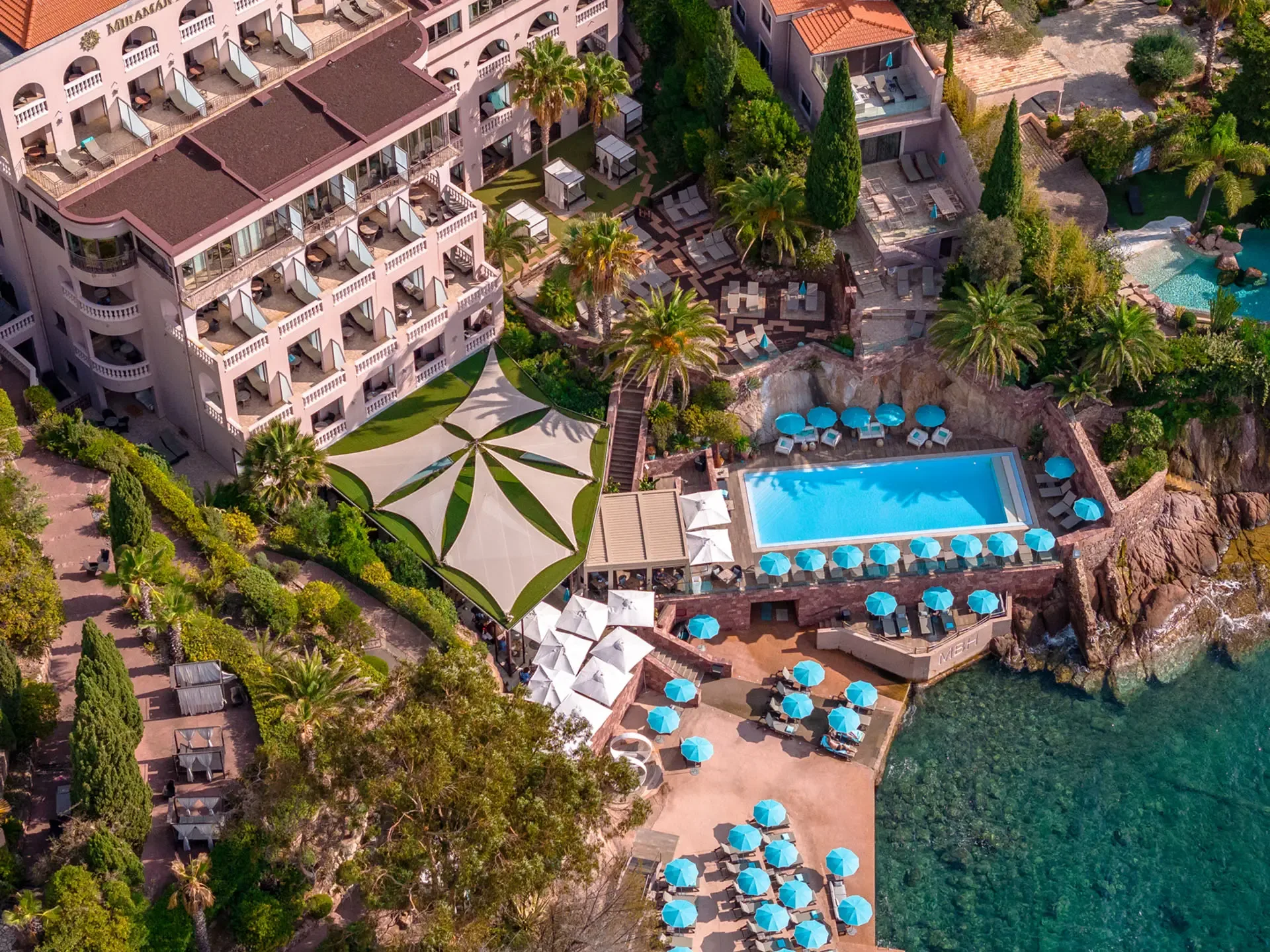
Most people meet Théoule-sur-Mer at forty kilometres an hour, through a windscreen, on the drive between Cannes and Saint-Raphaël. The Corniche d'Or does that to you — it hands over the whole coast in a single sweep and dares you not to slow down. But Théoule is not a view you pass. It is the precise point where the Massif de l'Esterel walks into the sea, eight kilometres west of Cannes, and the rock here is the wrong colour for a postcard. It is red. Volcanic porphyry, rust and oxblood, falling straight into water that has no business being that blue beside it. Painters have come back to that contrast for a century, and they keep getting it slightly wrong, which is how you know it is real.
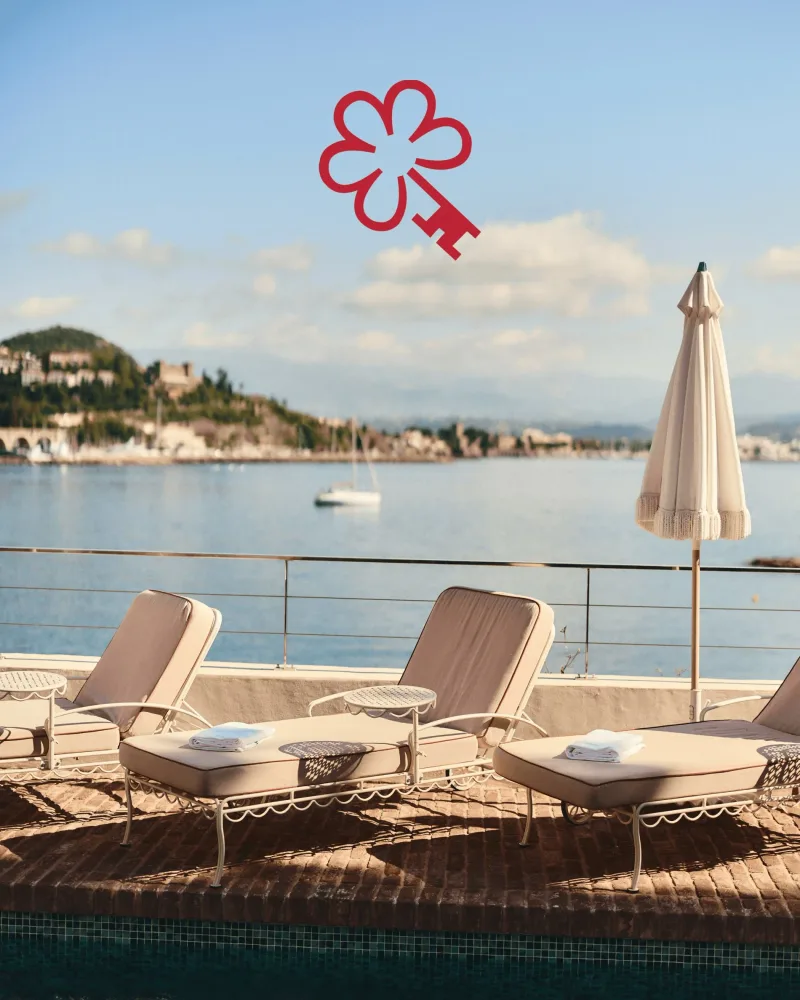
This is the Riviera with the volume turned down. No Croisette, no valet theatre, no one performing wealth at you. Théoule has one small marina, a scatter of calanques you reach on foot, cliff trails through Aleppo pines, and — quietly, in the last few years — two Michelin stars and a five-star château that opened in spring 2024. It rewards a certain kind of traveller: the one who has already done the loud version and wants the rock, the sea, and a very good lunch with nothing in between.
The lie of the land
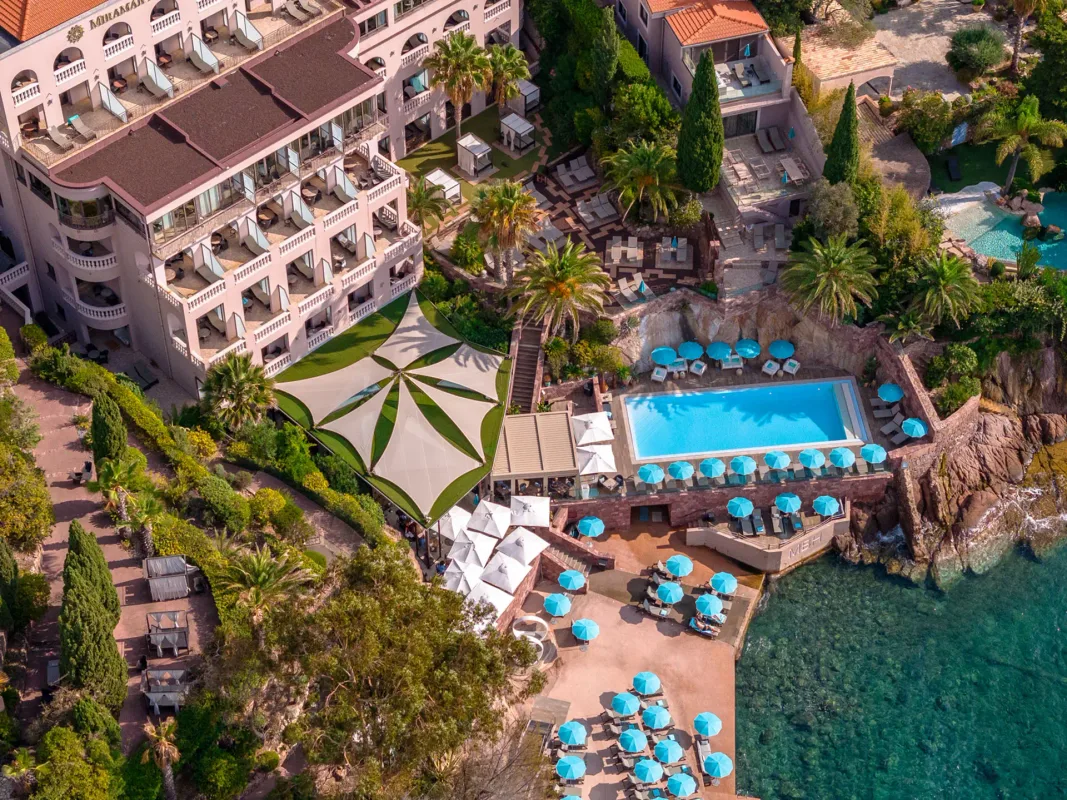
Understand Théoule as a vertical place, not a horizontal one. There is the village down at sea level — Place Général Bertrand, the marina, the everyday register — and then there is the cliff, where the hotels live, stacked above private coves you cannot see from the road.
The village is small and unhurried, and that is the point. This is where you buy your morning: Les Délices de Théoule on Place Général Bertrand is the boulangerie-pâtisserie that opens before the cliff hotels stir, coffee and viennoiseries first, sandwiches and salads by midday. A few doors on, Lougo Gelato on Avenue Charles Dahon is the village's only glacier — artisan gelato, a tea-room and crêperie sideline, open December through October. For the take-home object rather than the take-home memory, Le Poisson à Plumes on the same square carries pottery, paintings, sculpture and jewellery from regional makers. That is the village in full. Do not arrive expecting a shopping town; expect a place that does a few things and does them without fuss.
The cliff is the other Théoule, and it is where the ambition lives.
The two stars
For a commune this size to hold two one-star Michelin kitchens is faintly absurd, and entirely true.
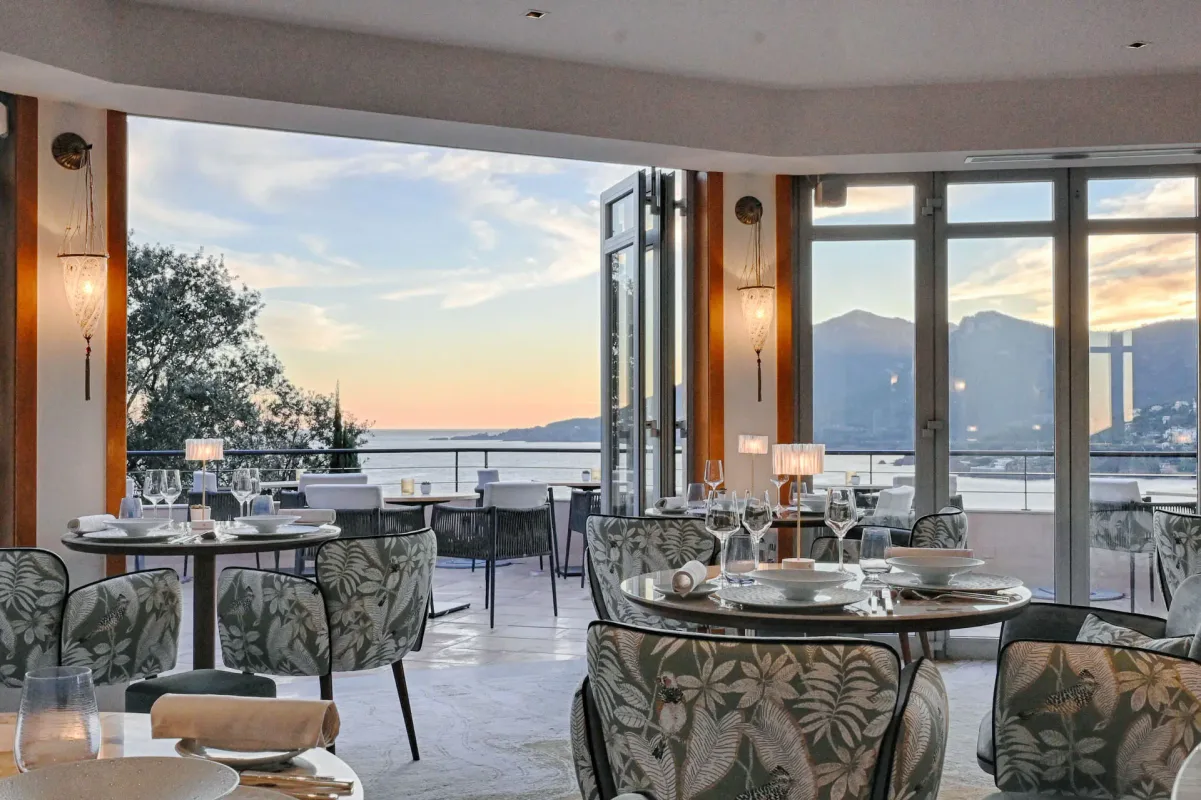
L'Or Bleu, inside the cliff-side Tiara Miramar Beach Resort on Avenue de Miramar, is the older claim. The kitchen is Chef Alain Montigny, Meilleur Ouvrier de France in 2004, and the room hangs over the hotel's private cove with the red Esterel rock standing above it. It serves in the evening only — this is a dinner, not a drop-in — and the cliff lights up outside as the meal goes long. Go when you have nowhere to be afterward, because you will not want to leave at speed.
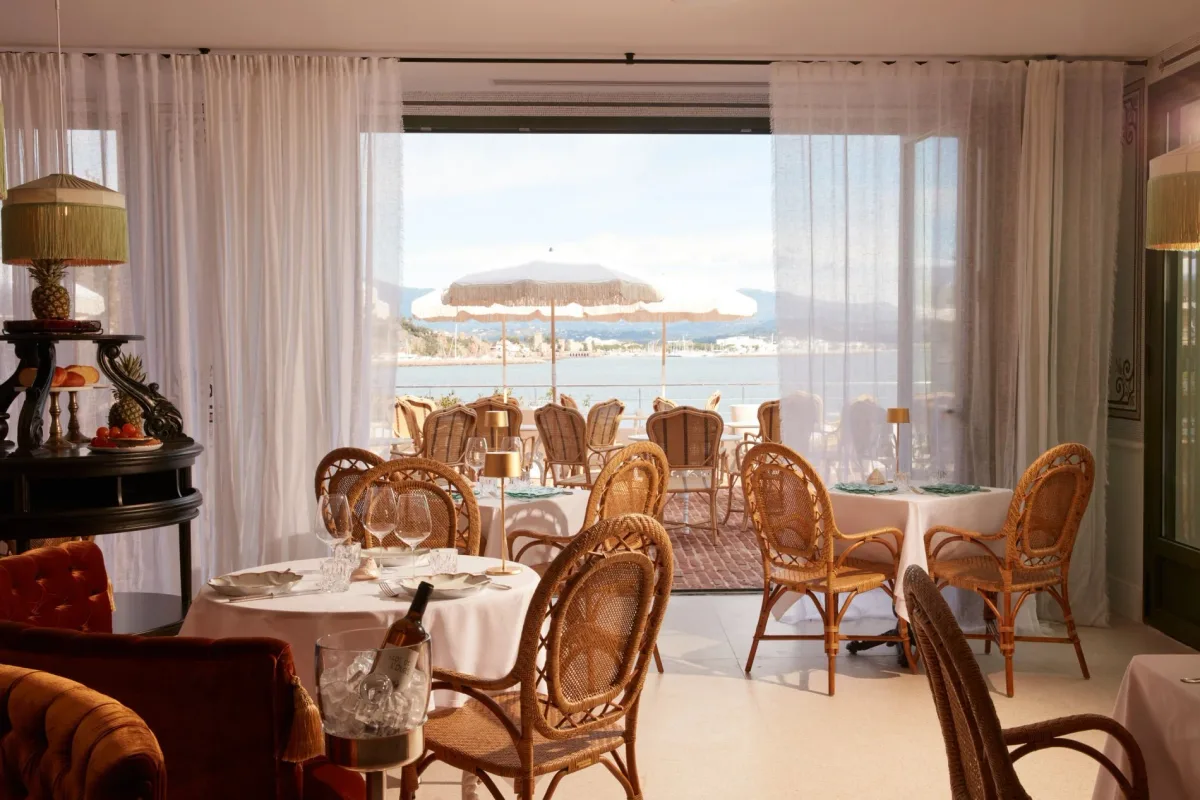
Mareluna is the newer one, and it belongs to the story of the moment. It sits inside Château de Théoule on Avenue de Lérins, the five-star that opened in spring 2024 and reset what this stretch of coast is for. The kitchen is Chef Francesco Fezza, the register Italian-leaning and precise, and the star arrived fast. Between the two houses you can eat at the very top of the Riviera twice in a day without driving more than a few minutes — a thing you genuinely cannot do in towns ten times the size.
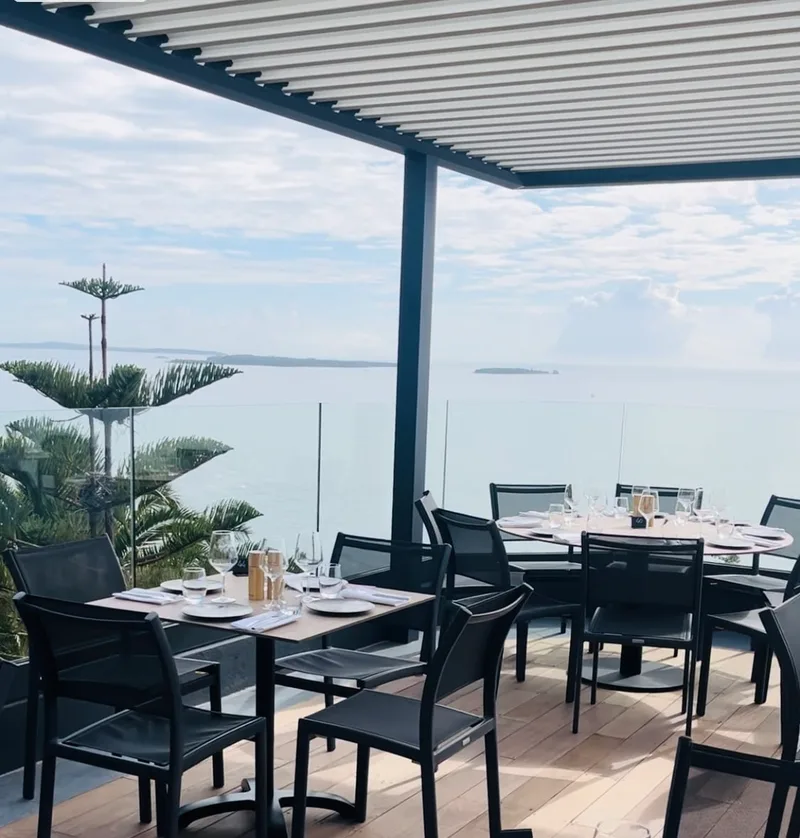
When the appetite for a tasting menu fades, L'Air du Temps on the Corniche d'Or is the honest middle: family-run Mediterranean cooking with the bay of Cannes laid out below. It is the register between the two stars, and there is no shame in spending most of your trip there.
A day, the SOF way
Start in the village, not the hotel. Coffee and something from the case at Les Délices de Théoule, eaten standing, watching the marina wake up.
Then take the cliff. The trails through the pines toward the calanques are the real Théoule — the porphyry underfoot, the sea flat and impossibly clear below, the kind of walk where you stop talking. Time it so the morning burns off before the heat does.
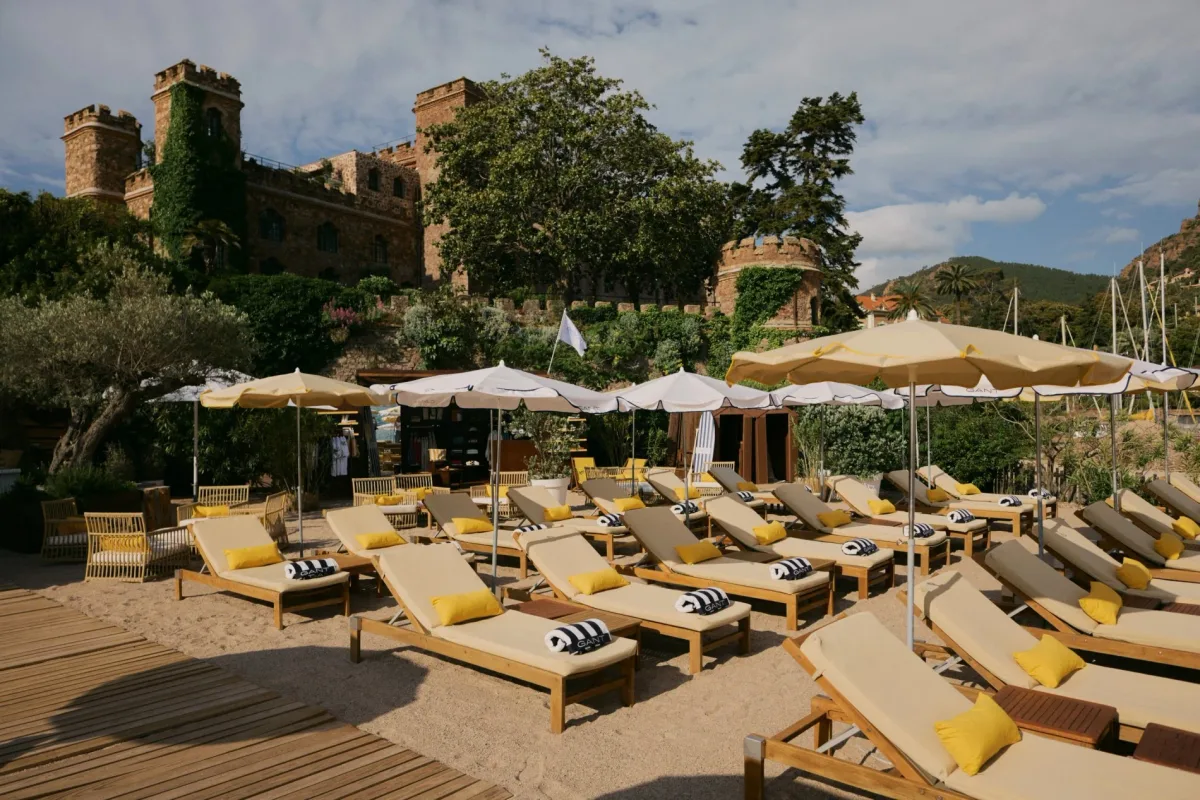
Lunch belongs to the water. La Plage Blanche, the beach club at the foot of Château de Théoule on the Promenade de la Darse, reopened for the 2026 season with a new card — Esterel red rock above, Mediterranean below, the Château perched at the top of the frame. It is the aperitif post too, when the light goes gold and the day tips toward evening.
Hold dinner for one of the stars. L'Or Bleu if you want the cove and the long, quiet evening; Mareluna if you want the newest room on the coast and a kitchen still in its first flush. Either way, book.
When to go
Théoule runs on the Esterel's clock, not Cannes's. May, June, September and early October are the window — the rock holds its colour, the sea is swimmable, the trails are walkable, and the cliff hotels are full but not frantic. July and August bring the drive-by crowds and the heat that makes the porphyry shimmer; the coves get busy and the Corniche d'Or slows to a crawl. Spring and early autumn are when the place is most itself: warm, unhurried, the light long and forgiving.
What to know
This is not a nightlife town, and pretending otherwise will only disappoint you. The rhythm here is dinner, then the dark, then the sound of the sea. There is no late club inside the commune — for an after-midnight room the nearest serious option is in Cannes, roughly thirteen kilometres east. Bring a car: the cliff hotels, the calanques and the Corniche d'Or all assume one, and Théoule is the better for not being walkable end to end. Pack for rock and water, not for a scene. The dress code, even at the two stars, is Riviera-easy rather than Riviera-loud.
Come for the colour you cannot quite believe, stay for the quiet that the rest of the coast forgot.